

Critical PHP vulnerabilities trigger global security scramble
Security flaws in the programming language powering 70% of websites have led to the temporary shutdown of 32 UK government services.
 AI & Cyber Desk 2 min read
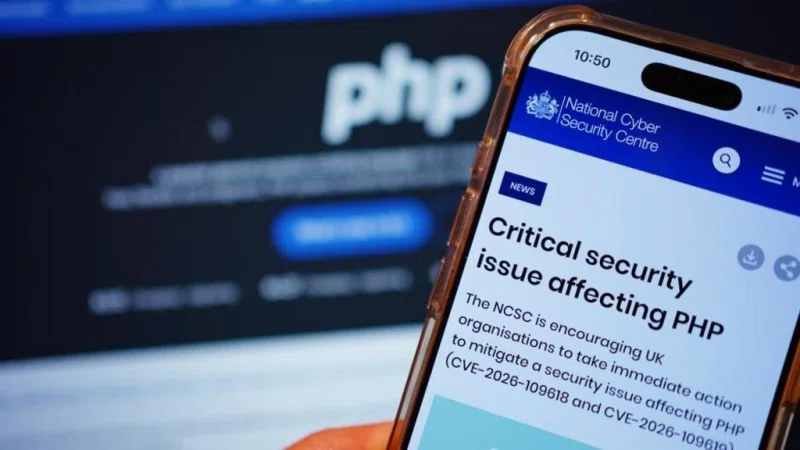
Wiz Research has uncovered multiple critical vulnerabilities in PHP, a scripting language that powers approximately 70% of all websites globally. The flaws include memory disclosure and unauthenticated remote code execution in the core engine, independent of the applications running on top of it. These vulnerabilities affect nearly every PHP version released in the last decade, dating back to version 5.4.
In the United Kingdom, 32 government services are unavailable while security work takes place. Baroness Lloyd of Effra told the House of Lords that four other services are partially unavailable, though no large public-facing critical services have been affected. Downing Street stated that the unavailability does not mean the services were hacked.
The vulnerabilities stem from bugs in how PHP handles fatal errors, particularly out-of-memory errors, which can leave a corrupted internal state behind. A later request can reuse that stale state, leading to memory disclosure or corruption. Successful exploitation could allow attackers to steal sensitive data, such as passwords, API keys, and certificates, or take control of affected servers.
The discovery of these flaws was aided by frontier AI models, which reduced the barrier to turning a longstanding flaw into an exploit. Researchers noted that while the underlying flaws had been present for decades, demonstrating their exploitability required an exceptionally complex chain of steps.
PHP released a patch on October 21, 2026, to fix multiple memory-safety vulnerabilities in the core engine. While companies are implementing the fix, researchers say many remain vulnerable. The impact of the security issue has been seen in countries including Japan, Finland, and France.
Key facts
- PHP powers approximately 70% of all websites in the world.
- 32 UK government services are unavailable due to security work.
- PHP released a patch for the vulnerabilities on October 21, 2026.
- The vulnerabilities affect nearly every PHP version since version 5.4.
Three perspectives
Neutral
The PHP programming language, which powers platforms like WordPress and Wikipedia, is undergoing widespread patching following the discovery of critical vulnerabilities.
Positive
PHP released a patch on October 21, 2026, to fix the memory-safety vulnerabilities in its core engine.
Negative
The vulnerabilities could allow unauthenticated attackers to execute code on servers or steal sensitive data like passwords and API keys.
Your week in news, every Wednesday
The biggest stories of the week for your edition, in your inbox every Wednesday morning, your time. Free, and you can unsubscribe at any time.