

Youth in Maliq use digital tools to advocate for Devoll River cleanup
Local NGO Qendra KAZUS trained 44 young people to document plastic and waste pollution along the Devoll River to pressure authorities for action.
 Climate Desk 2 min read
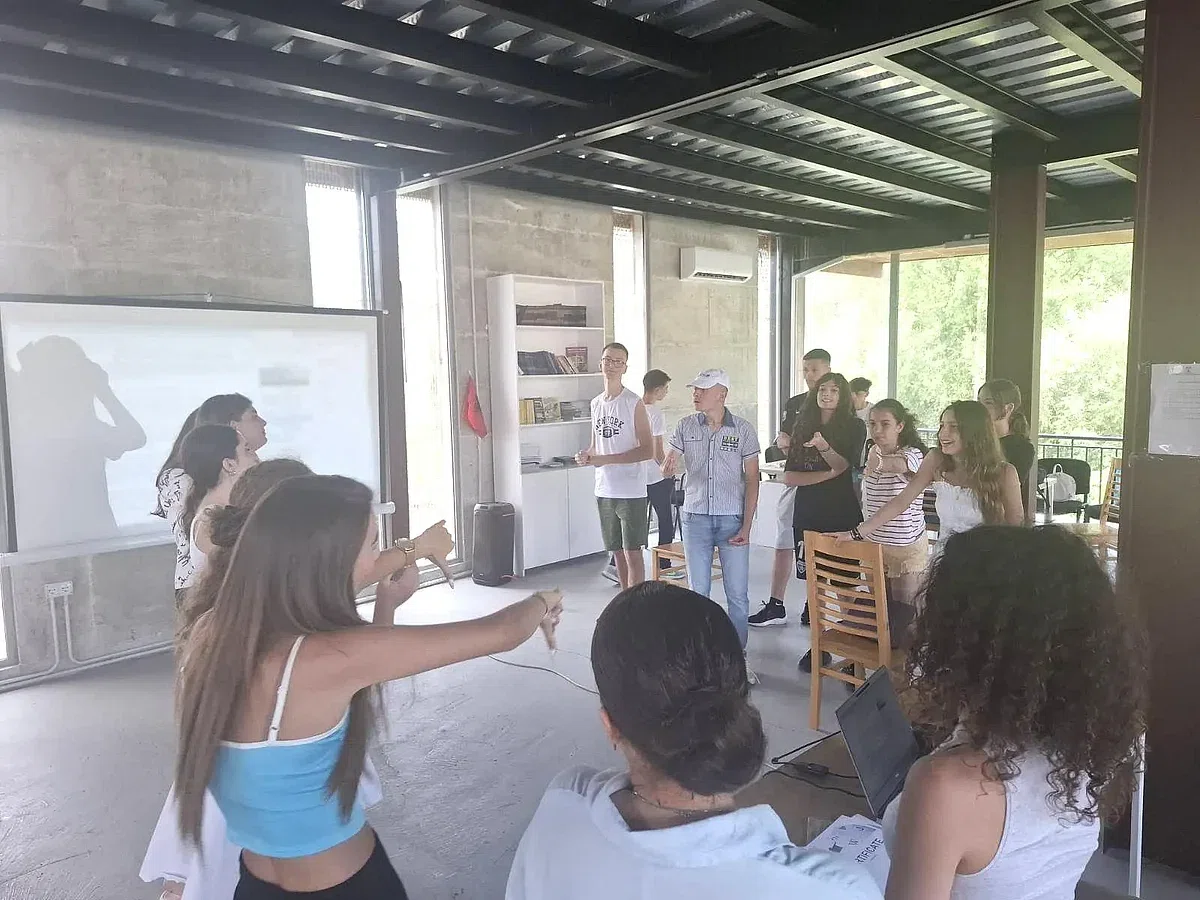
Forty-four young people from the Maliq municipality have been trained to use mobile storytelling, video editing, and graphic design to advocate for environmental solutions. The group, organized by the NGO Qendra KAZUS, used these digital tools to document waste accumulation along the Devoll River in the Korça region.
The project included two Digital Picnics in the villages of Pojan and Lozhan, where participants photographed and filmed debris to create a visual pollution map.
Dhorjela Cela, executive director of Qendra KAZUS, said the organization wanted to give young people tools like phones and social media to act as instruments of civic participation. The NGO aims to strengthen democracy and the rule of law through youth advocacy and environmental protection.
The Devoll River faces serious pollution from plastic, agricultural waste, and other debris. During winter floods, high river flows spread this waste and block drainage canals, causing water to overflow into residential areas and agricultural land. This has damaged soil health and local livelihoods.
An online petition on Change.org has collected 506 signatures to ask the Maliq municipality to increase cleaning actions. The petition seeks a joint commitment between the municipality and the community for cleaning and education.
The materials produced by the youth now serve as a public archive of evidence for future discussions with local authorities.
Key facts
- Qendra KAZUS trained 44 young people in the Maliq municipality in mobile storytelling and digital advocacy.
- An online petition regarding the Devoll River has collected 506 signatures.
- Waste accumulation in the Devoll River has contributed to flooding in the Korça region.
Three perspectives
Neutral
The NGO Qendra KAZUS implemented a digital advocacy project involving 44 youth to document waste along the Devoll River.
Positive
The project turned social media into a tool for action, allowing young people to document environmental problems and create a public archive of evidence.
Negative
Improper waste disposal has blocked drainage channels and contributed to devastating floods in the region.
Your week in news, every Wednesday
The biggest stories of the week for your edition, in your inbox every Wednesday morning, your time. Free, and you can unsubscribe at any time.