

 Eswatini
New Footbridge Links Eswatini Communities
EMU engineers and local partners build a new suspended footbridge across the Nkomazi River, replacing a dangerous old bridge that was often impassable during the rainy season. The new bridge provides safe year-round access to markets, healthcare, and schools for roughly 1,500 residents of the rural kaNdeva and Hlalakahle communities.
 Global Newsflix 2 min read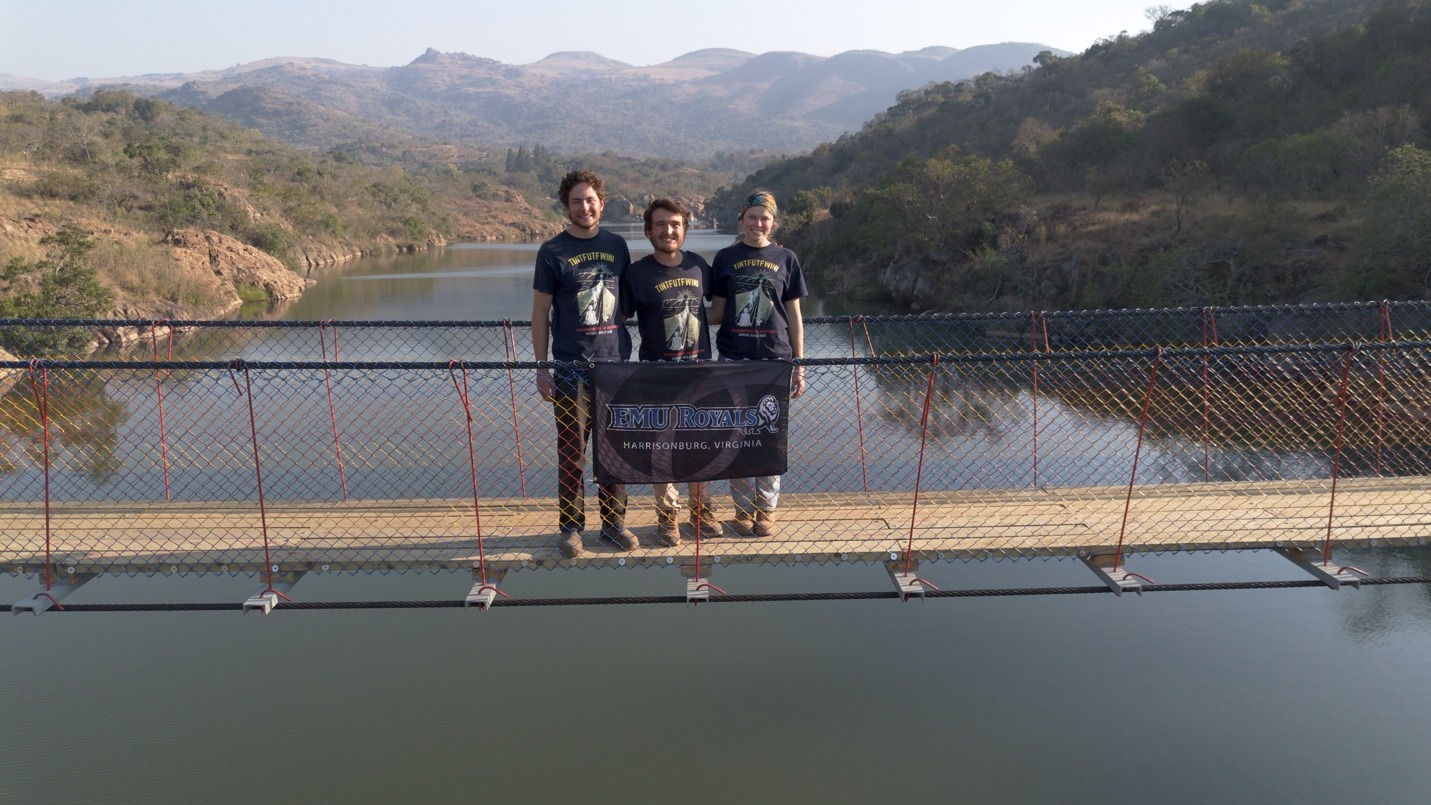
A group of EMU students and alumni, along with university students from Iowa, Western Ontario, and Rutgers, staff from the Engineers in Action nonprofit, and engineers and contractors from Eswatini, designed and built the new 300-foot Tintfutfwini Bridge. The bridge is located about 65 feet upstream from the old bridge and can hold more than 88,000 pounds.
The old footbridge was the only way for residents to cross the river, but it was often submerged during the rainy season, making it impassable. Schoolchildren had to wait three to four weeks for the river to lower before they could safely cross and return to class.
The new bridge crosses the river more than a dozen feet above the high-water mark, about 15 feet higher than the old bridge. It provides safe access to markets, healthcare, and schools for the communities.
EMU senior Isaac Greenleaf and students Moravia Satterfield and Levi Stutzman spent nearly eight weeks working on the project in the Hhohho region of Eswatini. They received mentorship from alumni bridge builders Luke Wheeler and Mana Acosta, on-site Bridge Corps members with Engineers in Action.
The aging old bridge had fallen into disrepair, with wide gaps between its weathered wooden planks and tattered fencing posing a risk to users. A local mother expressed concerns about the safety of the old bridge, saying it swung and swayed terribly and that she feared her children would fall into the river.
Key facts
- A new 300-foot suspended footbridge was built across the Nkomazi River in Eswatini.
- The bridge provides safe year-round access to markets, healthcare, and schools for roughly 1,500 residents.
- The old footbridge was often submerged during the rainy season, making it impassable.
- The new bridge can hold more than 88,000 pounds and crosses the river more than a dozen feet above the high-water mark.
Three perspectives
Neutral
The construction of the new footbridge is a significant development for the communities in Eswatini. The project was completed through a collaboration between EMU engineers, local partners, and nonprofit organizations. The new bridge is expected to improve access to essential services for the residents.
Positive
The new footbridge is a major improvement over the old one, providing safe and reliable access to markets, healthcare, and schools. The project demonstrates the impact of collaborative efforts between local and international partners. The bridge is expected to have a positive impact on the daily lives of the residents.
Negative
The old footbridge posed a significant risk to users, and its replacement is long overdue. The construction of the new bridge highlights the need for improved infrastructure in rural areas of Eswatini. The project also raises questions about the maintenance and upkeep of the new bridge.
Your week in news, every Wednesday
The biggest stories of the week for your edition, in your inbox every Wednesday morning, your time. Free, and you can unsubscribe at any time.