

 Australia
Japan launches mission to collect samples from Mars moon Phobos
The MMX mission launched on Tuesday, 20 October, beginning a five-year journey to return Martian moon samples to Woomera in 2031.
 Space Desk 2 min read
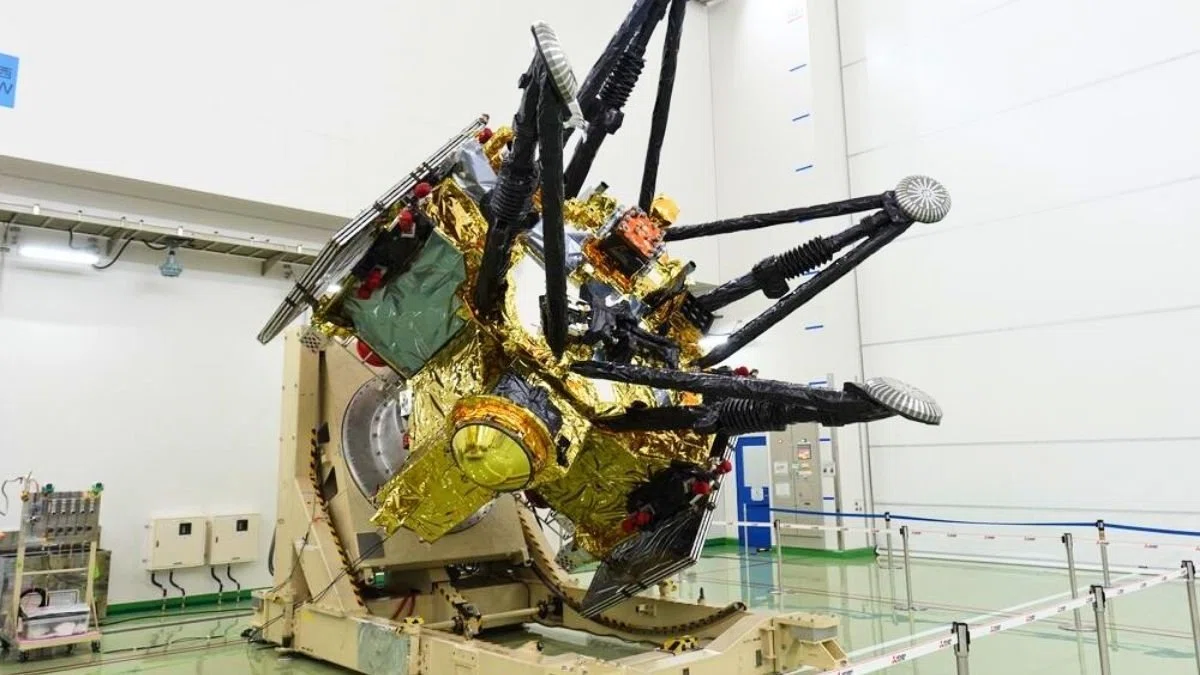
Japan’s Martian Moons eXploration (MMX) mission launched on Tuesday, 20 October, aboard an H3 rocket from the Tanegashima Space Center. The mission, led by the Japan Aerospace Exploration Agency (JAXA), begins a five-year journey to explore the moons Phobos and Deimos.
The spacecraft is expected to reach Mars in August 2027 to study the moons. It will attempt to collect at least 10 grams of rock and soil from the surface of Phobos. If successful, it will be the first mission to return samples from a moon of Mars to Earth.
The collected samples could reveal how Phobos and Deimos formed and provide insights into the early history of the Solar System. A capsule carrying the samples is expected to land in the Woomera region of outback South Australia in 2031.
South Australia’s Minister for Defence and Space Industries, Chris Picton, said the mission demonstrates the state’s growing role and importance in international space endeavours. The planned recovery will provide opportunities for Australian researchers and the space industry in technical operations, scientific research and spacecraft recovery.
The mission involves JAXA and space agencies from Europe, Germany, France and the United States. This follows the December 2020 Hayabusa2 mission, where Woomera was the landing site for samples collected from the asteroid Ryugu.
Key facts
- The MMX mission launched on Tuesday, 20 October, from Japan’s Tanegashima Space Center.
- The spacecraft aims to collect at least 10 grams of rock and soil from Phobos.
- Samples are expected to land in Woomera, South Australia, in 2031.
Three perspectives
Neutral
The MMX mission is a five-year journey to explore Mars' moons and return samples to Earth.
Positive
The mission will provide opportunities for Australian researchers and the space industry in scientific research and spacecraft recovery.
Negative
The samples are still five years away from reaching Earth.
Your week in news, every Wednesday
The biggest stories of the week for your edition, in your inbox every Wednesday morning, your time. Free, and you can unsubscribe at any time.