

UDC researcher explores urban agriculture and visits The Gambia
Andy Blunk is testing indoor farming methods and recently led students on an agricultural exploration of The Gambia.
 Science Desk 2 min read
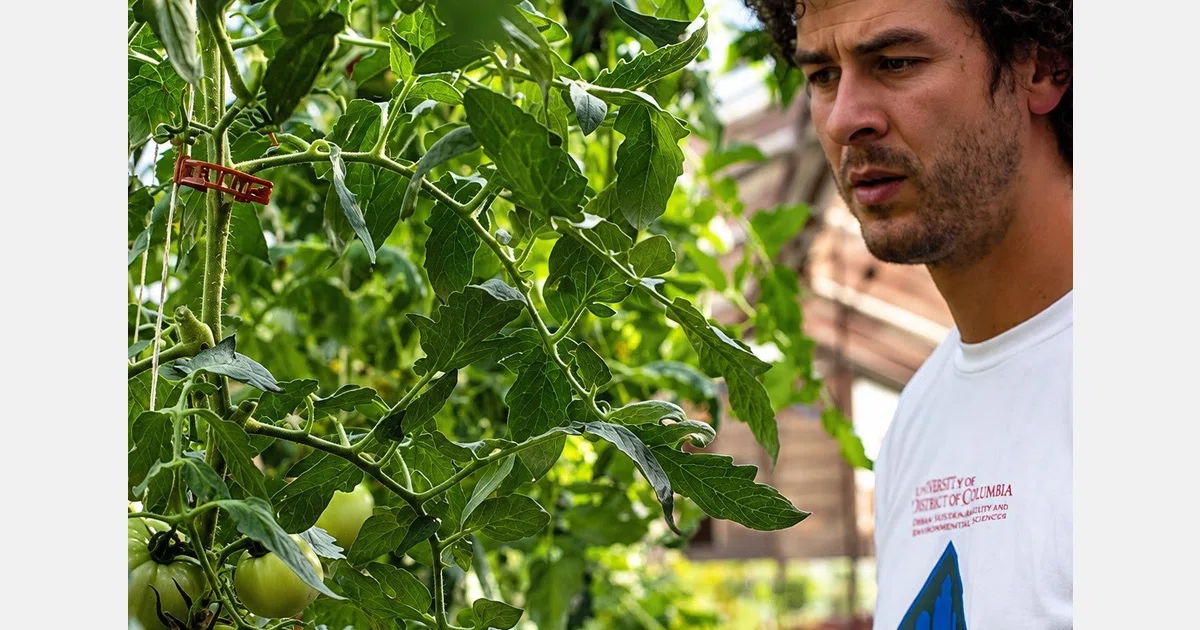
Blunk, a project specialist at the Center for Urban Resilience, Innovation and Infrastructure, focuses on turning limited urban space and local resources into food production opportunities. His research involves unconventional methods such as growing mushrooms in basements or microgreens in closets. He also studies larger indoor farms that use LED lighting and climate-control technology.
The research involves multiple disciplines, including engineering, computer science, and environmental science. Blunk works with students using sensors to manage water, imaging technologies to identify plant problems, and automated systems to increase efficiency. These projects allow students to apply technical skills to real-world agricultural problems.
During spring break, Blunk traveled to The Gambia with four UDC students for a weeklong exploration of agriculture and food systems. The group visited sites at the Ministry of Agriculture and urban farms, traveled to the countryside to meet farmers, and met researchers at the University of The Gambia. Gambian students studying agriculture joined the UDC group to learn alongside one another.
Blunk's goal for the trip was to learn how The Gambia approaches urban agriculture to see what Washington could learn from different relationships to natural resources.
Key facts
- Andy Blunk is testing if dynamically managed LED lighting can reduce electricity use in crop growth.
- Blunk led UDC students on a weeklong agricultural exploration of The Gambia.
- Research at UDC includes testing treated biosolids from the wastewater system as an amendment for growing vegetables.
Three perspectives
Neutral
Andy Blunk is researching indoor farming efficiency and recently led a student group to The Gambia to study agricultural systems.
Positive
The research creates opportunities for students to apply engineering and computer science skills to real-world food production.
Negative
Indoor and hydroponic farming can require significant management of costs such as electricity, heating, and cooling.
Your week in news, every Wednesday
The biggest stories of the week for your edition, in your inbox every Wednesday morning, your time. Free, and you can unsubscribe at any time.