

Heat and smoke co-exposure increasing in South-East Asia
A 20-year study shows that heatwaves and fire smoke are increasingly coinciding, raising risks for heart and lung disease.
 Climate Desk 2 min read
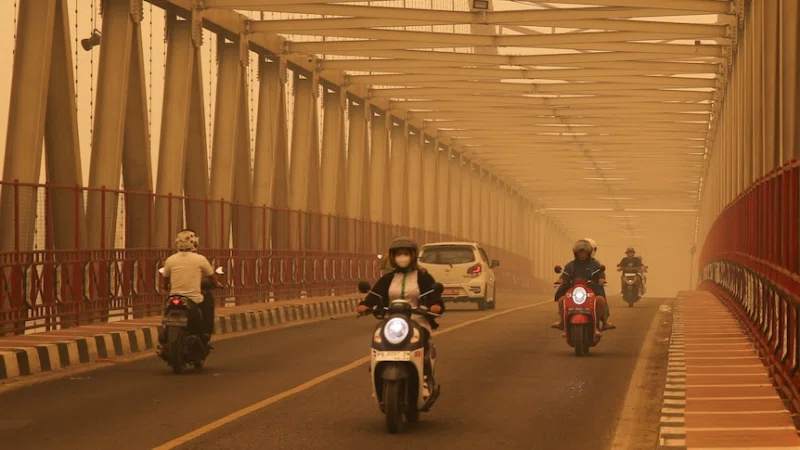
A new study reveals that the combination of extreme heat and smoke from wildfires is a growing problem across South-East Asia. From 2000 to 2019, an average of 194.5 million people per year in South-East Asia experienced at least one day when a heatwave coincided with substantial fire smoke. Researchers call these compound days co-exposure.
In Indonesia, the number of people experiencing these days rose from an average of 72 million in the 2000s to 101 million per year in the 2010s. Indonesia has more people affected by this combination than any other country in the world. Since July, Indonesia has reported more than 333,000 cases of acute respiratory infections.
Yuming Guo, a professor from Monash University, said heatwaves increasingly coincided with existing fire-related air pollution. Co-exposure to both hazards may exert greater health impacts than the sum of their individual effects. A 2022 study by University of Southern California researchers found that the risk of death during a double whammy of high heat and high air pollution was up to three times greater than the effect of either hazard alone.
Cambodia recorded one of the largest increases in co-exposure days, moving from an average of 1.6 days to 12.1 days. The number of people affected in Cambodia rose from 4.4 million to 12.6 million. Laos, Thailand, Vietnam and Malaysia also had increases.
Professor Guo said average annual heatwave exposure in the South-East Asian countries included in the analysis nearly doubled, from 21.3 to 41.6 days per person. The proportion of fire-pollution days that also experienced heatwaves rose 60 per cent.
Researchers hope the study will encourage authorities to integrate heatwave and smoke monitoring and warnings. Ideally, governments should combine temperature forecasts, fire activity, smoke transport predictions and air quality monitoring. Public health guidance needs to address these competing risks rather than treating heat and smoke independently.
Key facts
- From 2000 to 2019, an average of 194.5 million people per year in South-East Asia experienced co-exposure to heatwaves and smoke.
- In Indonesia, the average number of people affected by co-exposure rose from 72 million in the 2000s to 101 million per year in the 2010s.
- Cambodia's average annual co-exposure days increased from 1.6 to 12.1.
Three perspectives
Neutral
The combination of smoke and heat is on the rise globally, affecting billions of people.
Positive
Researchers hope the study will encourage authorities to integrate heatwave and smoke monitoring and warnings.
Negative
Co-exposure to high heat and high air pollution can increase the risk of death by up to three times.
Your week in news, every Wednesday
The biggest stories of the week for your edition, in your inbox every Wednesday morning, your time. Free, and you can unsubscribe at any time.