

Lizard tail fossil in Myanmar amber provides evidence of ancient survival strategy
A 99 million year old amber specimen from northern Myanmar shows a lizard deliberately shedding its tail.
 Science Desk 2 min read
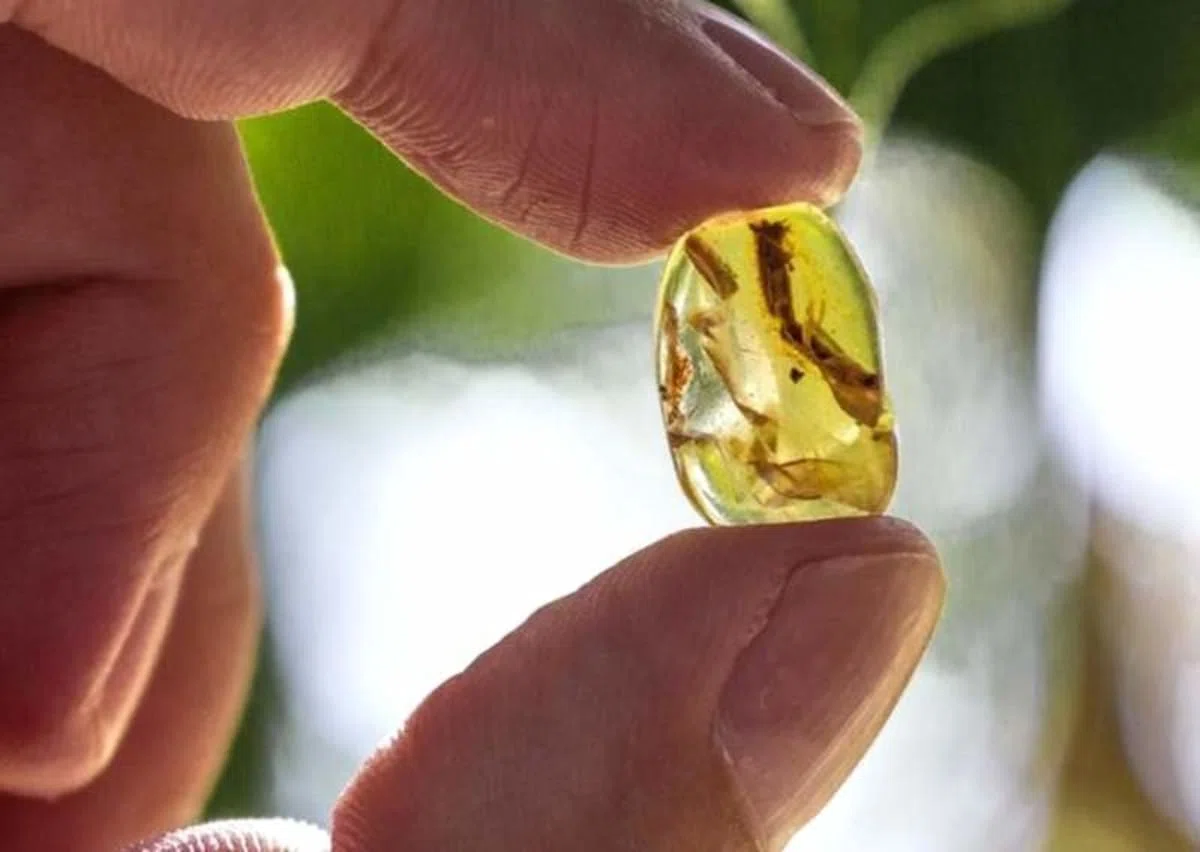
A lizard tail preserved in amber from northern Myanmar provides direct evidence that ancient reptiles could deliberately shed their tails. The amber specimen is 18 millimeters long and was initially mistaken for a tiny twig or a scrap of an insect.
Dolev Fabrikant, a PhD candidate at Tel Aviv University’s New Environmental School, realized the object was a lizard's tail after noticing it was covered in tiny scales. Leonidas-Romanos Davranoglou of the university’s School of Zoology and the Steinhardt Museum of Natural History said the fossil could help researchers understand the history of this widespread survival strategy.
Ahmed Nasser, who heads the Inter-Institutional Analytical Unit, explained that the scans create a three-dimensional reconstruction from X-ray images taken from many angles.
The scans showed a ring of tissue at the spot where the tail came off, similar to what is seen in tails dropped by living lizards. The break was clean and symmetrical, lacking the damage expected from an accidental injury.
While the specimen is identified as a lizard, researchers lack the skull and other skeletal features to determine its exact group. Apostolos Christopoulos, a PhD candidate at the National and Kapodistrian University of Athens, said possible affinities include groups containing today’s wall lizards, slow worms, or monitor lizards.
Key facts
- A 99 million year old lizard tail fossil was found in amber from northern Myanmar.
- Micro-CT scanning revealed a ring of tissue at the break point, similar to modern lizards.
- The fossil provides direct evidence of tail shedding, a strategy used to distract predators.
Three perspectives
Neutral
The fossil provides evidence of tail shedding but does not reveal the specific species of lizard or whether the animal survived.
Positive
The discovery offers an extraordinary window into the history of reptile survival strategies.
Negative
The researchers cannot determine if the lizard dropped its tail due to a predator or if it became stuck in the resin.
Your week in news, every Wednesday
The biggest stories of the week for your edition, in your inbox every Wednesday morning, your time. Free, and you can unsubscribe at any time.