

Kazakhstan proposes closer coordination between nuclear-weapon-free zones and Mongolia
The proposal was made during a UN forum marking the 20th anniversary of the Semipalatinsk Treaty.
 Politics Desk 2 min read
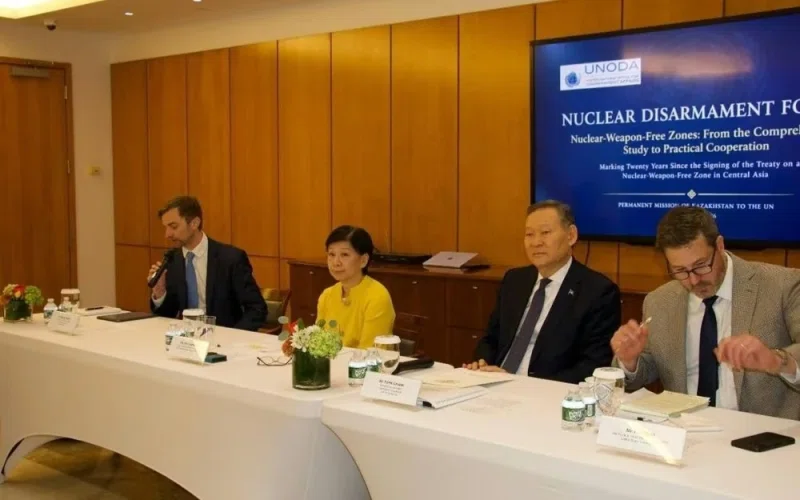
Kazakhstan's Permanent Mission to the United Nations proposed closer coordination among five regional nuclear-weapon-free zones and Mongolia to advance shared priorities in dialogue with nuclear-weapon States. The proposal was made during a forum entitled “Nuclear-Weapon-Free Zones: From the Comprehensive Study to Practical Cooperation,” hosted by the Permanent Mission of Kazakhstan to the United Nations in cooperation with the United Nations Office for Disarmament Affairs (UNODA).
The event marked the 20th anniversary of the signing of the Semipalatinsk Treaty and the publication of a new UN comprehensive study on nuclear-weapon-free zones, which is the first in 50 years. Discussions focused on implementing the study's recommendations, strengthening cooperation among nuclear-weapon-free zones, and engaging with nuclear-weapon States.
Kairat Umarov, Kazakhstan’s Permanent Representative to the United Nations, stated that rising nuclear risks make it important to strengthen cooperation mechanisms that have proven effective. He called for the recommendations of the new UN study to serve as a basis for concrete joint initiatives. Izumi Nakamitsu, UN Under-Secretary-General and High Representative for Disarmament Affairs, commended the partnership between the UN and Kazakhstan and the country's efforts to advance cooperation among nuclear-weapon-free zones.
Mexico's representative advocated for strengthening the institutional capacity of nuclear-weapon-free zones while taking regional specificities into account and continuing dialogue with nuclear-weapon States on legally binding security assurances. The Nuclear Threat Initiative (NTI) representative highlighted the potential of nuclear-weapon-free zones to reduce nuclear risks, citing the experiences of Kazakhstan, South Africa, Brazil, and Argentina.
Participants included diplomats from Mexico, Brazil, and the United Kingdom, as well as representatives from international organizations and experts. As a practical follow-up, Kazakhstan and UNODA will prepare a concise summary of the discussion outlining key proposals and possible areas for further cooperation.
Key facts
- Kazakhstan proposed closer coordination among five nuclear-weapon-free zones and Mongolia.
- The forum marked the 20th anniversary of the Semipalatinsk Treaty.
- The event coincided with the first UN comprehensive study on nuclear-weapon-free zones in 50 years.
Three perspectives
Neutral
The forum focused on implementing recommendations from a new UN study and strengthening cooperation among nuclear-weapon-free zones.
Positive
Kazakhstan and UNODA will prepare a summary of the discussion to outline key proposals and areas for further cooperation.
Negative
Kairat Umarov stated that rising nuclear risks make it important to strengthen cooperation mechanisms.
Your week in news, every Wednesday
The biggest stories of the week for your edition, in your inbox every Wednesday morning, your time. Free, and you can unsubscribe at any time.