

 South Africa
Voter turnout to determine South Africa municipal election outcomes
The shape of municipalities until 2031 depends on how many of the 29.23 million registered voters cast ballots on Wednesday.
 Politics Desk 2 min read
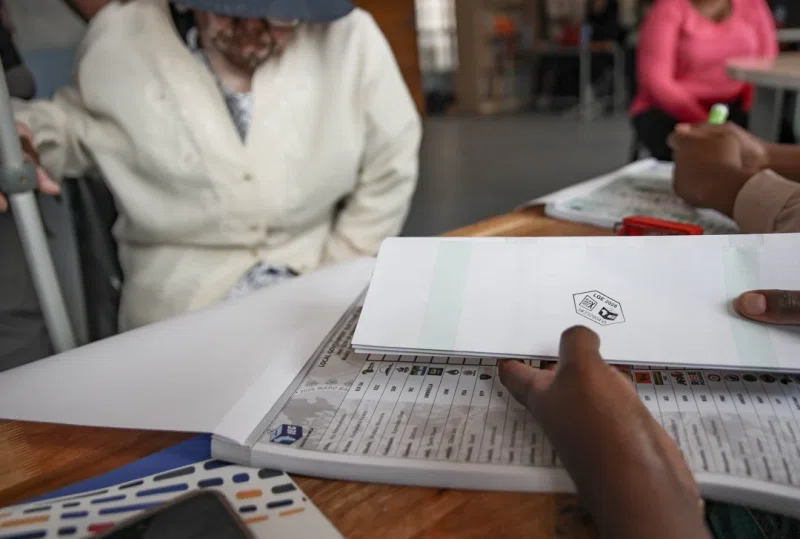
The shape of South Africa’s municipalities until 2031 will be determined by how many of the 29.23 million registered voters turn up at the ballot boxes on Wednesday. Campaigns are finished, and key races hinge on voter turnout.
Johannesburg is expected to be the fiercest battleground, with polls showing a tight contest between the DA and the ANC. A poll showed the DA leading the ANC with 25% to 23% among all registered voters, a gap that falls within the 3.3% margin of error. In a 52% turnout model, the DA rose to 29.2% and the ANC slipped to 22.6%.
Johannesburg is a four-way contest where the MK Party at 12.3% and the EFF at 11% could shape who governs. A DA–ANC coalition would command 51.8% of the modelled vote, which is the only two-party combination that clears 50%. A DA-led opposition bloc including the EFF, ActionSA, and FF Plus reaches 50.2%, while an ANC-led bloc including the MKP, EFF, and ActionSA reaches 52.9%.
In eThekwini, the MKP is expected to displace the ANC as the biggest party, with the DA in second place. Cape Town is expected to remain blue, with a poll putting the DA at 56% when modelled for turnout. In Tshwane, the DA and ANC are further ahead of other parties.
Historical data shows turnout is higher in DA-won wards than in ANC-won wards. In Cape Town, the gap between DA and ANC ward turnout grew from 4.25 percentage points in 2011 to 17.17 in 2021. In Tshwane, the gap grew from 11.47 percentage points to 15.99 percentage points over the decade.
Six of the eight metro councils will likely need to form a coalition, with Cape Town and Buffalo City as the exceptions. While a DA–ANC partnership is the most popular coalition option at 21%, there are grumblings within the ANC regarding working with the DA.
Key facts
- The shape of South Africa's municipalities until 2031 depends on how many of the 29.23 million registered voters turn up on Wednesday.
- Johannesburg is a four-way contest involving the DA, ANC, MK Party, and EFF.
- Six of the eight metro councils will likely need to form a coalition.
Three perspectives
Neutral
The outcome of the municipal elections depends on voter turnout across various metros.
Positive
A DA–ANC coalition in Johannesburg would command 51.8% of the modelled vote.
Negative
Wards that flipped from the DA to the ANC in 2021 resulted from a fall in turnout.
Your week in news, every Wednesday
The biggest stories of the week for your edition, in your inbox every Wednesday morning, your time. Free, and you can unsubscribe at any time.