

Genetic engineering cannot truly reverse extinction, researchers argue
Researchers say recreating traits in living species does not restore evolutionary history or lost genetic diversity.
 Science Desk 2 min read
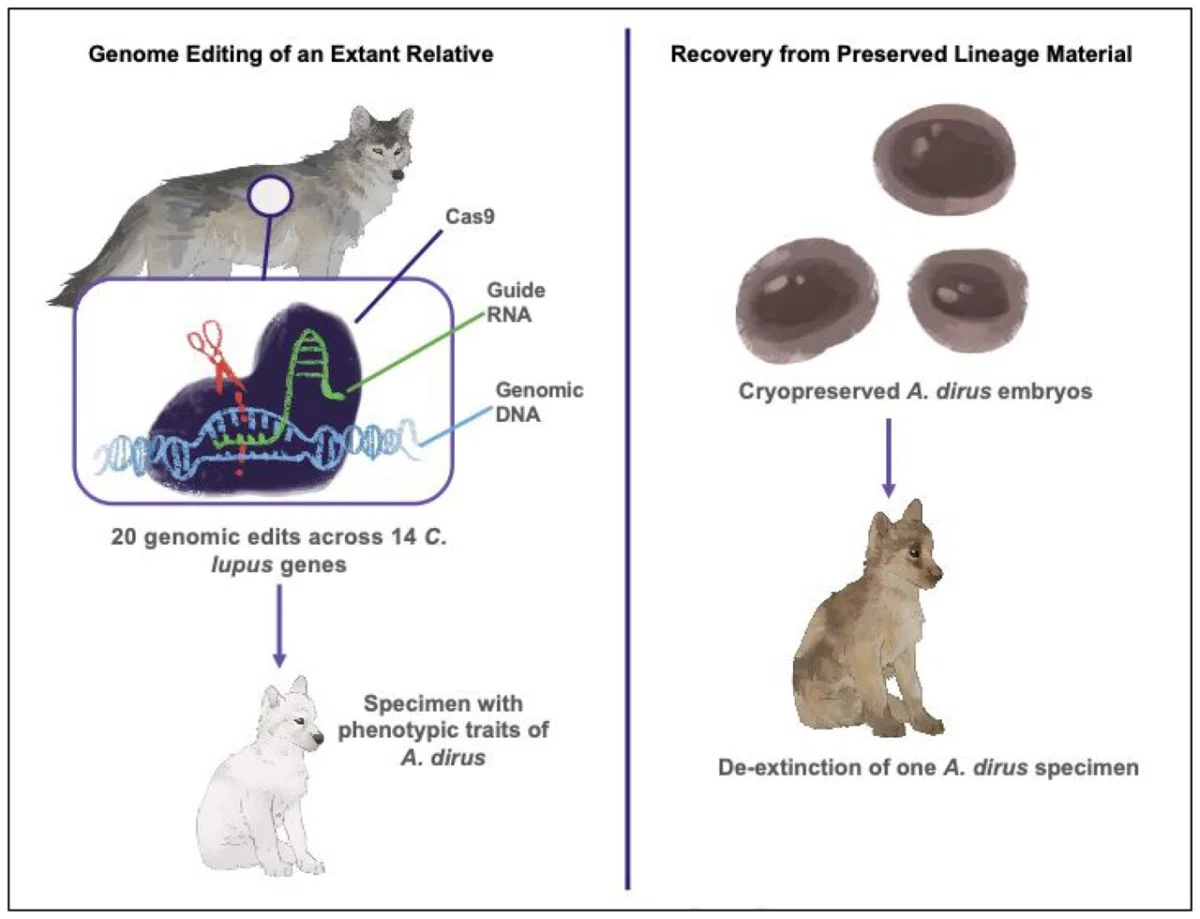
Genetic engineering cannot truly reverse extinction, according to an opinion paper published in the journal Biology Letters. Andrew Davinack and Charlotte K. Daniels of Wheaton College in Massachusetts argue that bringing extinct species back from the dead is not what it seems.
The researchers use the Dire Wolf Project to illustrate their case. Biotechnology company Colossal Biosciences claimed to have brought the extinct predator back to life by genetically modifying cells from living gray wolves through 20 edits across 14 genes. The company then used these modified cells to produce cloned animals with some characteristics of the extinct predators.
Davinack and Daniels state the resulting animals are genetically engineered gray wolves rather than dire wolves brought back from extinction. Recreating some characteristics does not restore the evolutionary history or the genetic diversity that once existed across the original population. The researchers wrote that such organisms may serve as ecological proxies or analogs, but they are not continuations of extinct lineages.
The researchers also argue that scientists could not restore the environment in which an extinct animal evolved, including its relationships with other animals. They note that cloning animals from preserved cells or frozen embryos of an extinct species is a different matter because such material could preserve a direct biological link to the original species.
The technologies being developed for de-extinction could instead help protect living species. These tools could restore lost genetic diversity and potentially reduce the harmful effects of inbreeding in animals that are still alive.
Key facts
- Andrew Davinack and Charlotte K. Daniels argue genetic engineering cannot truly reverse extinction.
- Colossal Biosciences modified gray wolf cells with 20 edits across 14 genes to produce animals with dire wolf characteristics.
- De-extinction technologies could be used to restore genetic diversity in living species.
Three perspectives
Neutral
Advances in biotechnology, including genome analysis and gene editing, have led to discussions about the possibility of bringing extinct species back to life.
Positive
Technologies developed for de-extinction could help protect living species by restoring lost genetic diversity and reducing the effects of inbreeding.
Negative
Recreating characteristics of an extinct animal does not restore its evolutionary history or the environment in which it evolved.
Your week in news, every Wednesday
The biggest stories of the week for your edition, in your inbox every Wednesday morning, your time. Free, and you can unsubscribe at any time.