

Enzymes embedded in plastic accelerate breakdown in marine environments
Researchers have developed a way for certain compostable plastics to degrade much faster in shallow coastal waters and the deep sea using heat-stable enzymes.
 Science Desk 2 min read
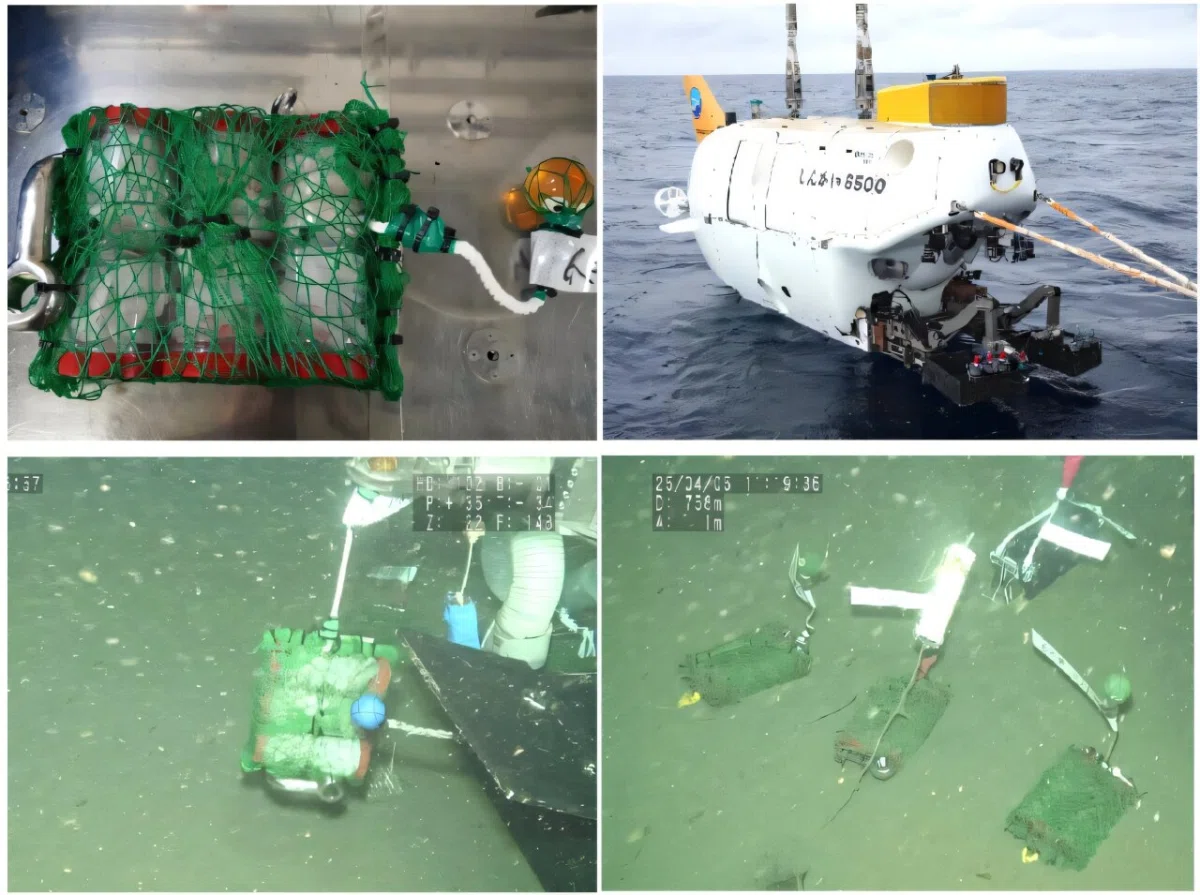
Scientists have developed a way for certain types of compostable plastic to break down much faster in marine environments, ranging from shallow coastal waters to the deep sea. The breakthrough uses tiny enzymes embedded in the plastic that help degrade it from within.
Researchers led by Tadahisa Iwata at the University of Tokyo took four types of compostable plastic, including PBS, PBSA, PCL, and PBAT, and melted them down. To prevent extreme heat from destroying delicate proteins, the team used heat-stable, freeze-dried forms of Candida antarctica lipase B and Humicola insolens cutinase.
The team shaped these materials into films and microbeads to simulate plastic waste and microplastics. They deployed the samples in different marine locations and monitored them for periods between one month and 18 months.
At a depth of 757 meters, films of three plastic types containing 3% cutinase lost nearly all their mass within five months, while enzyme-free controls barely changed. Even at extreme ocean depths of 5,503 meters, the enzymes continued to work to break down the plastic.
In shallow coastal waters, adding 0.1% of an enzyme sped up the breakdown process. However, the researchers emphasize that improved marine biodegradability alone does not guarantee overall environmental sustainability.
Key facts
- Enzymes embedded in compostable plastics help them degrade in both shallow and deep-sea environments.
- At 757 meters deep, plastic films with 3% cutinase lost nearly all mass within five months.
- The research was led by Tadahisa Iwata at the University of Tokyo.
Three perspectives
Neutral
The study shows that embedded enzymes can accelerate the degradation of certain compostable plastics in various marine settings.
Positive
The development allows compostable plastics to break down more rapidly in the ocean, including at depths of 5,503 meters.
Negative
Improved marine biodegradability does not guarantee overall environmental sustainability.
Your week in news, every Wednesday
The biggest stories of the week for your edition, in your inbox every Wednesday morning, your time. Free, and you can unsubscribe at any time.