

 Australia
NSW riverbank project backs farmers against future floods
About 800 landholders joined a $48 million recovery project using natural and recovered materials to stabilise riverbanks.
 Climate Desk 2 min read
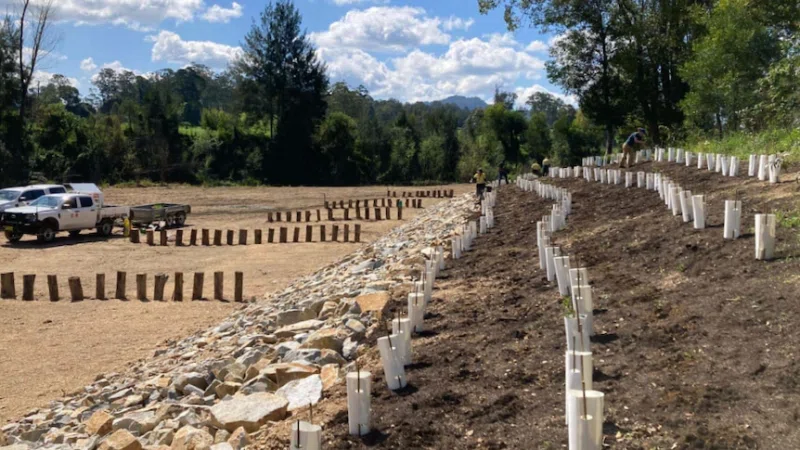
About 800 landholders across 11 river catchments took part in the Riverbank Rehabilitation Project, a disaster recovery effort led by NSW Local Land Services and the Soil Conservation Service. The catchments span from the Tweed at the Queensland border to the Hawkesbury-Nepean in Sydney.
The NSW and Australian governments jointly funded the project, which was worth more than $48 million. Project teams consulted landholders individually and tailored restoration work to how each property was used.
Dairy farmer Dave McKay lost productive grazing land when floods in 2021 and 2022 eroded riverbanks on his property. After he carried out some rock work with grant support, a record-breaking flood in 2025 damaged areas he had worked on and other parts of the farm.
Work on Mr McKay’s property this year included planting hundreds of native trees, with oats between them to help hold them steady. The project prioritised natural and recovered materials over options such as concrete or steel, and received the International Erosion Control Association Australasia’s Environmental Excellence Award.
Project team leader Craig Hart said early results were promising, but the work’s success would only be clear several years after the initial repairs. About half of the projects funded by the program were under way or complete during the 2025 floods.
Mr Hart said farmers would need to manage weeds, support plant growth and keep livestock away from repaired riverbanks.
Key facts
- About 800 landholders took part in the project.
- The project covered 11 river catchments.
- The project was worth more than $48 million.
- The project received the International Erosion Control Association Australasia’s Environmental Excellence Award.
Three perspectives
Neutral
The project used natural and recovered materials to rehabilitate riverbanks across 11 catchments.
Positive
About 800 landholders received tools and support through the recovery project.
Negative
Project leaders said the work’s long-term success cannot be judged until several years after the repairs.
Your week in news, every Wednesday
The biggest stories of the week for your edition, in your inbox every Wednesday morning, your time. Free, and you can unsubscribe at any time.