

Octopus escape tactics could inspire new rescue robots
New research shows common octopuses change how they squeeze through gaps depending on the tightness of the opening.
 Technology Desk 2 min read
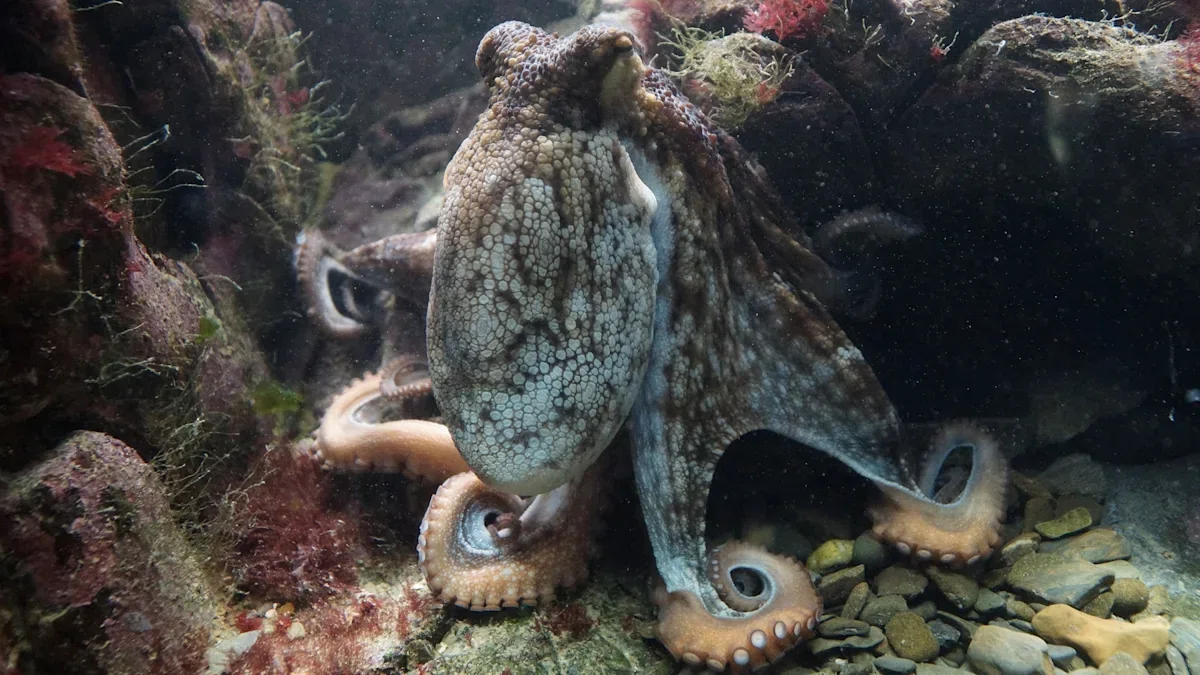
Common octopuses use different tactics for tight and roomy holes, a study found. The findings could inspire engineers to build rescue robots that wriggle through rubble in disaster zones.
Researchers filmed young common octopuses and Mayan octopuses escaping from clear Perspex boxes through holes of different sizes. Michael Kuba of the University of Naples Federico II, Wenci Xin of the National University of Singapore, Tamar Gunit, and Daniel Abed-Navandi of Austria's Haus des Meeres-Aqua Terra Zoo took part in the study.
Kuba measured the distance between each animal's eyes, which ranged from 15 to 35 millimetres. This span serves as a stand-in for the size of the stiff cartilage sheath that encases the octopus's central nervous system, which could set the smallest hole it can pass.
With larger holes, octopuses explored the opening with arms, pushed one through, and threaded up to five more behind it before hauling the head and mantle through. For smaller holes, they split the move into two stages: first pulling the remaining arms through, then slightly compressing the mantle and dragging it after.
Mayan octopuses behaved differently, as they did not try the tighter hole and instead left through the larger opening. Wenci Xin and Cecilia Laschi of the National University of Singapore want to turn these findings into soft-bodied robots to explore the open sea and search ruins.
Current search-and-rescue robots have slender, snake-like bodies that limit how many sensors and manipulators fit inside. Octopus-inspired designs could open a new era in rescue robotics.
Key facts
- Common octopuses change their movement strategies based on the size of a gap.
- The study involved measuring eye spacing to determine the minimum hole size an octopus can pass.
- Findings could lead to the development of soft-bodied robots for disaster zones.
Three perspectives
Neutral
The study, published in the Journal of Experimental Biology, examined how young octopuses manage gaps narrower than their mantles.
Positive
Octopus-inspired designs could allow robots to overcome environmental constraints and enter spaces that are difficult to reach.
Negative
The study used young animals in boxes, so it does not say how the results hold for adults or in the wild.
Your week in news, every Wednesday
The biggest stories of the week for your edition, in your inbox every Wednesday morning, your time. Free, and you can unsubscribe at any time.