

US Supreme Court declines to reinstate immigration court rule
The justices turned away an emergency request to restore a regulation that allows immigration judges to pause certain deportation proceedings.
 Politics Desk 2 min read
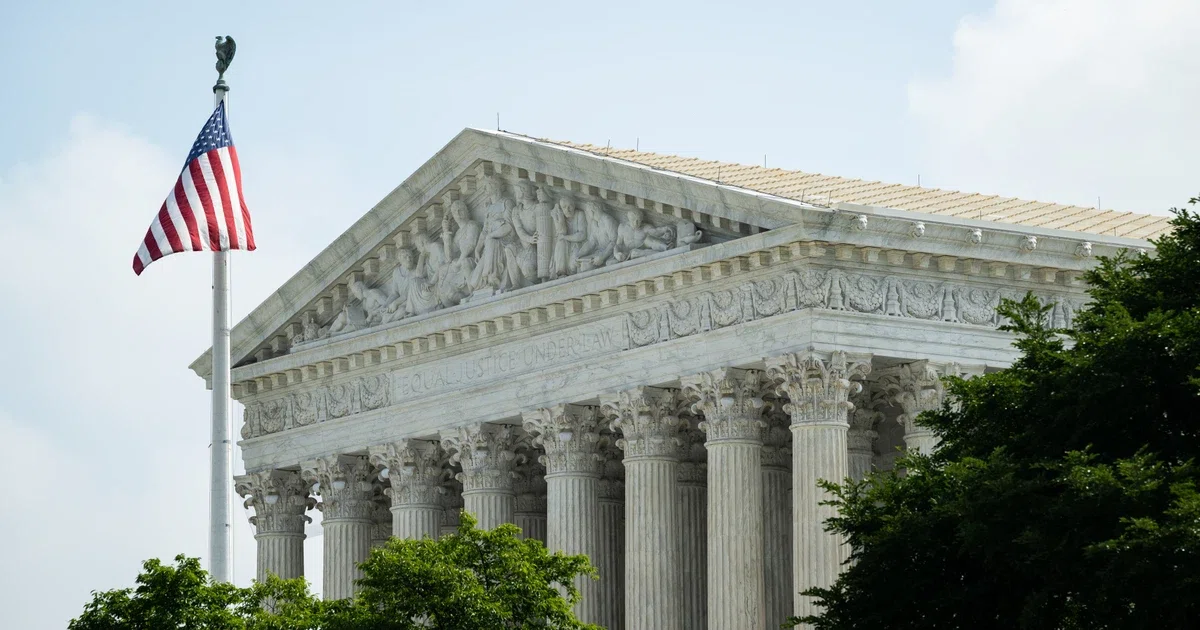
The US Supreme Court on Tuesday declined an emergency request to reinstate a regulation that allows federal immigration judges to pause deportation proceedings in some circumstances. The high court order will apply while litigation continues.
The request was made by three cities and a legal services provider, including Centro Legal de la Raza.
The disputed regulation lets judges administratively close deportation cases when a person is seeking legal protection as a neglected child or a survivor of violent crime. Texas sued the federal government in 2026 to challenge the rule. The Justice Department agreed that a judge should set aside the rule and bar future administrations from adopting similar measures unless Congress changes the law.
US District Judge Reed O’Connor signed off on the settlement in Wichita Falls, Texas, the same day the suit was filed. O’Connor, a Republican appointee, ruled that the challengers lacked legal standing because they were not directly affected by the settlement. US Solicitor D. John Sauer argued the applicants were attempting to attack the merits of a consent judgment.
The challengers expressed deep disappointment in a joint statement, saying the Supreme Court declined to prevent the Trump-Vance administration from dismantling immigration court procedures through a backdoor agreement with Texas. The Justice Department did not respond to a request for comment on the decision.
Key facts
- The US Supreme Court declined an emergency request to reinstate an immigration regulation.
- The regulation allows immigration judges to pause deportations for certain individuals, such as survivors of violent crime.
- Texas and the Justice Department reached a settlement to eliminate the regulation.
Three perspectives
Neutral
The US Supreme Court declined to intervene in a dispute over a settlement between the Trump administration and Texas regarding immigration court procedures.
Positive
The settlement aims to address the Justice Department's position that the regulation cannot be squared with federal immigration law.
Negative
Challengers described the settlement as egregious collusion that erases important immigration procedures without public participation.
Your week in news, every Wednesday
The biggest stories of the week for your edition, in your inbox every Wednesday morning, your time. Free, and you can unsubscribe at any time.