

Finance dominates COP31 discussions as Africa seeks climate investment
UN Secretary-General António Guterres warns adaptation funding for vulnerable countries remains insufficient as Africa seeks to bridge the climate finance gap.
 Climate Desk 2 min read
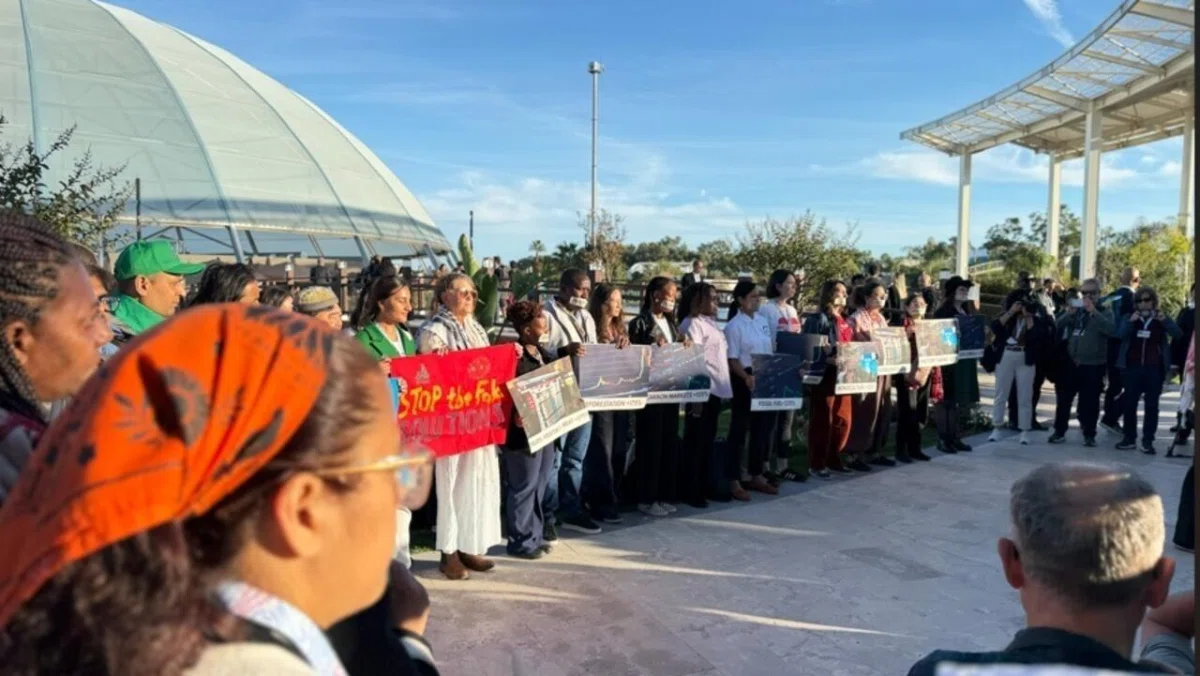
Finance dominated discussions at COP31 on Friday, ranging from high-stakes negotiations over billions of dollars to emotional appeals for climate justice. UN Secretary-General António Guterres warned that even tripling adaptation funding for vulnerable countries would meet less than a third of their needs. This comes as pressure mounts on major polluters and wealthy nations to pay their fair share.
Africa faces a difficult financial situation regarding climate change, as the continent accounts for less than 4% of global greenhouse gas emissions but is one of the most climate change-exposed regions. Droughts, floods, and increasingly erratic rainfall are impacting people, livelihoods, and economies. The continent needs hundreds of billions of dollars every year to underpin resilient development, clean energy, and climate adaptation, yet it receives a very small share of global climate finance.
A large proportion of the finance Africa does receive is in the form of loans rather than grants. Local project developers and institutions often find it difficult to access the finance needed to deliver on the ground. High project development costs, regulatory uncertainty, limited access to financing, and concerns over carbon pricing can prevent promising initiatives from reaching implementation.
Ghana is building an Article 6 pipeline that covers electric mobility, waste management, low-emission rice farming, and clean cooking. Other African nations are also moving, such as Kenya, which updated laws to attract carbon market investment, and Senegal, which authorised initiatives supporting the transition to electric vehicles.
Private investment and carbon markets are increasingly considered ways to close the gap. Through voluntary carbon markets and mechanisms under Article 6 of the Paris Agreement, countries can attract private capital to support emissions-reduction projects while advancing national climate commitments. At COP31, the challenge will be translating climate commitments into investments that can be scaled up.
Key facts
- UN Secretary-General António Guterres warned that tripling adaptation funding would meet less than a third of the needs for vulnerable countries.
- Africa accounts for less than 4% of global greenhouse gas emissions but is one of the most climate change-exposed regions.
- Ghana is developing an Article 6 pipeline for clean cooking, waste management, electric mobility, and low-emission rice farming.
Three perspectives
Neutral
Finance dominated discussions at COP31 on Friday, with debates focusing on climate justice and high-stakes negotiations over billions of dollars.
Positive
Ghana is building an Article 6 pipeline covering clean cooking, low-emission rice farming, waste management and electric mobility.
Negative
A large proportion of climate finance received by Africa is in the form of loans rather than grants.
Your week in news, every Wednesday
The biggest stories of the week for your edition, in your inbox every Wednesday morning, your time. Free, and you can unsubscribe at any time.