

Women in Central River Region revive cotton growing and weaving
A project led by Women Initiative Gambia aims to restore cotton processing skills and create income through products like wrappers and tablecloths.
 Business Desk 2 min read
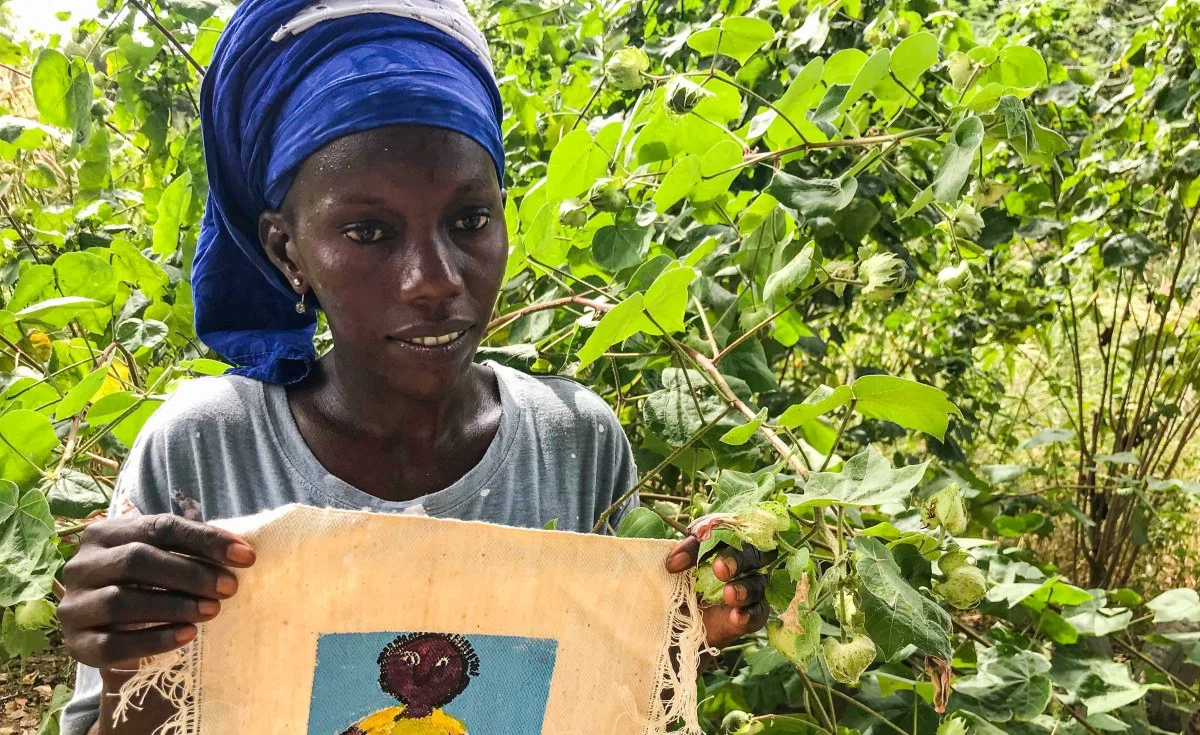
Women in the Central River Region are growing, spinning, and weaving cotton into products to earn income and sustain cultural traditions. This work offers a starting point for a wider revival of a sector that once supported thousands of rural farmers.
The cotton project is led by Women Initiative Gambia (WIG) through Reforest Future The Gambia. Founder Isatou Ceesay said 30 women have been trained in the cotton value chain, including planting, growing, spinning, weaving, design, and marketing. The project has run for three years, with more than 50 women benefiting and 40 women cultivating 1.5 acres at the centre alone.
Participants make products such as wrappers, shirts, tablecloths, bags, and book covers. Finished items sell for between D500 and D2,500 depending on the product. Tourists visiting the Reforest Future centre in Njau are among the main customers.
Foddy Ceesay said that before women in Njau Sawalo began growing cotton again, she had to travel between weekly markets to find the fibre, which was difficult to find and expensive. Now, the women grow their own and sell it to others, saving money they used to spend on purchases.
The initiative uses savings boxes to help members put aside money from sales. In Central River Region North, more than 40 women have benefited from the farm-to-cloth project, and each has saved at least D4,000. Women also use a "development box" where D50 is deducted from each sale for future financial independence.
A 2007 World Bank report recorded a steep decline in The Gambia's cotton sector, from around 3,000 tonnes of seed cotton in the mid-1990s to approximately 200 tonnes. The report identified erratic rainfall, pest infestations, high input costs, weak farmer support, and poor returns as pressures facing the sector.
Key facts
- The cotton project has run for three years and more than 50 women have benefited.
- Finished cotton products sell for between D500 and D2,500.
- The Gambia's Industrial and Diversification Policy 2025–2035 identifies cotton as a sector to be supported.
Three perspectives
Neutral
Women in the Central River Region are growing and weaving cotton to create income and preserve cultural traditions.
Positive
The project empowers women economically and culturally by providing skills in the cotton value chain and helping them save money.
Negative
A 2007 World Bank report recorded a steep decline in The Gambia's cotton sector from around 3,000 tonnes of seed cotton in the mid-1990s to approximately 200 tonnes.
Your week in news, every Wednesday
The biggest stories of the week for your edition, in your inbox every Wednesday morning, your time. Free, and you can unsubscribe at any time.