

India shifts to network-centric strategy to combat Myanmar-linked drug trade
Security agencies are targeting the entire supply chain of narcotics smuggled from Myanmar into India's northeastern states.
 World Desk 2 min read
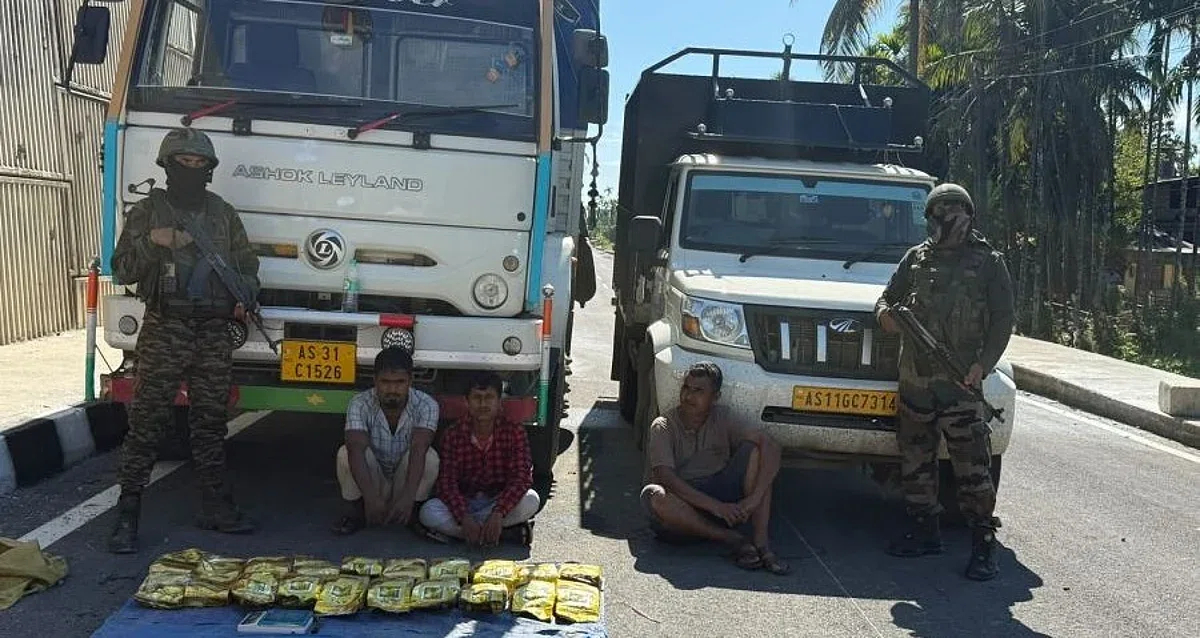
Security agencies in India have adopted a network-centric strategy to dismantle drug supply chains, moving away from a focus on mere seizures. This shift aims to target the sources, financiers, and operators behind the narcotics trade in the northeastern region.
The drug trade in the northeast is largely fueled by narcotics smuggled from Myanmar, which has replaced Afghanistan as the world's largest illicit opium producing nation. Myanmar cartels produce and smuggle brown sugar, finished heroin, methamphetamine, and opium. Annually, Myanmar produces between 1,000 and 1,080 metric tonnes of opium.
The 1,643 km India-Myanmar border is largely unfenced and passes through dense forest and terrain in Mizoram, Nagaland, Arunachal Pradesh, and Manipur. Local communities, including the Nagas and Mizos, have resisted the fencing of the border. Drugs are carried across the Tiau River in Zokhawthar, opposite Khawmawi in Myanmar, before traveling through Mizoram to Assam and the rest of India.
The Enforcement Directorate (ED) is working to identify money trails and has traced 1,400 mule accounts belonging to Indian traders. These traders help drug syndicates by procuring items like petrol, diesel, medicines, edible oil, flour, clothing, and footwear using GST invoices. These goods are then exchanged for drugs in a barter system.
Transactions are handled by illicit money exchanges and hawala networks in Champhai, with money flowing from Delhi, Kolkata, and Mumbai. While shutting down money trails originating in Myanmar and Bangladesh is difficult, officials say it is possible within India. Once the exchanged goods reach Myanmar, they are marketed commercially, which eliminates the money trail.
Key facts
- Myanmar has replaced Afghanistan as the world's largest illicit opium producing nation.
- The Enforcement Directorate has traced 1,400 mule accounts belonging to Indian traders.
- Myanmar produces between 1,000 and 1,080 metric tonnes of opium annually.
Three perspectives
Neutral
Indian security agencies are transitioning from a seizure-based approach to a network-centric strategy to tackle drug trafficking from Myanmar.
Positive
The Enforcement Directorate is working to identify money trails and has already traced 1,400 mule accounts used by traders.
Negative
The 1,643 km India-Myanmar border is largely unfenced and passes through dense forest and difficult terrain.
Your week in news, every Wednesday
The biggest stories of the week for your edition, in your inbox every Wednesday morning, your time. Free, and you can unsubscribe at any time.