

US visa restrictions for Pacific states create opportunity for China
As Washington closes migration pathways for Tuvalu, Tonga, and Vanuatu, Beijing may use climate mobility to expand its influence in the Pacific.
 Politics Desk 2 min read
The United States is closing migration pathways that Pacific states rely on as an adaptation strategy. Tuvalu, Tonga, and Vanuatu appeared on a State Department visa-restriction list, and Fiji was caught up in a January 2026 suspension of immigrant visas.
This retreat comes at a time when Beijing has money, technology, and experience to offer new pathways. China has conducted planned relocation at a scale and speed no other country has matched, relocating 9.6 million people between 2015 and 2020.
Beijing could potentially bundle its resources into a climate mobility strategy. This could include funding for the Pacific’s Climate Mobility Action Hub, technical expertise for communities, and planning support for those that must move.
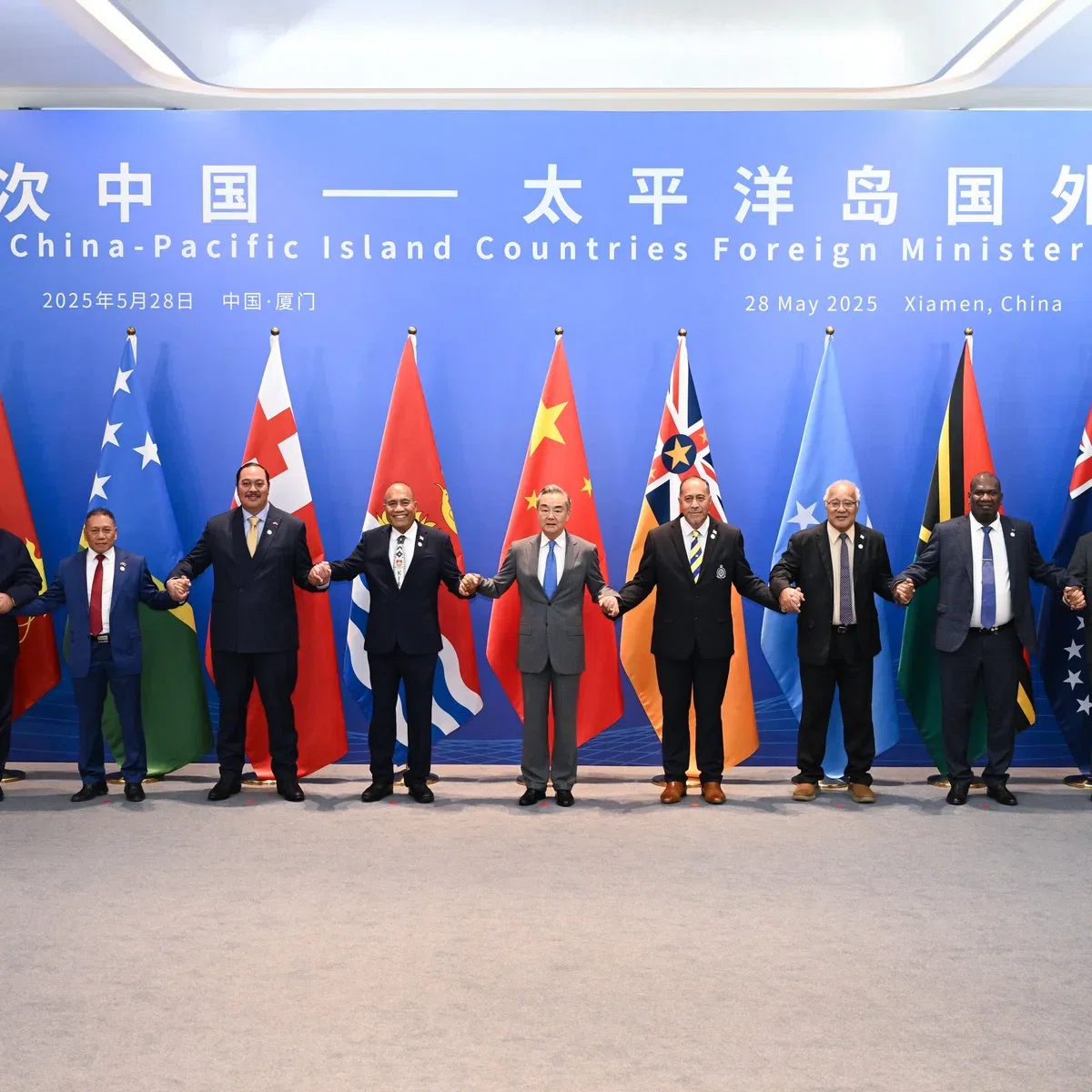
China also has technical expertise, such as creating "sponge cities" designed to absorb heavy rainfall and prevent flood-displacement. In May 2025, Beijing announced $2 million for Pacific climate cooperation and 100 community projects over three years.
While New Zealand committed NZ$17.9 million to a Pacific Climate Mobility Partnerships Program in August, no middle power can match China’s money, technology, and relocation experience.
The US has also withdrawn from the UN Framework Convention on Climate Change and the Intergovernmental Panel on Climate Change. This follows the US leaving the Green Climate Fund the year before.
Key facts
- Tuvalu, Tonga, and Vanuatu appeared on a US State Department visa-restriction list.
- China relocated 9.6 million people between 2015 and 2020.
- Fiji was caught up in a January 2026 suspension of immigrant visas.
- New Zealand committed NZ$17.9 million to a Pacific Climate Mobility Partnerships Program in August.
Three perspectives
Neutral
The United States is restricting visa access for several Pacific nations while China possesses significant relocation experience and climate finance resources.
Positive
China has pledged $2 million for Pacific climate cooperation and 100 community projects to be implemented over three years.
Negative
The United States is closing the very pathways that Pacific states say they are relying on as an adaptation strategy.
Your week in news, every Wednesday
The biggest stories of the week for your edition, in your inbox every Wednesday morning, your time. Free, and you can unsubscribe at any time.