

Excavation of largest Xiongnu tomb in Mongolia completed
The National Museum of Korea announced the completion of a four-year investigation at the Duurlig Nars site, unearthing 413 artifacts including Roman glass and silver ornaments.
 Science Desk 2 min read
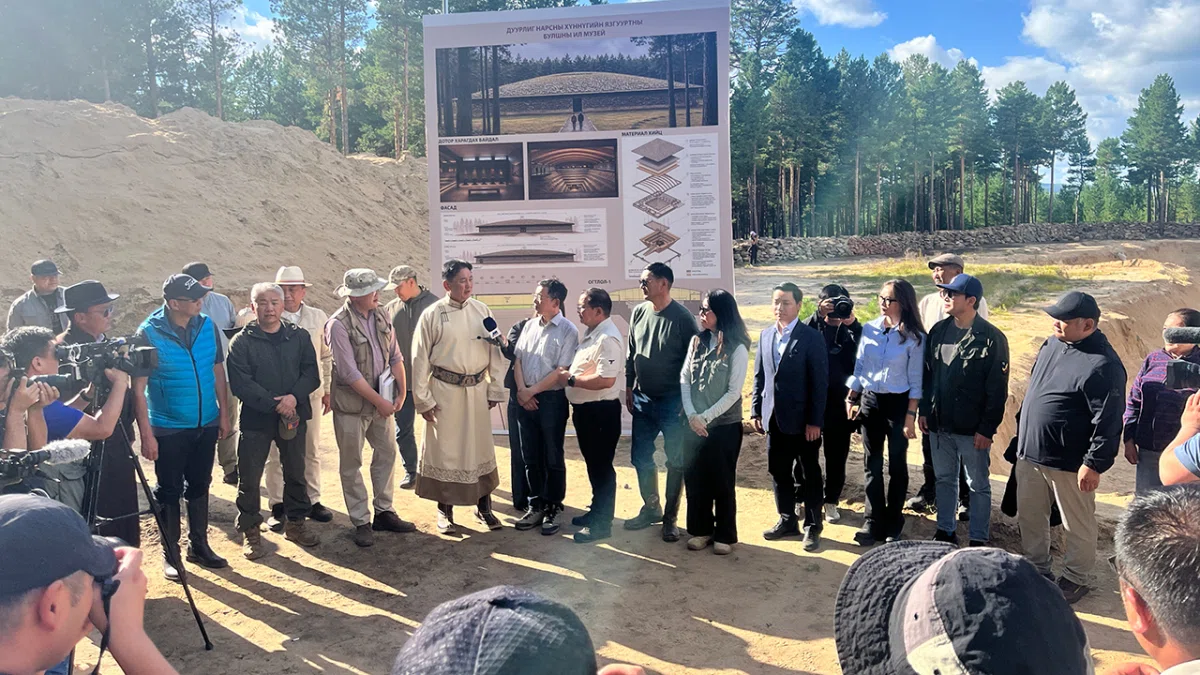
The National Museum of Korea has completed the excavation investigation of Tomb No. 160 at the Duurlig Nars site, which is the largest Xiongnu tomb identified in Mongolia. The investigation was conducted over four years starting in 2023 in collaboration with the National Museum of Mongolia and the Institute of Archaeology of the Mongolian Academy of Sciences.
To confirm the structure of a top-tier Xiongnu elite tomb, the research team removed nine layers of piled stones down to a depth of 14.5 meters underground. While the tomb has a massive external appearance, the center of the tomb was small and shallow. The research team stated this is a rare characteristic among large Xiongnu tombs and serves as new material illustrating changes during a period when Xiongnu influence was declining.
A total of 413 artifacts were unearthed from the center of the tomb. These include a glassware piece presumed to be Roman glass, jade reflecting Han Dynasty burial culture, and silver horse ornaments identical to those found in tombs in Nangnang. The research team noted this is the first time high-level artifacts of this scale have been identified in eastern Mongolia.
The Xiongnu was a nomadic empire centered on the Mongolian steppes that dominated eastern Eurasia around the time of the birth of Christ and maintained close relations with ancient Korean societies such as Gojoseon and Nangnang. The National Museum of Korea has been investigating the Mongolian steppes since 1997 to uncover the formation process of ancient Korean culture.
These achievements contributed to the inscription of Xiongnu tomb sites, including Duurlig Nars, as UNESCO World Heritage sites last July. The investigation shows how the Xiongnu engaged in extensive exchanges spanning from Rome to the Korean Peninsula 2,000 years ago.
The findings are being unveiled for the first time at the 50th National Conference of the Korean Archaeological Society, held on November 6 and November 7. An excavation report is planned to be published following comprehensive research.
Key facts
- Tomb No. 160 at the Duurlig Nars site is the largest Xiongnu tomb identified in Mongolia.
- The excavation team unearthed 413 artifacts, including Roman glass and silver horse ornaments.
- The investigation was conducted over four years starting in 2023.
Three perspectives
Neutral
The National Museum of Korea completed a four-year excavation of the Duurlig Nars site in collaboration with Mongolian institutions.
Positive
The discovery of 413 high-level artifacts provides new material regarding Xiongnu exchanges spanning from Rome to the Korean Peninsula.
Negative
The tomb's center was found to be small and shallow, which is a rare characteristic compared to its massive external appearance.
Your week in news, every Wednesday
The biggest stories of the week for your edition, in your inbox every Wednesday morning, your time. Free, and you can unsubscribe at any time.