

Somalia faces security vacuum as international support and troops diminish
Funding cuts to UNSOS and the departure of international forces leave the Somali National Army to address al-Shabaab threats alone.
 Politics Desk 2 min read
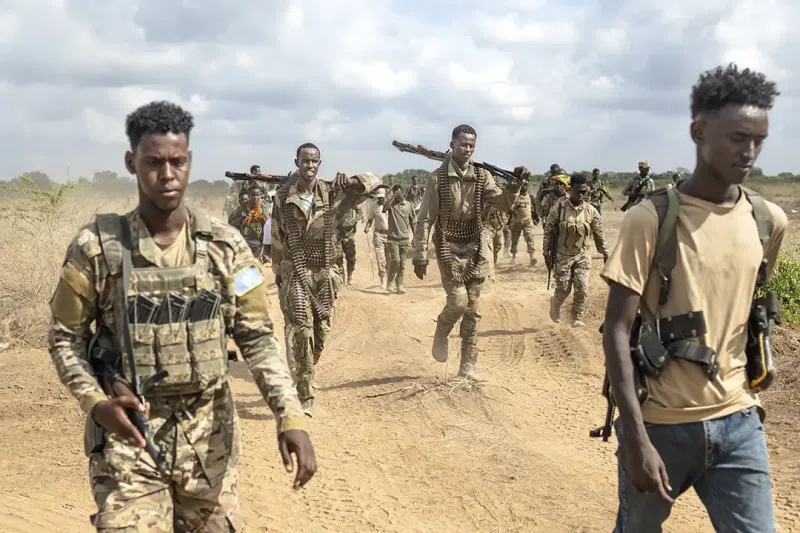
Somalia faces a convergence of crises, including the departure of international forces, persistent terror threats from al-Shabaab, political division and regional tension. Ethiopian forces serving under the African Union Support and Stabilization Mission in Somalia (AUSSOM) handed over a military base to the Somali National Army in the southern town of Burhakaba on August 8. Ethiopian troops had maintained a presence at that base since 2014.
The United Nations Support Office in Somalia (UNSOS) faces severe funding cuts, including at least $500 million in international support that will be cut off by December 31, 2026. UNSOS supports approximately 12,000 AUSSOM personnel and as many as 20,900 Somali security personnel by funding food, water, fuel, transportation, medical evacuation, communications, engineering, maintenance and other critical battlefield services.
Mohamed Daud Ismail, a senior research assistant at the Armed Conflict Location and Event Data (ACLED) project, believes this shortfall will leave the 12,000-strong AUSSOM force operationally unsustainable. Ismail wrote that without immediate alternative international funding, AUSSOM faces imminent operational collapse heading into 2027. He predicted al-Shabaab will try to exploit security gaps with a major offensive throughout the final months of 2026 and into 2027, which could allow the group to reclaim territorial footholds and threaten major urban hubs including Mogadishu and Kismayo.
The country also lost assistance from the United Nations Transitional Assistance Mission in Somalia (UNTMIS) at the end of October. Somalia’s minister of justice and constitutional affairs, Hassan Moallim Mohamud, thanked UNTMIS delegates for supporting justice sector institutions, particularly in capacity-building, legal and policy development, and corrections reform. The Ministry of Justice and Constitutional Affairs will now handle UNTMIS-related work on its own.
These changes coincide with armed resistance from state governments upset over Mogadishu’s influence over state elections and some states rejecting constitutional changes they say leave power with the federal government. Guled wrote that Somalia faces the gradual erosion of the infrastructure that has made the country’s security system viable at the same time the political order is becoming less cohesive.
Key facts
- UNSOS faces at least $500 million in international support cuts by December 31, 2026.
- Ethiopian forces handed over a military base in Burhakaba to the Somali National Army on August 8.
- Al-Shabaab may exploit security gaps with a major offensive through late 2026 and into 2027.
Three perspectives
Neutral
Somalia is managing the handover of military bases and the conclusion of UN mission assistance amid shifting international funding.
Positive
Hassan Moallim Mohamud thanked UNTMIS delegates for supporting justice sector institutions through capacity-building and reform.
Negative
The Somali National Army remains overstretched and structurally unequipped to manage complex country-wide logistics independently.
Your week in news, every Wednesday
The biggest stories of the week for your edition, in your inbox every Wednesday morning, your time. Free, and you can unsubscribe at any time.