

Study suggests Van Gogh's Starry Night was based on real July 1889 sky
Researchers say celestial bodies in the painting match the sky seen from an asylum in Saint-Rémy-de-Provence on about 22 July 1889.
 Space Desk 2 min read
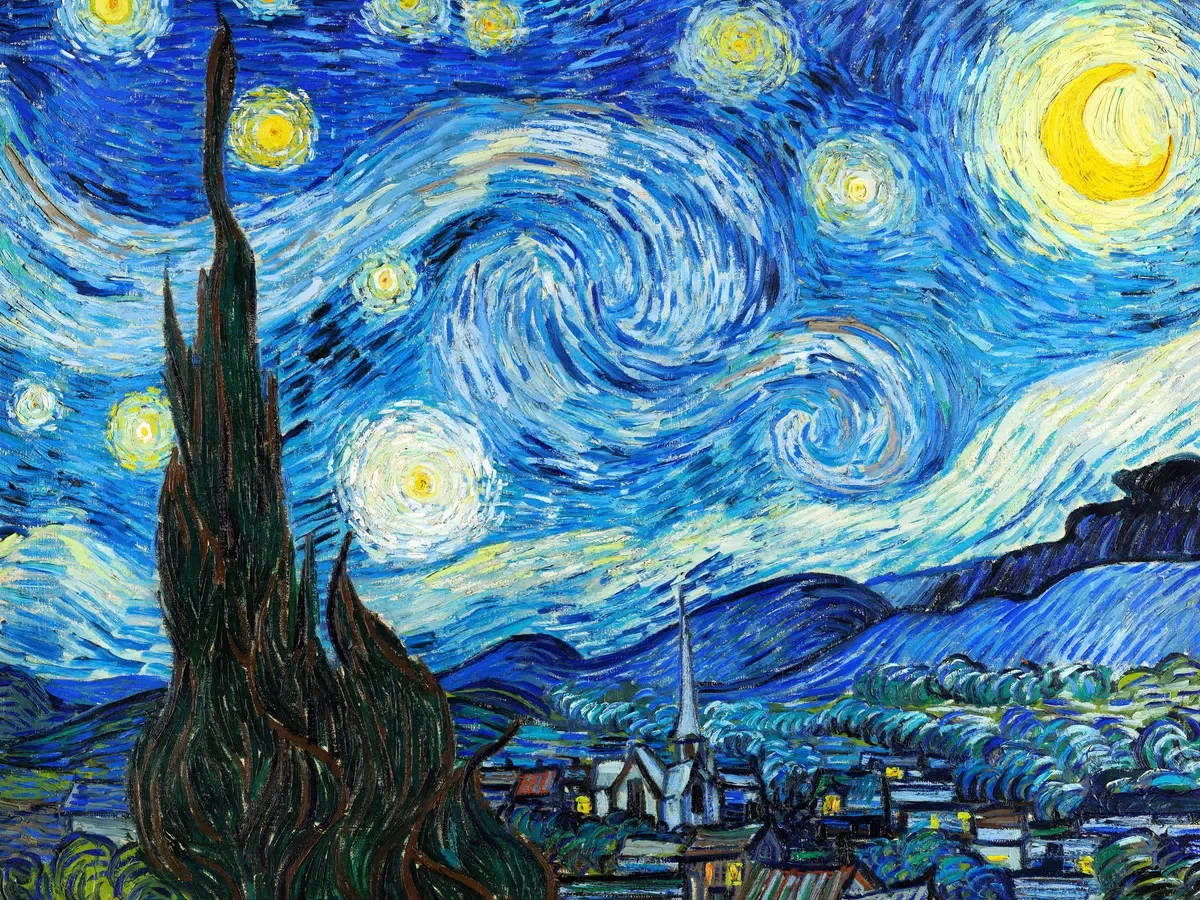
A new study suggests Vincent van Gogh's famous painting, The Starry Night, was based on a real dawn sky in July 1889 rather than just the artist's imagination. Researchers say the celestial bodies depicted in the 1889 work match the sky the Dutch artist may have seen on about 22 July 1889, which is a month later than the date usually given for the work.
The team used astronomy software to recreate the dawn sky for every day in June and July 1889. In the painting, the moon sits above Venus, so they looked for dawns where this occurred and both fitted inside a narrow frame. Only three dates qualified, and 22 July was the closest match, with a thin crescent moon, Venus, and a star cluster called the Hyades arranged as in the painting.
Elijah Jeong-hyun Kim, an astronomer at Kyung Hee University in Yongin, South Korea, and the study's first author, said the team used shape geometry and statistics to measure the resemblance between the star patterns and the real sky. Kim noted that the results were not conclusive, as Van Gogh may have combined the skies of several days.
The Van Gogh Museum in Amsterdam, which was not involved in the research, said its experts had established that Van Gogh painted The Starry Night in June 1889. The museum said the painting was made on a roll of canvas received in early June, and on 2 July Van Gogh sent his brother Theo a drawing based on it.
Donald Olson, professor emeritus of physics and astronomy at Texas State University, was also not convinced by the study. He said the positions of Venus and the Hyades cluster in the painting do not match their calculated position. Olson added that the assumed narrow field of view is inconsistent with the wider field of view required to encompass the round hills and cliffs in the painting.
Key facts
- Researchers suggest the painting matches the sky seen on about 22 July 1889.
- The study was published in the journal Scientific Reports.
- The Van Gogh Museum maintains the work was painted in June 1889.
Three perspectives
Neutral
Researchers propose a July 1889 date for the painting based on celestial patterns, while the Van Gogh Museum and other experts maintain the traditional June 1889 date.
Positive
The study uses astronomy software and statistical measurements to provide a scientific approach to dating the famous work.
Negative
Donald Olson argued that the study's assumed narrow field of view is inconsistent with the wider view required to show the painting's hills and cliffs.
Your week in news, every Wednesday
The biggest stories of the week for your edition, in your inbox every Wednesday morning, your time. Free, and you can unsubscribe at any time.