

Horn of Africa leaders prioritize regime survival over stability
States in the region remain locked in mutual suspicion as leaders focus on personal power rather than border control or basic services.
 Politics Desk 2 min read
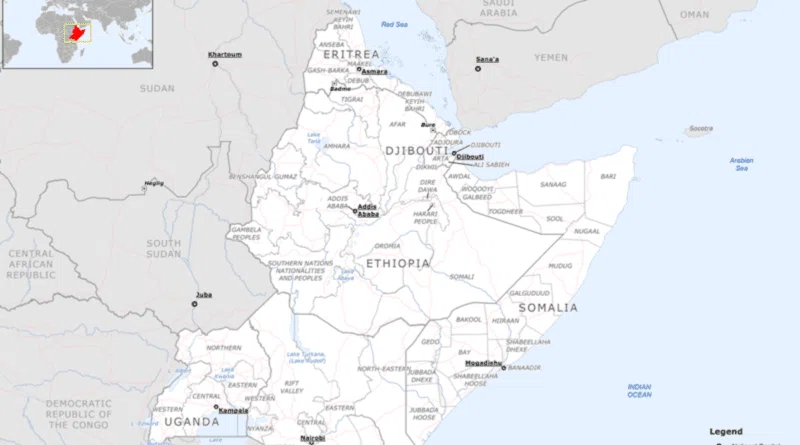
Leaders in the Horn of Africa prioritize personal regime survival over effective control of borders or the delivery of basic services. This focus on regime security creates a paradox where a capital city might boast an imposing presidential palace, but its occupant exerts less control over the state’s sovereign borders than the local weather patterns.
The region operates like a volatile, codependent apartment complex where tenants have lived together for millennia, lost the keys to their front doors, and respond to problems by flooding their neighbors. In this dysfunctional sub-region, the art of leadership has historically been misconstrued as the art of personal survival. Leaders grip power with the white-knuckled desperation of a man clinging to a moving train, aware that letting go means immediate disaster.
Ethiopia is a landlocked giant searching for sea access, while Eritrea has transformed isolationism into regional stoicism through absolute secrecy. Somalia possesses a rich shared cultural identity but treats the centralized state apparatus as an optional lifestyle choice. Djibouti sits on the coast as the pragmatic landlord of the Red Sea.
When the state fails to provide security, justice, or a basic social contract, people turn to the clan, the ethnic group, or the local strongman. Power is often consolidated by crushing rivals instead of persuading voters, making each transition of power feel less like a democratic transfer and more like a hostile corporate takeover.
Lasting stability requires independent institutions, respect for opposition, and treating security as a shared domestic public good rather than a tool against rivals. Stability will only become possible when a fisherman in Massawa, a port worker in Tadjoura, a merchant in Bosaso, and a citizen in Jigjiga feel their local rights are protected by laws instead of the whim of whoever sits in the capital’s palace.
Key facts
- Horn of Africa leaders prioritize personal regime survival over effective border control or basic services.
- Stability requires independent institutions, respect for opposition, and treating security as a shared public good.
- People turn to clans or ethnic groups when the state fails to provide security, justice, or a social contract.
Three perspectives
Neutral
The Horn of Africa consists of structurally inseparable states where the concept of national citizenship remains an elusive promise.
Positive
True stability and meaningful development may become possible when leaders build functional governance foundations like independent courts and predictable economic rules.
Negative
The relentless focus on regime security and the use of security as a weapon against neighbors or domestic opponents prevents regional peace.
Your week in news, every Wednesday
The biggest stories of the week for your edition, in your inbox every Wednesday morning, your time. Free, and you can unsubscribe at any time.