

Challenger Deep selected as geological heritage site
The International Union of Geological Sciences included the deepest part of the Mariana Trench in its latest 100 geological heritage sites.
 Science Desk 2 min read
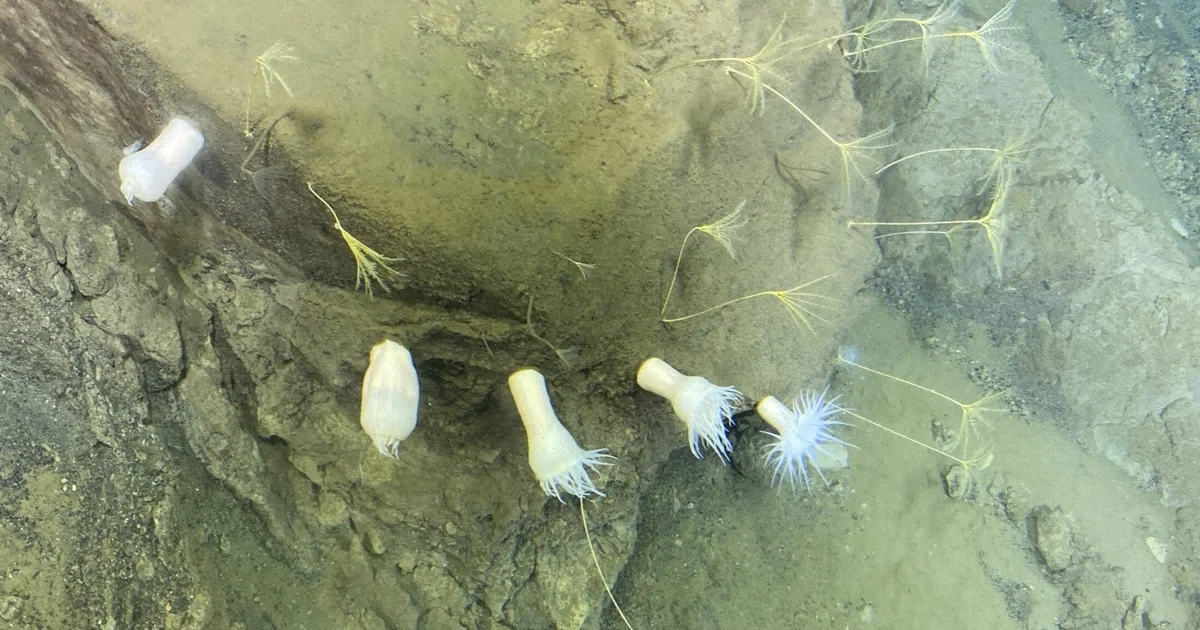
The International Union of Geological Sciences (IUGS) announced its latest 100 Geological Heritage Sites on Nov. 6, including six deep-sea locations. This marks the first time marine sites were selected for the designation.
The Challenger Deep subduction trench floor in the Federated States of Micronesia is among the new sites. It is the deepest part of the Mariana Trench, lying at a depth of about 11,000 meters, which is the deepest known point on Earth.
Other marine sites include the TTT-type triple junction south of the Boso Peninsula, the Rodrigues triple junction in the Indian Ocean, the Daiichi-Kashima seamount off Choshi, the Godzilla Megamullion in the Philippine Sea, and hydrothermal vents off the Galapagos Islands in Ecuador. These sites lie on the deep-sea floor at depths ranging from several thousand meters to more than 10,000 meters.
The recognition of these sites is seen as a move intended to act as a check on increasingly active exploration and development of seabed mineral resources. Hiroshi Kitazato, a visiting professor at Tokyo University of Marine Science and Technology, said the sites offer an opportunity to consider the importance of passing Earth's fragile environment to future generations.
The IUGS designates these sites every two years in cooperation with organizations including UNESCO. This year marked the third round of designations. Experts choose sites that are symbolic in understanding Earth and its history.
Key facts
- The Challenger Deep subduction trench floor in the Federated States of Micronesia was selected as a geological heritage site.
- The Challenger Deep is the deepest known point on Earth at a depth of about 11,000 meters.
- The IUGS announced 100 new geological heritage sites on Nov. 6.
Three perspectives
Neutral
The International Union of Geological Sciences selected six deep-sea locations, including the Challenger Deep, for its latest 100 Geological Heritage Sites.
Positive
The recognition of these sites is intended to act as a check on the increasingly active exploration and development of seabed mineral resources.
Negative
Exploration and development targeting valuable seabed mineral resources have intensified in recent years.
Your week in news, every Wednesday
The biggest stories of the week for your edition, in your inbox every Wednesday morning, your time. Free, and you can unsubscribe at any time.