

 United States
Industrial farming practices linked to major US food supply chains
Dairy and poultry factory farms in California connect to widely used products including pizza cheese and retail chicken.
 Lifestyle Desk 2 min read
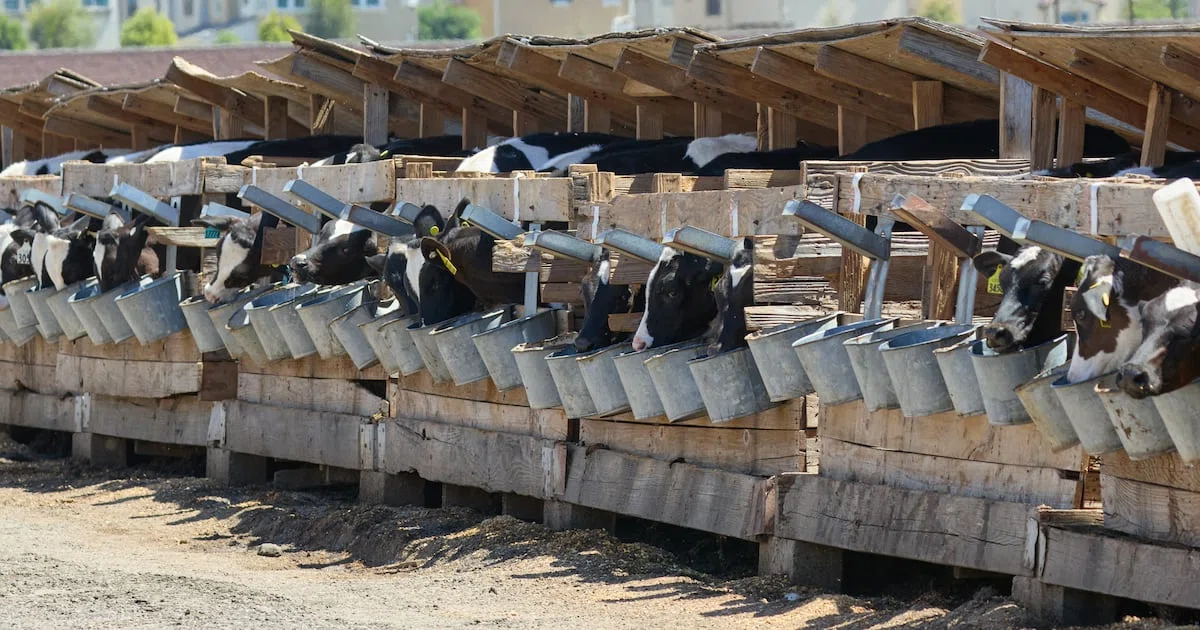
Dairy and poultry factory farms in California are connected to many food supply chains. For example, Leprino produces 85% of the cheese used for pizzas in the US. This company sources milk from Dairy Farmers of America, whose Central Valley dairies send newborn calves to Grimmius Cattle. Grimmius Cattle operates large calf-raising operations in California, housing up to 100,000 calves per factory farm.
In Chino, calves are often confined in wooden hutches of about 13 square feet for roughly eight weeks. These areas provide barely enough room to turn around. While some lawyers argue these hutches violate California Penal Code 597t, which requires an adequate exercise area for confined animals, district attorneys have refused to prosecute, calling the hutches the industry standard.
Retail chicken products are also linked to large-scale operations. Plant codes P-6137A and P-7632 on certain raw chicken products indicate they are sourced from Foster Farms in Fresno, California. This corporation has at least 46 chicken factory farms in California, with an average of over 800,000 chickens per farm.
Investigations of Foster Farms facilities have revealed conditions such as workers driving over living chickens with forklifts. The USDA has cited Foster Farms on 18 separate occasions for failing to abide by animal welfare laws, including instances of animals being scalded alive. Foster Farms stated that animal welfare is a top priority and that they adhere to the National Chicken Council’s Animal Welfare Guidelines.
Factory farms are a leading source of pollution in US streams and rivers, as billions of pounds of manure leak into waterways every year. They also emit large quantities of greenhouse gases and are linked to deforestation and biodiversity loss. Approximately 99.7% of farmed animals in the US are raised in factory farms.
Key facts
- Leprino produces 85% of the cheese used for pizzas in the US.
- Foster Farms has at least 46 chicken factory farms in California.
- The USDA has cited Foster Farms 18 times for failing to follow animal welfare laws.
- 99.7% of farmed animals in the US are raised in factory farms.
Three perspectives
Neutral
Many US food products, from pizza cheese to retail chicken, are sourced from large-scale industrial factory farms.
Positive
Foster Farms stated that animal welfare is a top priority and that they use independent third-party audits to assess their practices.
Negative
Factory farms are a leading source of pollution in US waterways and have been cited for animal welfare violations.
Your week in news, every Wednesday
The biggest stories of the week for your edition, in your inbox every Wednesday morning, your time. Free, and you can unsubscribe at any time.