

GPS tracking reveals elephant movement into Bhutan's Jomotsangkha Wildlife Sanctuary
A five-year study in Assam shows elephant herds move through tea estates and into Bhutan during the dry season, highlighting the need for cross-border cooperation.
 Science Desk 2 min read
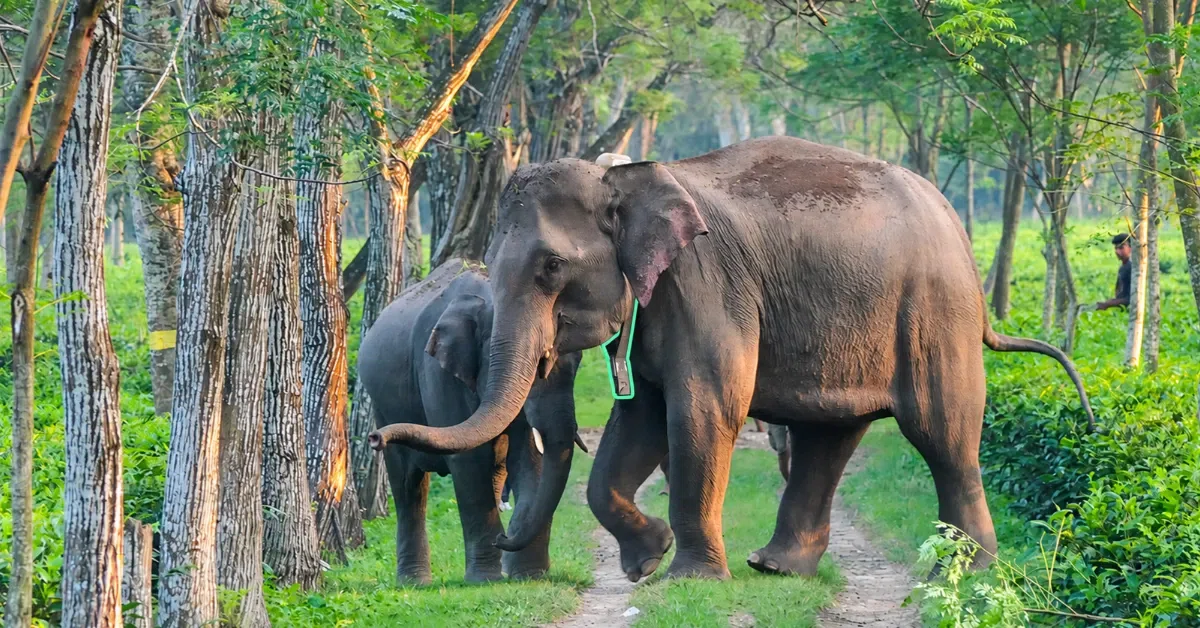
A five-year study by the Assam Forest Department and WWF-India has mapped seasonal movement routes of elephants, including a cross-border corridor into Bhutan. Researchers tracked five elephants across 38,000 GPS locations between April 2021 and June 2026.
The study found that during the dry season, elephant herds in Udalguri travel into Bhutan’s adjoining Jomotsangkha Wildlife Sanctuary. This discovery shows why keeping elephant routes safe requires cooperation between India and Bhutan, as the same herds move between both countries.
The tracked elephants included four females and one solitary, tuskless male named Bishu. In Sonitpur, female elephants Tara and Phul lead herds that stay near Sonai Rupai Wildlife Sanctuary from January to September, but move toward tea estates and settlements near the Brahmaputra between October and December.
Other females, Mynow and Budhuni, travelled through Bornadi Wildlife Sanctuary and moved into crop fields around tea estates like Barangajuli, Dimakuchi and Paneri between October and January. These journeys often overlap with the paddy season when ripening crops attract elephants toward farms.
Elephant encounters caused 1,468 human deaths in Assam between 2000 and 2023. During that same period, 626 elephants died from human-related causes, including poisoning, electrocution and railway collisions.
The findings suggest forest officials could use the maps to identify dangerous stretches and plan safety measures, such as better lighting near settlements and carefully planned fencing.
Key facts
- Elephant herds in Udalguri travel into Bhutan’s Jomotsangkha Wildlife Sanctuary during the dry season.
- Between 2000 and 2023, elephant encounters claimed 1,468 human lives in Assam.
- A five-year study tracked five elephants using 38,000 GPS locations.
Three perspectives
Neutral
The study tracked five elephants across 38,000 GPS locations to map seasonal movement routes and cross-border corridors.
Positive
The GPS maps can help forest officials identify dangerous stretches and plan ways to make elephant journeys safer.
Negative
Between 2000 and 2023, 1,468 human lives were lost in elephant encounters in Assam.
Your week in news, every Wednesday
The biggest stories of the week for your edition, in your inbox every Wednesday morning, your time. Free, and you can unsubscribe at any time.