

Beira Corridor forum calls for regional cooperation to boost fuel security
The Beira Corridor Forum 2026 in Livingstone highlighted infrastructure investment and cross-border collaboration to support economic growth.
 Business Desk 2 min read
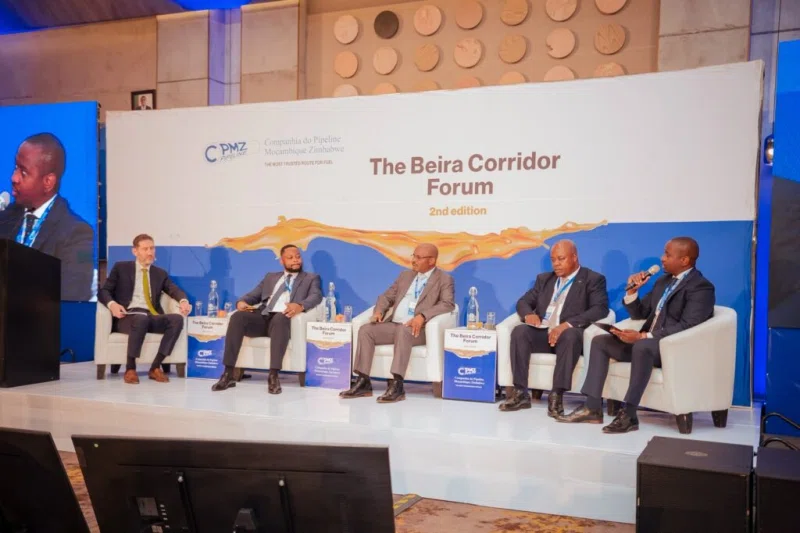
The Beira Corridor Forum 2026 concluded in Livingstone, Zambia, with a call for stronger regional cooperation, coordinated infrastructure investment, and strategic partnerships to strengthen fuel security and support economic growth. Held on 27 October at the Radisson Blu Mosi-Oa-Tunya Livingstone Resort, the forum brought together government representatives, policymakers, regulators, investors, financial institutions, infrastructure operators, and industry leaders. The meeting examined the Beira Corridor’s strategic role in supplying fuel to Zambia, Zimbabwe, Malawi, Botswana, and the Katanga region of the Democratic Republic of Congo (DRC).
Companhia do Pipeline Moçambique-Zimbabwe (CPMZ) is expanding the Beira–Feruka pipeline to increase annual transportation capacity from three million to five million cubic metres by December 2027. This investment includes two additional pumping stations to accommodate growing fuel demand across Southern Africa. Patrick Dias da Cunha, Board Member and Managing Director of CPMZ, said the company aims to position Harare as a fuel distribution hub serving neighbouring markets.
Professor Ephraim Kabunda Munshifwa, Permanent Secretary – Energy at Zambia’s Ministry of Energy, said a stronger Beira Corridor can widen Zambia's fuel supply options, improve reliability, and support the competitiveness of mining, agriculture, manufacturing, and transport sectors. He noted that increased pipeline capacity must be complemented by coordinated investment in storage, transport infrastructure, and efficient border procedures.
Daniel Evans, Vice-President at S&P Global Energy, projected that fuel demand within the Beira Supply Zone is expected to increase by approximately 35%, or an additional four million cubic metres, over the next decade. Chinguane Mabote, Secretary of State at Mozambique’s Ministry of Transport and Logistics, said the corridor's competitiveness depends on lower logistics costs, shorter waiting times, and reliable services. He called for pipeline expansion to be matched by improvements in port, storage, and distribution capacity.
Key facts
- The Beira–Feruka pipeline capacity is expected to increase from three million to five million cubic metres by December 2027.
- Fuel demand in the Beira Supply Zone is projected to grow by approximately 35% over the next decade.
- The Beira Corridor serves Zambia, Zimbabwe, Malawi, Botswana, and the Katanga region of the DRC.
Three perspectives
Neutral
The forum examined the Beira Corridor’s strategic role in supplying fuel to Zambia, Zimbabwe, Malawi, Botswana, and the Katanga region of the DRC.
Positive
CPMZ is expanding the Beira–Feruka pipeline to increase annual transportation capacity to five million cubic metres by December 2027.
Negative
Increased pipeline capacity must be complemented by coordinated investment in storage, transport infrastructure, and efficient border procedures to ensure benefits reach businesses and communities.
Your week in news, every Wednesday
The biggest stories of the week for your edition, in your inbox every Wednesday morning, your time. Free, and you can unsubscribe at any time.