

Late-night eating and sleep habits linked to metabolic disease risk
A study led by UTHealth Houston found that adults with obesity who eat and sleep late are more likely to show traits of metabolic syndrome.
 Health Desk 2 min read
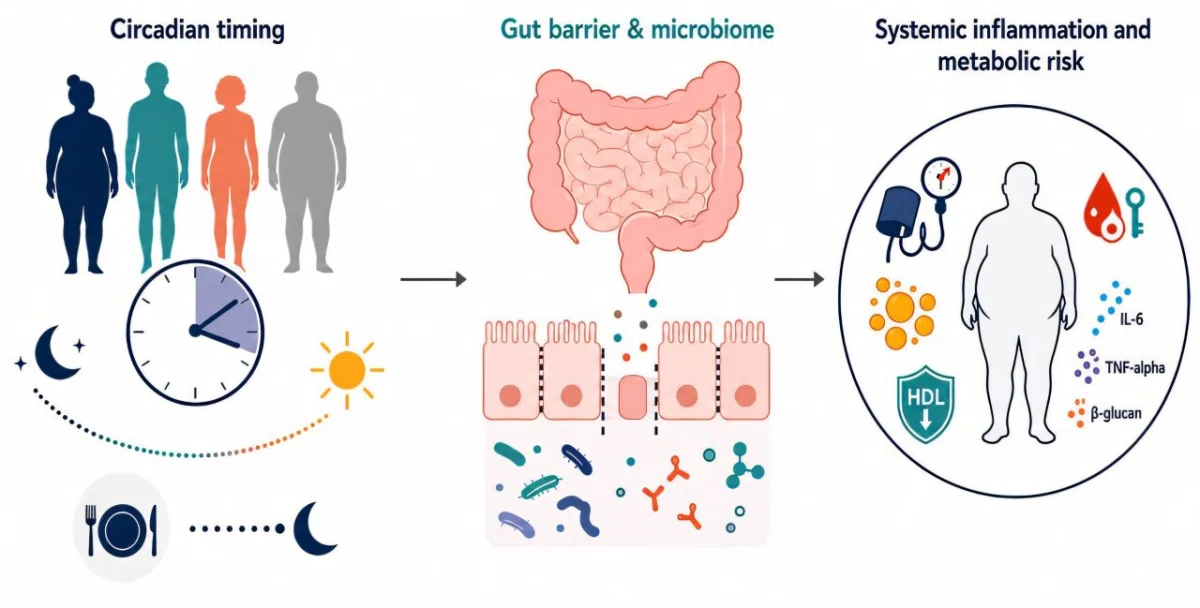
Adults with obesity who stay up late and eat late in the day are significantly more likely to exhibit traits associated with metabolic syndrome. This group faces a higher risk of metabolic syndrome, which includes conditions that increase the risk of stroke, heart disease and type 2 diabetes.
Researchers analyzed how circadian behaviors, including sleep and meal timing, relate to metabolic health. The study found that the greatest metabolic risk occurred in individuals who combined a late chronotype, or being a night owl, with late-night eating habits.
The findings suggest a mismatch between the body's internal clock and daily behaviors may contribute to disease risk through changes in the gut microbiome and the intestinal barrier. Individuals with higher metabolic risk showed signs of leaky gut, which allows substances normally kept inside the intestines to enter the bloodstream and trigger inflammation.
Faraz Bishehsari, a professor and director of the Gastroenterology Research Center at UTHealth Houston, said the study connects circadian behaviors with the gut microbiome, intestinal barrier function and systemic inflammation. He noted that while what people eat matters, when they eat may also be important.
The study suggests the microbiome may be a modifiable pathway connecting circadian behaviors and metabolic health. Participants who showed improvements in gut barrier function following a microbiome-targeted intervention showed an increase in beneficial short-chain fatty acid-producing bacteria.
Future research will help determine if therapies aimed at strengthening the gut microbiome or improving circadian alignment can reduce inflammation and lower metabolic disease risk.
Key facts
- Late-night eating and late sleep schedules are linked to metabolic syndrome risk in adults with obesity.
- A mismatch between internal clocks and daily behaviors may cause leaky gut and systemic inflammation.
- Improving the gut microbiome through targeted interventions may strengthen the intestinal barrier.
Three perspectives
Neutral
A study led by UTHealth Houston identified a link between late-night eating, sleep habits, gut health and metabolic disease.
Positive
Understanding these relationships could open new opportunities for preventing or managing metabolic diseases through lifestyle changes and interventions targeting the gut microbiome.
Negative
Late sleep schedules and late-night eating may contribute to changes in the gut microbiome, weakening the intestinal barrier and promoting inflammation.
Your week in news, every Wednesday
The biggest stories of the week for your edition, in your inbox every Wednesday morning, your time. Free, and you can unsubscribe at any time.