

Respiratory infections hit 300,000 people in Indonesia amid wildfires
More than 300,000 people in seven provinces suffered respiratory infections from August to October as wildfires consumed over 1.9 million hectares.
 Health Desk 2 min read
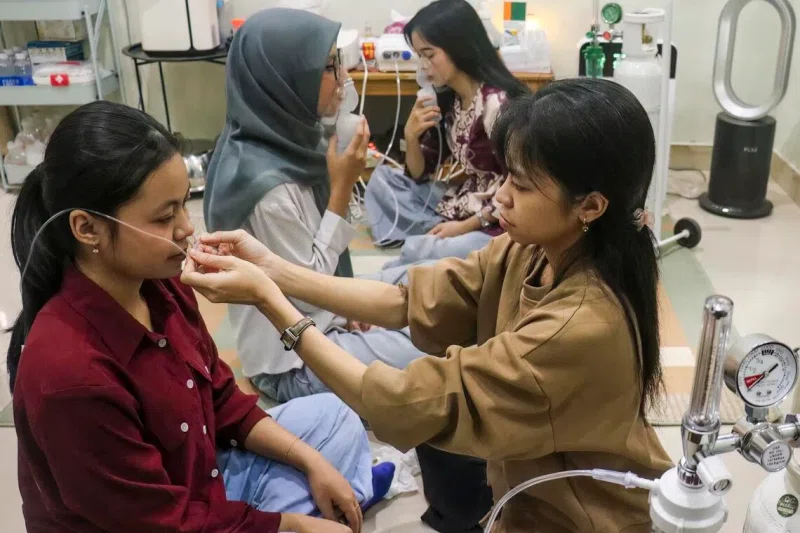
More than 300,000 people in seven Indonesian provinces were affected by respiratory tract infections between August and October, according to the Health Ministry. In Palangkaraya, more than 11,000 people were treated for such infections during the months-long wildfire crisis.
Wildfires have consumed more than 1.9 million hectares in the nine months leading to September, according to deforestation monitor Nusantara Atlas. The toxic smog from these fires contains formaldehyde, hydrogen cyanide, ammonia, and PM2.5 particles, which the World Health Organization has linked to increased illness and death.
Sudarsono, a 57-year-old construction worker and farmer, was evacuated from his home in Palangkaraya while inhaling from an oxygen tank. He fell sick after attempting to fight fires near the outskirts of the city in Central Kalimantan province.
Alexandra Surya Habsari was treated with a nebuliser and oxygen for breathing difficulties and a headache at an NGO-run shelter in Palangkaraya. She said her 20-minute daily commute to the office has become torture and described the air as poison.
The Health Ministry has established nearly 500 facilities across the country providing free oxygen and treatment for haze-related ailments. Nearly 300 of these facilities are in Central Kalimantan, and the local government has also deployed buses equipped with oxygen tanks around Palangkaraya.
Key facts
- Over 300,000 people in seven Indonesian provinces had respiratory infections from August to October.
- Wildfires consumed more than 1.9 million hectares in the nine months to September.
- More than 11,000 people were treated for respiratory infections in Palangkaraya.
Three perspectives
Neutral
Indonesia has struggled for months to contain wildfires that have caused widespread respiratory infections and toxic haze.
Positive
The government and NGOs have set up nearly 500 facilities nationwide to provide free oxygen and treatment for haze-related ailments.
Negative
The toxic smog contains harmful elements like formaldehyde and ammonia, and the fires have caused growing anger at home and abroad.
Your week in news, every Wednesday
The biggest stories of the week for your edition, in your inbox every Wednesday morning, your time. Free, and you can unsubscribe at any time.