

Scientists use invisible light to study magnetic whirlpools in superconductors
Researchers from Rutgers and Estonia have developed a way to distinguish particle groups within magnetic vortices to help improve superconducting materials.
 Science Desk 2 min read
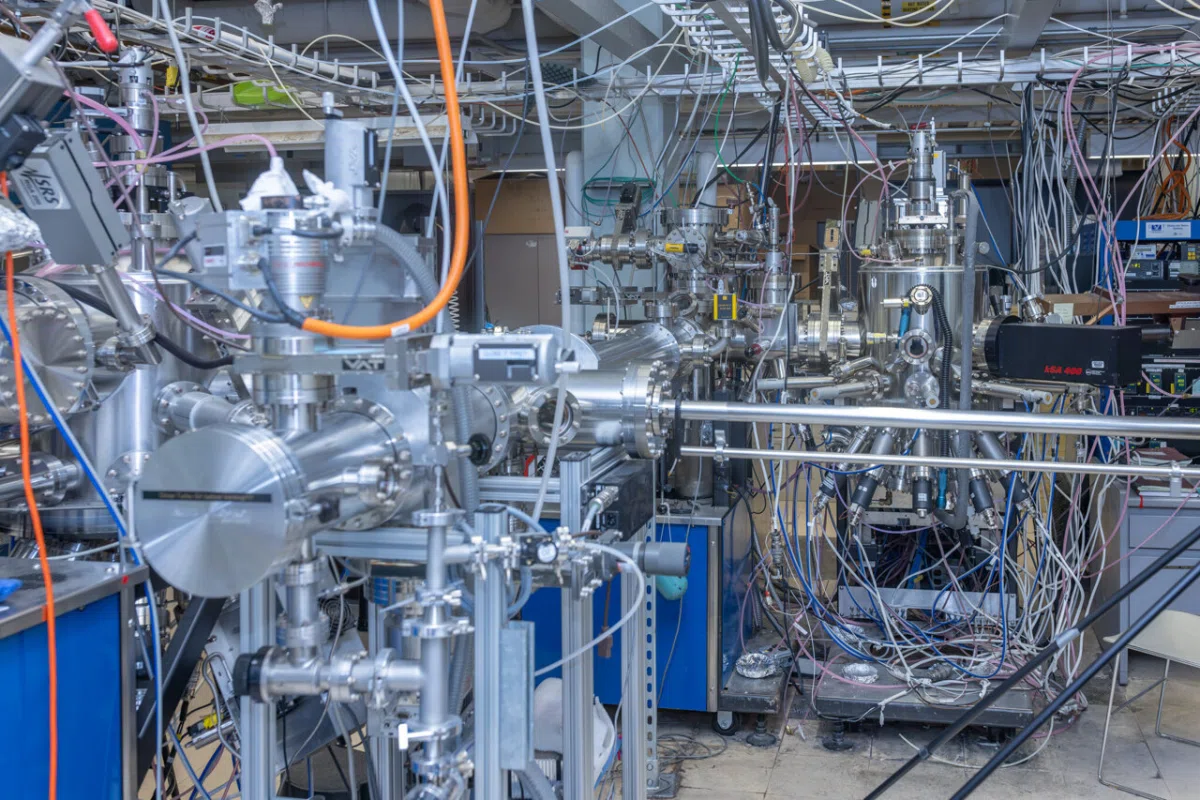
Scientists at Rutgers and in Estonia have used invisible light to look into tiny magnetic whirlpools, called vortices, inside a superconductor. This method reveals details that could help researchers develop better materials for carrying electricity.
The study, published in Physical Review Letters, distinguishes two groups of particles trapped within these vortices and measures properties that conventional techniques could not readily separate. Each vortex consists of circulating electrical current around a narrow core where superconductivity is weakened.
To improve superconductors, scientists need to understand what vortices contain and how they behave, said Girsh Blumberg, a professor in the Department of Physics and Astronomy at the Rutgers School of Arts and Sciences and a co-author of the study. When magnetic vortices move, they cause energy losses. Understanding their behavior could help scientists develop materials that perform more reliably in strong magnetic fields.
The team used iron-based superconductors with narrow vortex cores to keep energy levels far enough apart to distinguish. Researchers passed terahertz radiation, a form of invisible light, through 40-nanometer-thick films. One group of particles responded to a left-handed light pattern, while the other group responded to a right-handed pattern.
By looking for these transitions with light of different handedness, you can separate them, Blumberg said. The researchers estimated the size of the vortices and how strongly a magnetic field would disrupt superconductivity for each group of particles.
The approach could be used to investigate other superconductors with sufficiently narrow vortex cores, expanding the tools available to researchers developing new materials.
Key facts
- Scientists used terahertz radiation to distinguish two groups of particles trapped in magnetic vortices.
- The study was conducted using iron-based superconducting films prepared by a Rutgers team.
- The research was published in Physical Review Letters.
Three perspectives
Neutral
Researchers used terahertz radiation to measure how different groups of particles within magnetic vortices respond to light.
Positive
The new technique provides a way to examine internal differences in materials as composition changes, which could help develop better superconductors.
Negative
When magnetic vortices move inside superconductors, they cause energy losses.
Your week in news, every Wednesday
The biggest stories of the week for your edition, in your inbox every Wednesday morning, your time. Free, and you can unsubscribe at any time.