

Voynich Manuscript may have been misbound, study suggests
 Science Desk 2 min read
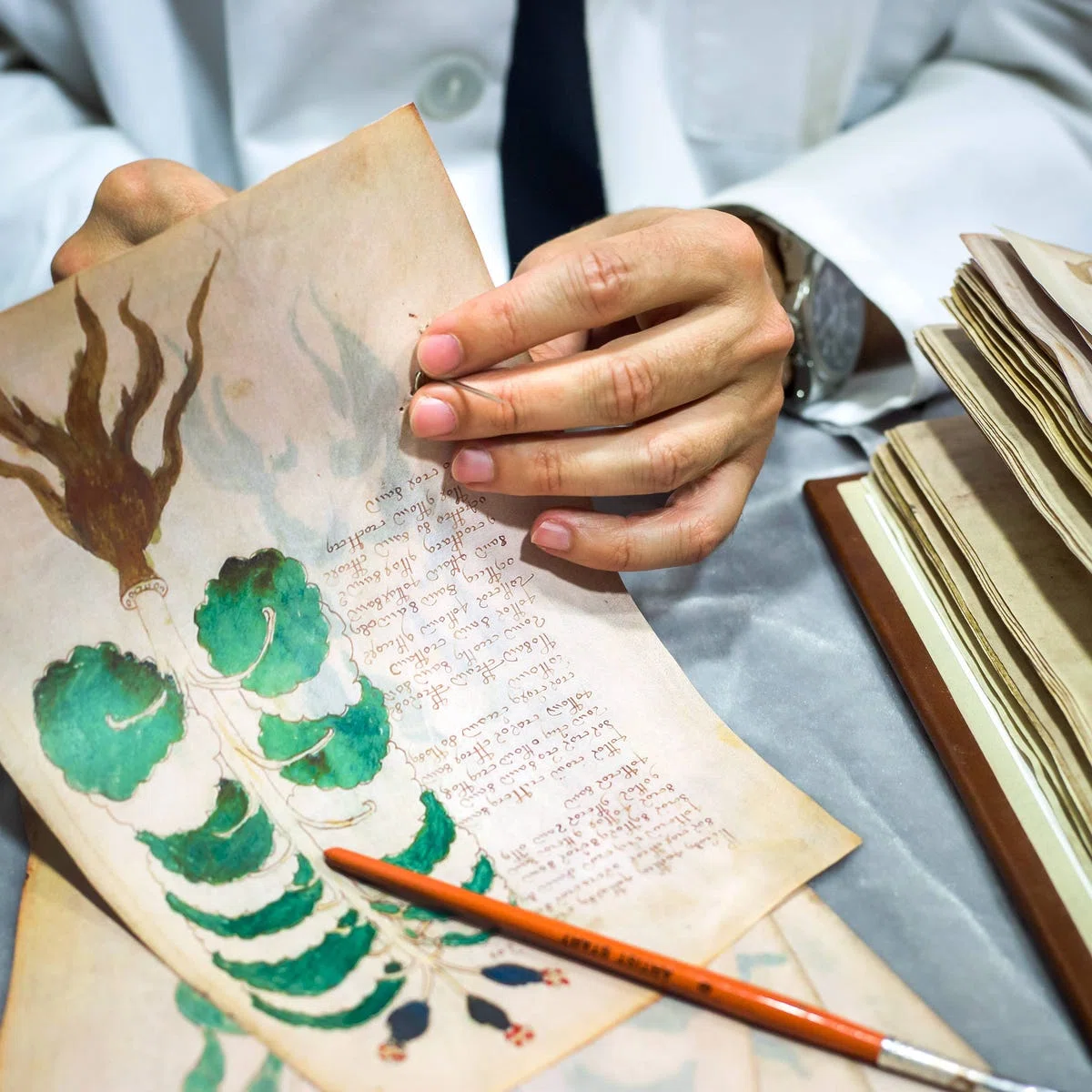
A new study suggests the Voynich Manuscript may have been assembled out of order, potentially explaining why experts have failed to decode its text for over 100 years.
Colin Layfield, an information scientist at the University of Malta, and Lisa Fagin Davis, the executive director of the Medieval Academy of America, believe the book might have been misbound.
The manuscript is currently bound in quires, which are folded pages sewn together to form booklets, but Layfield said this current binding has different scribes in the same quire, which is not how books are written.
Using Latent Semantic Analysis, the researchers found that some pages were semantically similar but were interrupted by non-similar pages.
When the pages were reordered as loose singulions, similar semantic sections appeared and illustrations seemed more in alignment.
Carbon dated by Yale University to the early-to-mid 15th century, the codex contains text that is either a completely unknown language or a substitution cipher.
Davis noted that while the misbinding led experts down an indecipherable path, the fact that the manuscript survived at all is an irony, as many medieval manuscripts did not survive because they were not bound.
Key facts
- The Voynich Manuscript was carbon dated to the early-to-mid 15th century.
- Colin Layfield of the University of Malta and Lisa Fagin Davis believe the manuscript was misbound.
- Reordering the pages as loose singulions caused similar semantic sections and illustrations to align.
Three perspectives
Neutral
The Voynich Manuscript is a 15th-century codex containing an unknown language or substitution cipher that has frustrated scholars for over a century.
Positive
Reordering the pages as loose singulions allows similar semantic sections and illustrations to appear more in alignment.
Negative
The manuscript's text has remained an inscrutable puzzle that has frustrated linguists, cryptologists, and bibliographers for centuries.
Your week in news, every Wednesday
The biggest stories of the week for your edition, in your inbox every Wednesday morning, your time. Free, and you can unsubscribe at any time.