

 Mongolia
Jambyn Batmönkh
Jambyn Batmönkh was a Mongolian communist political leader and economics professor who led the Mongolian People's Republic from 1984 until the 1990 transition to democracy.
 Biography DeskOctober 24, 2026
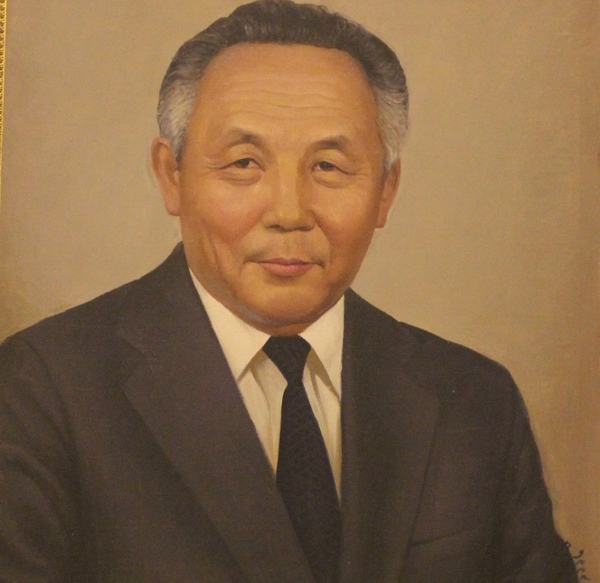
Jambyn Batmönkh was born on 10 March 1926 in Khyargas sum of Uvs aimag. He used the name Jamba as a surname during primary school. He attended a two year preparatory program at the National University of Mongolia after seventh grade.
Batmönkh studied at the National University's School of Economics from 1947 to 1951. He met his wife, Daariimaa, while they were students at the School of Economics and the Agricultural Technical College. They married one year after meeting at age 16.
He joined the Mongolian People's Revolutionary Party in 1948 and began working as a professor at the Pedagogical University in 1951. In 1973, he became the Minister of Science. He was promoted to Vice Chairman of the Council of Ministers of the MPRP in 1974.
In June 1974, Batmönkh became the Chairman of the Council of Ministers. During his leadership, he helped build the Ulaanbaatar and Erdenet power stations. He also oversaw the connection of the Central high-power electric grid with the Soviet Union's Siberian Grid.
Batmönkh helped remove Yumjaagiin Tsedenbal from power in 1984 and became the head of state. He strengthened the alliance with the Soviet Union and called for improved relations with China. His reign included the start of operations at the Erdenet and Baganuur coal mines.
During the 1990 democratic movement, Batmönkh refused to sign a decree to crack down on demonstrators. He maintained a policy against using force and stated that Mongolians should not make each other's noses bleed. The MPRP officially relinquished power on 9 March 1990.
After 1990, Batmönkh and his wife sold bread, deel, and gutals. He lived in Dambadarjaa from 1992 until his death while planting fruits and vegetables. He died in 1997 and was buried at the Altan-Ölgii National Cemetery.
Key facts
- Jambyn Batmönkh led the Mongolian People's Republic from 1984 to 1990.
- He refused to use force against demonstrators during the 1990 Mongolian Revolution.
- His leadership contributed to the construction of the Erdenet and Baganuur mines.
- He died in 1997 and is buried at the Altan-Ölgii National Cemetery.