

 India
Ashoke Sen
Ashoke Sen is an Indian theoretical physicist known for his major contributions to string theory.
 Biography DeskOctober 26, 2026
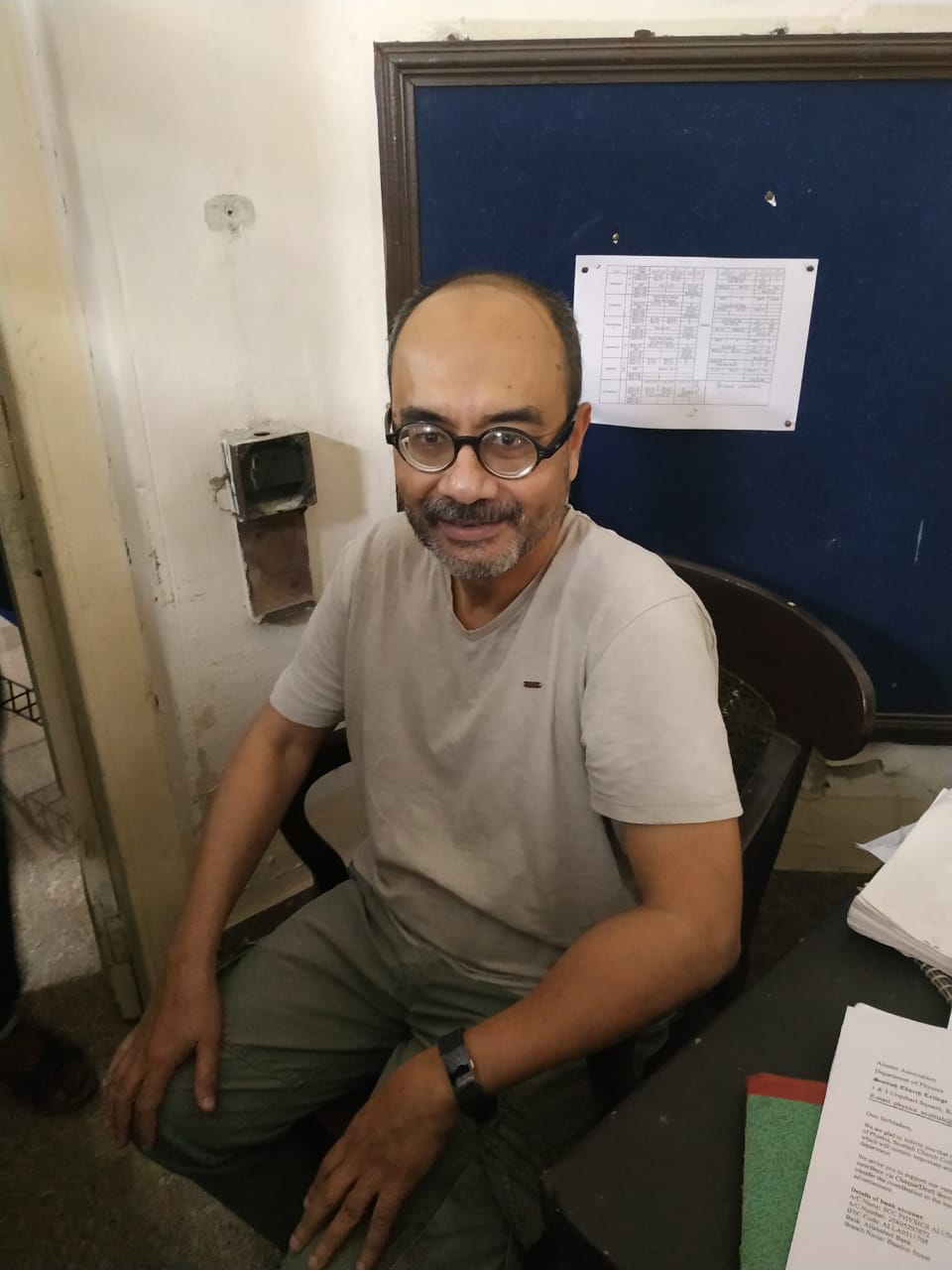
Ashoke Sen is an Indian theoretical physicist and the ICTS-Infosys Madhava Chair Professor at the International Centre for Theoretical Sciences (ICTS), Bangalore. He is known for his work in string theory and was a recipient of the Breakthrough Prize in Fundamental Physics. This prize recognized his work in showing that all string theories are different limits of the same underlying theory.
Born on 15 July 1956 in Kolkata, he is the elder son of Gouri Sen and Anil Kumar Sen. His father, Anil Kumar Sen, was a former professor of physics at the Scottish Church College, Kolkata. He completed his schooling at Sailendra Sircar Vidyalaya in Kolkata.
He earned a Bachelor of Science degree from Presidency College under the University of Calcutta in 1975. He obtained his master's degree from the Indian Institute of Technology Kanpur one year later. During his time at Presidency, he was inspired by the teaching and work of Amal Kumar Raychaudhuri.
Ashoke Sen performed his doctoral work in physics at Stony Brook University. He made original contributions to string theory, including a landmark paper on S-duality, which is strong-weak coupling duality. He also pioneered the study of unstable D-branes and proposed the Sen conjecture regarding open string tachyon condensation.
His research includes the description of rolling tachyons in string cosmology and work on string field theory. He developed the entropy function formalism for extremal black holes and its applications to attractors. His work also involves the attractor mechanism, precision counting of black hole microstates, and string perturbation theory.
In 1998, he became a Fellow of the Royal Society after being nominated by Stephen Hawking. He has received several honors, including the ICTP Prize in 1989 and the S.S. Bhatnagar award in 1994. He was awarded the Padma Shri in 2001 and the Padma Bhushan in 2013.
He was a distinguished professor at the Harish-Chandra Research Institute, Prayagraj. He is an honorary fellow in the National Institute of Science Education and Research (NISER) India. In 2020, he joined the Indian Institute of Science Education and Research, Bhopal as a visiting/adjunct professor.
He currently serves as a distinguished professor at the International Centre for Theoretical Sciences, Bangalore. He is also a Morningstar Visiting Professor at the Massachusetts Institute of Technology (MIT) and a distinguished professor at the Korea Institute for Advanced Study. His research interests include S-duality, black hole entropy, and superstring perturbation theory.
Key facts
- Ashoke Sen is an ICTS-Infosys Madhava Chair Professor at the International Centre for Theoretical Sciences.
- He received the Breakthrough Prize in Fundamental Physics for his work on string theories.
- He was awarded the Padma Shri in 2001 and the Padma Bhushan in 2013.
- He is a Fellow of the Royal Society, having been nominated by Stephen Hawking.