

 Nepal
Girija Prasad Koirala
Girija Prasad Koirala was a Nepalese politician who served as the Prime Minister of Nepal on four occasions and led the Nepali Congress.
 Biography DeskOctober 24, 2026
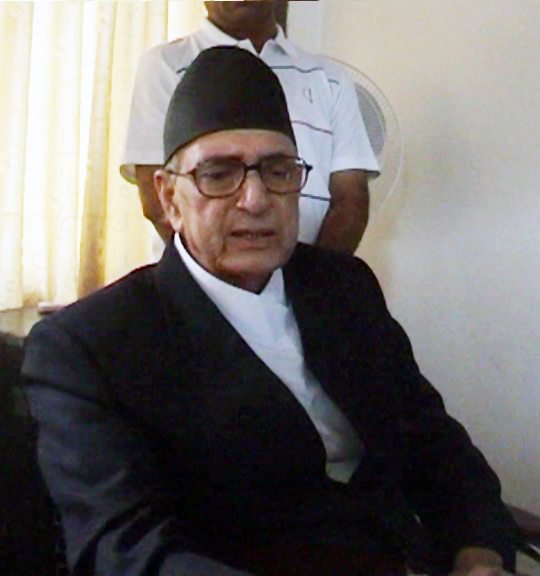
Nepal Ratna Girija Prasad Koirala, known as Girija Babu, was a prominent Nepalese politician. He headed the Nepali Congress and served as Prime Minister of Nepal four times. He also acted as the Head of State during the transition from a monarchy to a republic.
He was born on 4 July 1924 in Saharsa, Bihar and Orissa Province, British India. His father, Krishna Prasad Koirala, was a Nepali living in exile. In 1952, Koirala married Sushma Koirala and they had a daughter, Sujata Koirala.
Koirala began his political involvement in 1947 by leading the Biratnagar jute mill strike. He founded the Nepal Mazdoor Congress in 1948. After being imprisoned following the 1960 royal coup, he lived in exile in India until 1979.
In 1991, he became the first democratically elected prime minister in Nepal since 1959. During his first term, his government liberalized the education, media, and health sectors. He also founded Purbachal University and the B.P. Koirala Institute of Health Sciences.
Koirala served subsequent terms as prime minister from 1998 to 1999, 2000 to 2001, and 2006 to 2008. Following the 2006 Loktantra Andolan, he was selected by the Seven Party Alliance to lead the government. He served as the interim head of state after the interim constitution was promulgated.
In 2007, he was re-elected as prime minister to lead a government composed of the SPA and the CPN (Maoist). He resigned in 2008 after the Constituent Assembly voted to declare Nepal a republic. He was present for the swearing in of Ram Baran Yadav, the first president of Nepal.
Koirala died on 20 March 2010 at the age of 85. He wrote the book Simple Convictions: My Struggle for Peace and Democracy. In 2015, he was posthumously awarded the Nepal Ratna Man Padavi.
Key facts
- Girija Prasad Koirala served as Prime Minister of Nepal four times.
- He led the Biratnagar jute mill strike in 1947.
- He was the first democratically elected prime minister in Nepal since 1959.
- He was posthumously awarded the Nepal Ratna Man Padavi in 2015.