

 India
Amartya Sen
Amartya Sen is an Indian economist and philosopher who received the Nobel Prize in Economic Sciences.
 Biography DeskNovember 8, 2026
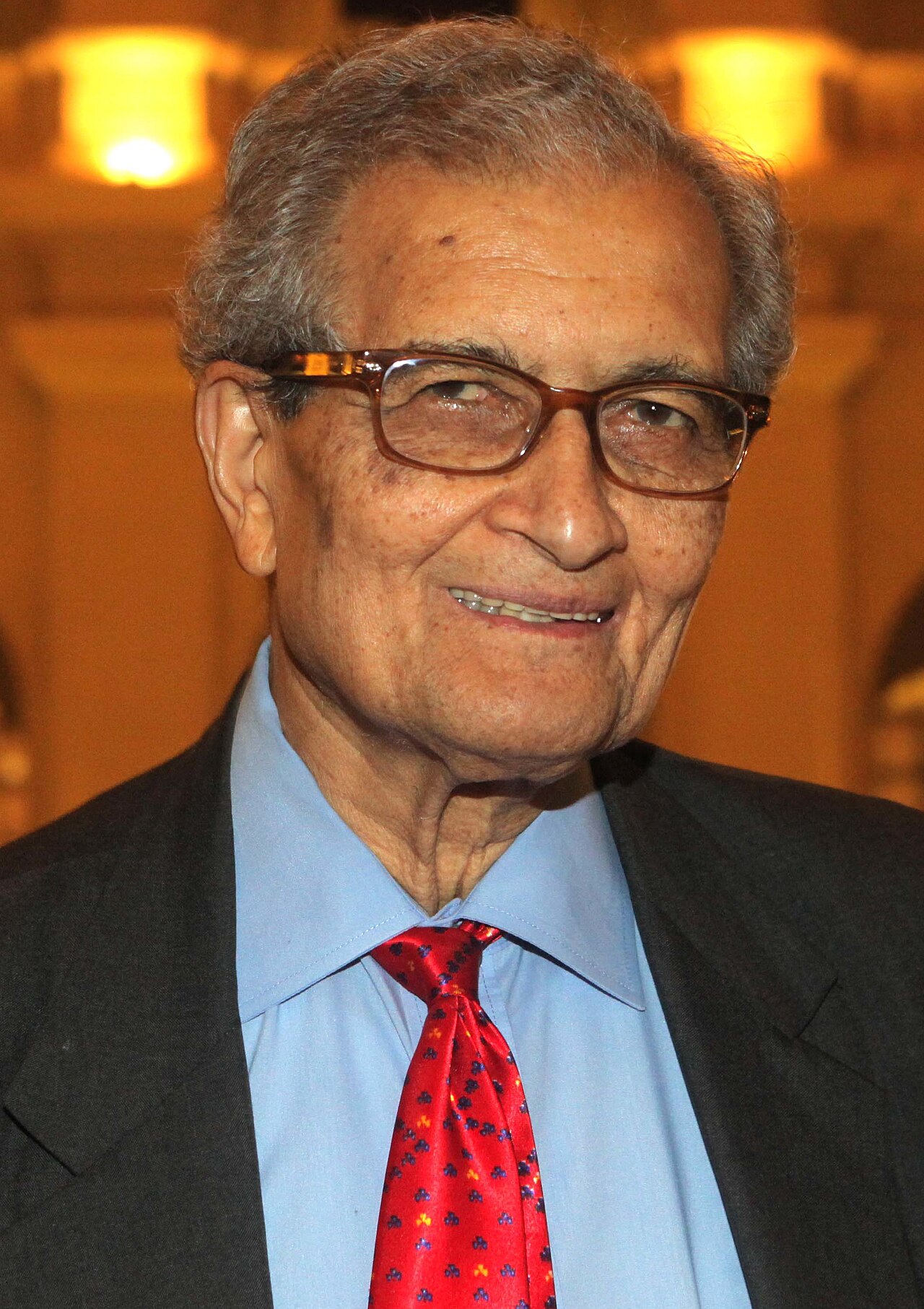
Amartya Kumar Sen is an Indian economist and philosopher. He received the Nobel Prize in Economic Sciences in 1998 for his contributions to welfare economics.
Born on 3 November 1933 in Santiniketan, Bengal, Sen was named by Rabindranath Tagore. His father, Ashutosh Sen, was a professor of chemistry at Dhaka University and chairman of the West Bengal Public Service Commission.
Sen attended St Gregory's School in Dhaka and Patha Bhavana in Santiniketan. He earned a BA in economics from Presidency College, Calcutta, in 1951, and later a second BA in economics from Trinity College, Cambridge, in 1955.
At age 22, Sen became the first-professor and first-head of the Economics Department at Jadavpur University from 1956 to 1958. He later studied philosophy at Trinity College after being elected a Prize Fellowship.
In 1970, Sen published a paper on the liberal paradox. In 1981, he published Poverty and Famines, arguing that famine results from inequalities in food distribution rather than just food shortages.
Sen developed the capability approach, which he discussed in his 1979 article Equality of What?. In 1999, he published Development as Freedom, arguing that development should focus on increasing real freedoms.
He is currently the Thomas W. Lamont University Professor of economics and philosophy at Harvard University. In 1999, he received the Bharat Ratna for his contributions to welfare economics.
Key facts
- Amartya Sen won the Nobel Prize in Economic Sciences in 1998.
- He received India's highest civilian honour, the Bharat Ratna, in 1999.
- He served as the master of Trinity College at the University of Cambridge.
- He is a professor at Harvard University.