

 North Macedonia
Fanula Papazoglu
Fanula Papazoglu was a Yugoslav classical scholar, epigrapher, and academic specializing in the ancient history of the Balkans.
 Biography DeskNovember 5, 2026
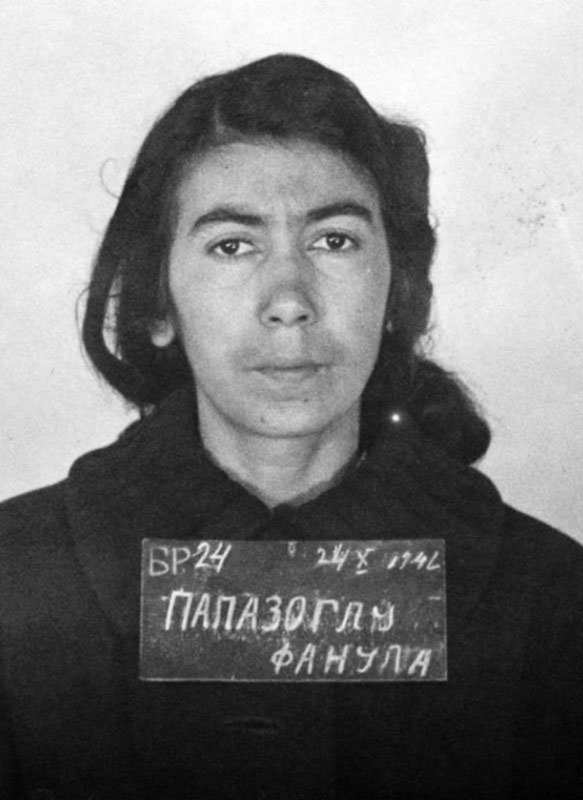
Fanula Papazoglu was a Yugoslav classical scholar, epigrapher, and academic. She was an expert in the ancient history of the Balkans. In 1970, she founded the Centre for Ancient Epigraphy and Numismatics.
Born in Bitola, in the Allied Powers' zone of modern North Macedonia, she belonged to a Greek family of Aromanian origin. She completed her secondary school in Bitola in 1936. She then attended the University of Belgrade Faculty of Philosophy to study archaeology, ancient history, and classical philology.
During the Invasion of Yugoslavia, she was a member of a student organization that supported the Yugoslav Partisans. She spent one year in the Banjica concentration camp from 1942 to 1943. She graduated from the Faculty of Philosophy in 1946.
She began working at the Department for Ancient History at the Faculty of Philosophy in 1947. Her Ph.D. thesis, titled Macedonian towns during the Roman period, was completed in 1955. She reached the rank of full professor in 1965.
Papazoglu was elected as a corresponding member of the Serbian Academy of Sciences and Arts on March 21, 1974. She became a full member of the academy on December 15, 1983. Her work focused on Central Balkan tribes such as the Autaritae, Scordisci, Dardani, Triballi, and Moesi.
She married the Yugoslav Byzantologist George Ostrogorsky at Belgrade University. They had two children, Tatyana and Alexander. She retired from her career in 1979.
Her published works include Makedonski gradovi u rimsko doba in 1957 and Srednjobalkanska plemena u predrimsko doba in 1969 and 1978. She also wrote Rimski građanski ratovi in 1991 and Istorija helenizma in 1995. She died in Belgrade on January 26, 2001.
Key facts
- Fanula Papazoglu was born in Bitola.
- She founded the Centre for Ancient Epigraphy and Numismatics in 1970.
- She was a full member of the Serbian Academy of Sciences and Arts from 1983.
- She was an expert in the ancient history of the Balkans.