

 Singapore
Tan Kah Kee
Tan Kah Kee was a Chinese businessman, investor, entrepreneur, and philanthropist active in Singapore, Hong Kong, and several Chinese cities.
 Biography DeskOctober 28, 2026
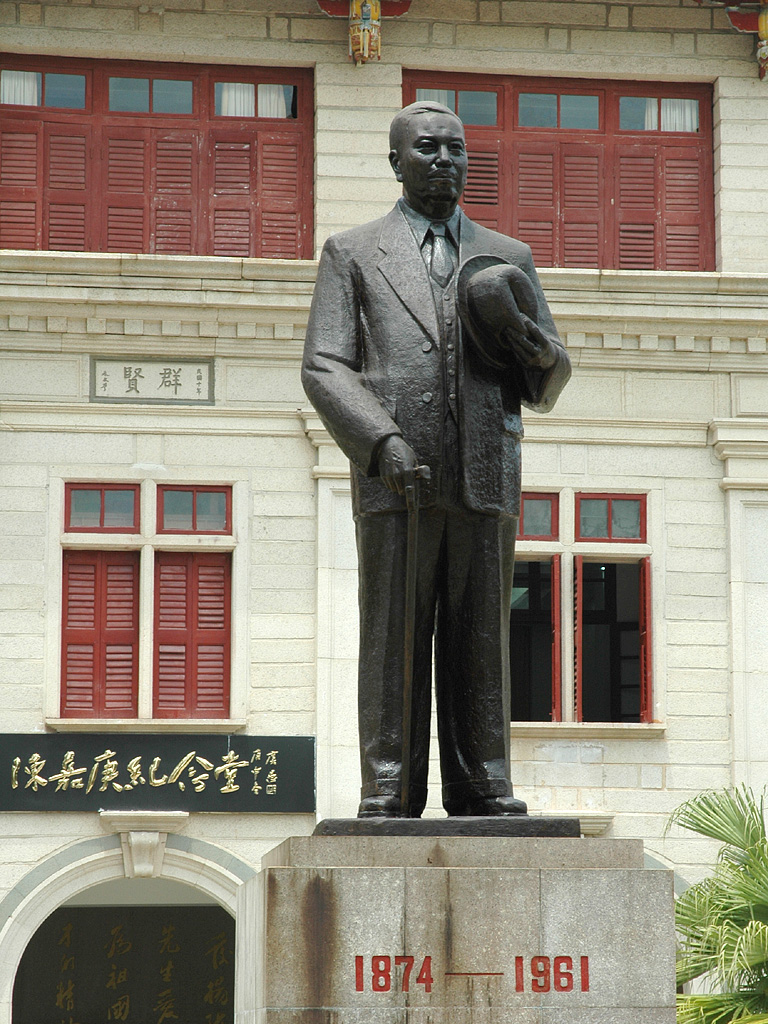
Tan Kah Kee was a prominent figure in the overseas Chinese community in Singapore and Southeast Asia during the 20th century. He was a businessman and philanthropist who provided support to China during the Xinhai Revolution, the Kuomintang's Northern Expedition, and the Second Sino-Japanese War.
Born in Jimei, Fujian Province, in 1874, Tan travelled to Singapore in 1890 at age 16. He went to help his father's rice trading business. After his father's business collapsed in 1903, Tan started his own company.
Tan built a business empire including rubber plantations, manufacturing, sawmills, canneries, real estate, and ocean transport. He was known as the "Henry Ford of the Malayan community" between 1912 and 1914. His success in Singapore was aided by his proficiency in Hokkien.
Tan contributed to many educational institutions. He was one of 110 founders of Tao Nan School and set up The Chinese High School in 1919. He also established the Jimei Schools in 1918 and Xiamen University in 1921.
During the Second Sino-Japanese War, Tan organized relief funds, including one that raised ten million Straits dollars in 1937. When the Japanese occupied Singapore in 1942, he fled to Medan and later settled in Malang, Indonesia. There, he wrote The Memoirs of an Overseas Chinese of the Southern Ocean.
In 1947, Tan founded the Chiyu Banking Corporation in Hong Kong to fund education in Fujian. After the founding of the People's Republic of China in 1949, he tried to return to Singapore in 1950 but was denied entry by British colonial authorities. He moved to China and died in Beijing in 1961.
His legacy includes the Tan Kah Kee MRT station in Singapore and the Tan Kah Kee Foundation. The asteroid 2963 Chen Jiageng is also named after him.
Key facts
- Tan Kah Kee was born in 1874 in Jimei, Fujian Province.
- He founded Xiamen University in 1921.
- He was known as the "Henry Ford of the Malayan community" from 1912 to 1914.
- He died in Beijing in 1961.