

 United States
Lyndon B. Johnson
Lyndon Baines Johnson was the 36th president of the United States and a Southern Democrat who served from 1963 to 1969.
 Biography DeskNovember 7, 2026
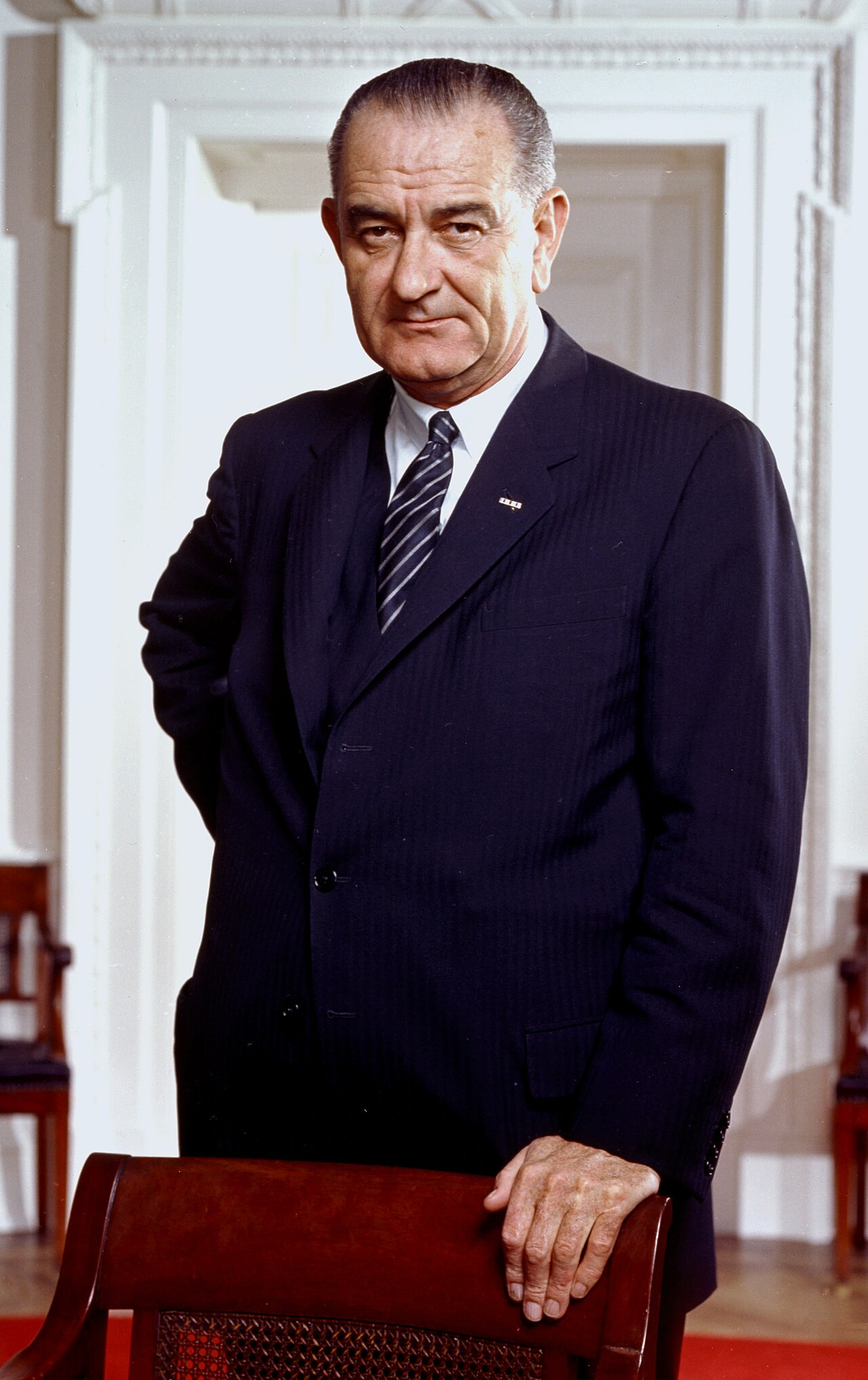
Lyndon Baines Johnson, known as LBJ, served as the 36th president of the United States from 1963 to 1969. He was the 37th vice president and assumed the presidency after the assassination of John F. Kennedy. His presidency included the passage of landmark civil rights legislation and the creation of Great Society programs.
Born on August 27, 1908, near Stonewall, Texas, Johnson was the eldest of five children. He grew up in a poor household where his father lost a great deal of money. He graduated from Johnson City High School in 1924 and later earned a Bachelor of Science in history from Southwest Texas State Teachers College in 1930.
Johnson began his political career as a legislative secretary for Richard M. Kleberg in 1931. He served as the Texas state administrator of the National Youth Administration starting in 1935. In 1937, he was elected to the U.S. House of Representatives for Texas's 10th congressional district.
After losing a 1941 U.S. Senate election to W. Lee "Pappy" O'Daniel, Johnson returned to the House of Representatives. He served in the Navy during World War II and received the Silver Star for gallantry in action in 1942. In 1948, he won the Democratic primary for the U.S. Senate and won the general election.
Johnson rose through the Senate to become Senate majority whip in 1951 and Senate majority leader in 1954. He was selected as the vice presidential running mate for John F. Kennedy in 1960. Following Kennedy's assassination in 1963, Johnson became president and won reelection in 1964.
His Great Society domestic agenda included the War on Poverty and the creation of Medicare and Medicaid through the Social Security Amendments of 1965. He also signed the Civil Rights Act of 1964 and the Voting Rights Act of 1965. His foreign policy involved the containment of communism and an escalation in the Vietnam War.
Public approval declined due to the Vietnam War and domestic unrest, including race riots and a credibility gap. Johnson withdrew his 1968 reelection candidacy after the New Hampshire primary. He retired to his Texas ranch and died on January 22, 1973.
Key facts
- Lyndon B. Johnson served as the 36th president of the United States from 1963 to 1969.
- He implemented the Great Society programs, including Medicare and Medicaid.
- His presidency was marked by the passage of the Civil Rights Act of 1964 and the Voting Rights Act of 1965.
- Johnson's administration saw a significant escalation in the Vietnam War.