

 Pakistan
Khwaja Nazimuddin
Sir Khwaja Nazimuddin was the second governor-general and the second prime minister of Pakistan.
 Biography DeskNovember 1, 2026
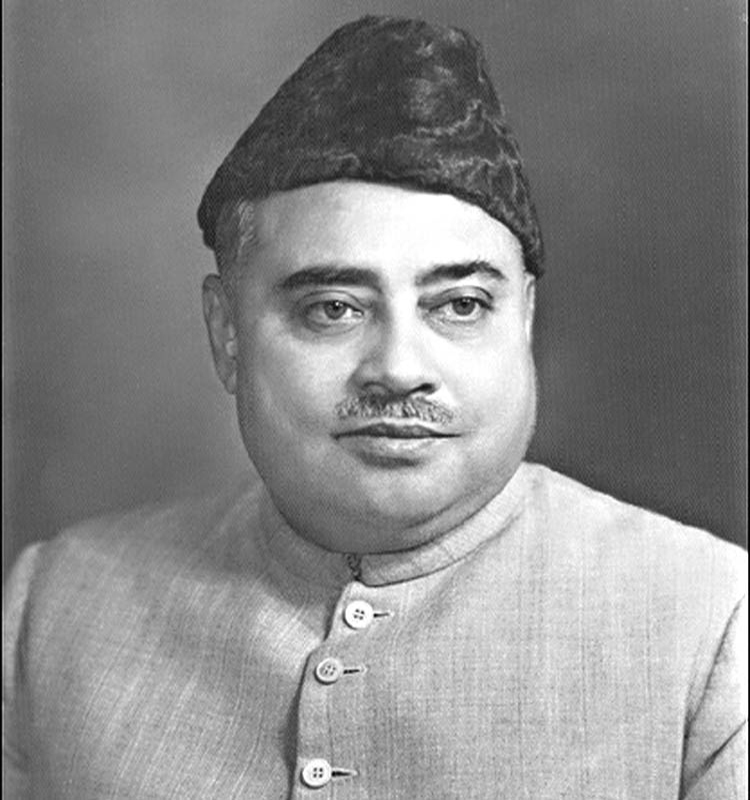
Sir Khwaja Nazimuddin was a Pakistani politician born on 19 July 1894. He served as the second governor-general of Pakistan from 1948 to 1951 and as the second prime minister from 1951 to 1953.
Born into an aristocratic Nawab family in Bengal, his father was Khwaja Nizamuddin. He was educated at Dunstable Grammar School in England and the MAO College of the Aligarh Muslim University. He later earned a Master of Arts from Trinity Hall at the University of Cambridge and became a Barrister-at-Law.
Nazimuddin joined the Muslim League and served as chairman of Dhaka Municipality from 1922 until 1929. He was the education minister of Bengal until 1934 and served on the Viceroy's Executive Council until 1937. He also served as Prime Minister of Bengal from 1943 to 1945.
After the partition of India, he became the 1st chief minister of East Bengal from 1947 to 1948. Following the death of Muhammad Ali Jinnah, he was appointed acting governor-general in 1948. He served as governor-general until 1951, during which time he established the Basic Principles Committee.
He became prime minister in 1951 after the assassination of Liaquat Ali Khan. His term involved managing the first nationwide census and addressing the Bengali Language Movement. In 1953, he declared martial law in Punjab to quell religious riots.
Governor-General Ghulam Muhammad dismissed Nazimuddin on 17 April 1953. This was the first federal government to be dismissed in Pakistan's history. He retired from national politics and died in 1964 at the age of 70.
He is buried at the Mausoleum of Three Leaders in Dhaka. He was a founding father of Pakistan and the first Bengali to govern the country.
Key facts
- Served as the second governor-general of Pakistan from 1948 to 1951.
- Served as the second prime minister of Pakistan from 1951 to 1953.
- Was the first chief minister of East Bengal from 1947 to 1948.
- Was dismissed from office by Governor-General Ghulam Muhammad on 17 April 1953.