

 India
C. V. Raman
Chandrasekhara Venkata Raman was an Indian physicist known for his work in light scattering and the discovery of the Raman effect.
 Biography DeskOctober 28, 2026
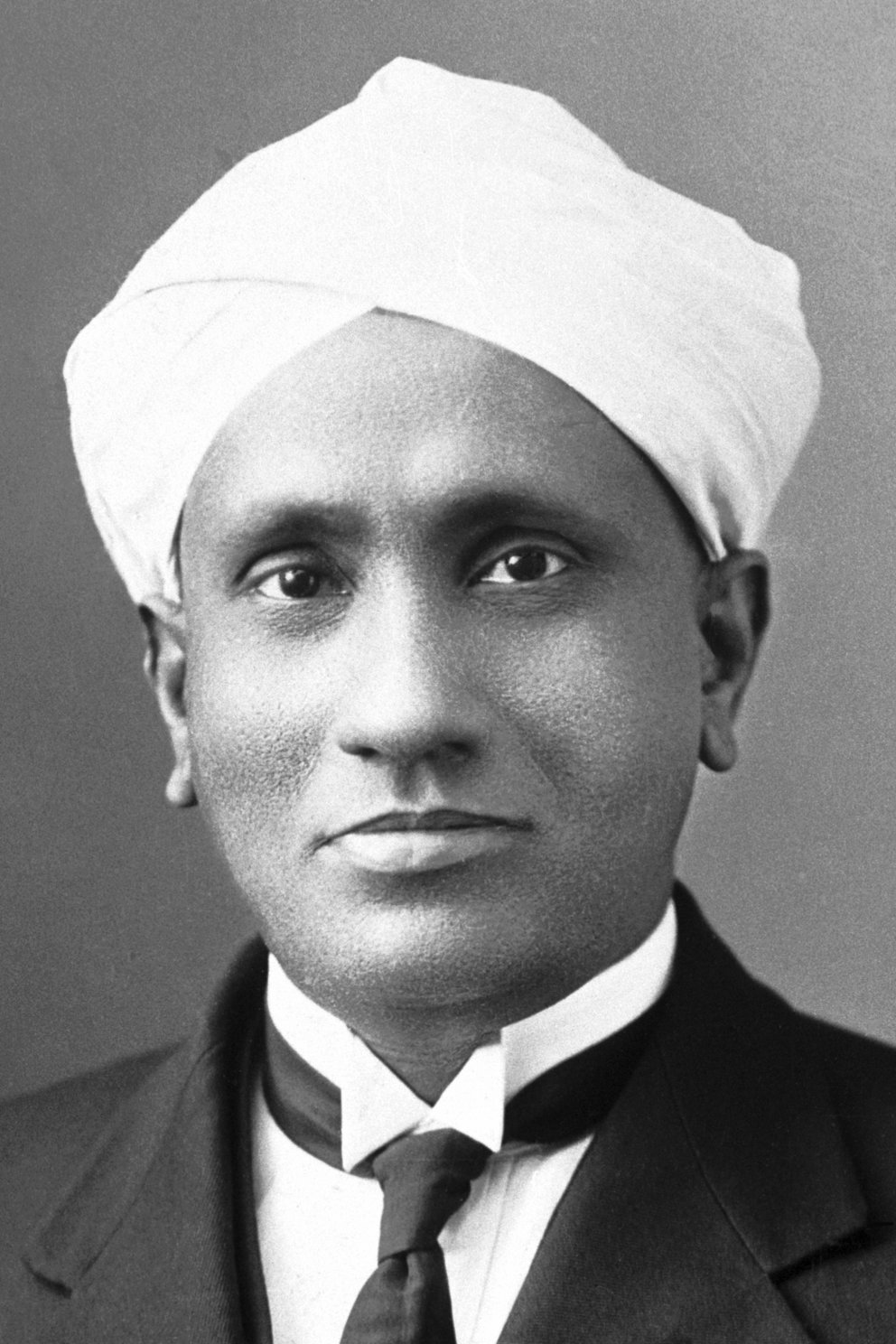
Chandrasekhara Venkata Raman was an Indian physicist known for his work in light scattering. He and his student K. S. Krishnan discovered that deflected light changes its wavelength when traversing a transparent material. This phenomenon was called modified scattering and was later termed the Raman effect or Raman scattering.
Born on 7 November 1888 in Tiruchirappalli, Raman was the second of eight children. He completed his secondary education at St Aloysius' Anglo-Indian High School at age 11 and his higher secondary education at age 13. He topped the bachelor's degree examination at Presidency College with honours in physics at age 16.
Raman published his first research paper on the diffraction of light in 1906 while a graduate student. He obtained a master's degree in 1907. At age 19, he joined the Indian Finance Service in Calcutta as Assistant Accountant General.
While in Calcutta, Raman conducted research at the Indian Association for the Cultivation of Science. In 1917, he was appointed the first Palit Professor of Physics at the Rajabazar Science College under the University of Calcutta. He resigned from his civil service position to accept this professorship.
On 28 February 1928, Raman discovered the Raman effect. In 1930, he received the Nobel Prize in Physics for his work on the scattering of light. He became the first Asian and non-White person to receive a Nobel Prize in Physics.
Raman moved to Bengaluru in 1933 to become the first Indian director of the Indian Institute of Science. He founded the Indian Academy of Sciences in 1934. In 1948, he established the Raman Research Institute.
Raman worked at the Raman Research Institute until his death on 21 November 1970. The Government of India celebrates the day of his discovery, 28 February, as National Science Day.
Key facts
- Chandrasekhara Venkata Raman received the Nobel Prize in Physics in 1930.
- He discovered the Raman effect on 28 February 1928.
- He was the first Indian director of the Indian Institute of Science.
- He established the Raman Research Institute in 1948.