

 Zambia
Kenneth Kaunda
Kenneth Kaunda was the first president of Zambia who led the campaign for independence from the British Empire.
 Biography DeskOctober 19, 2026
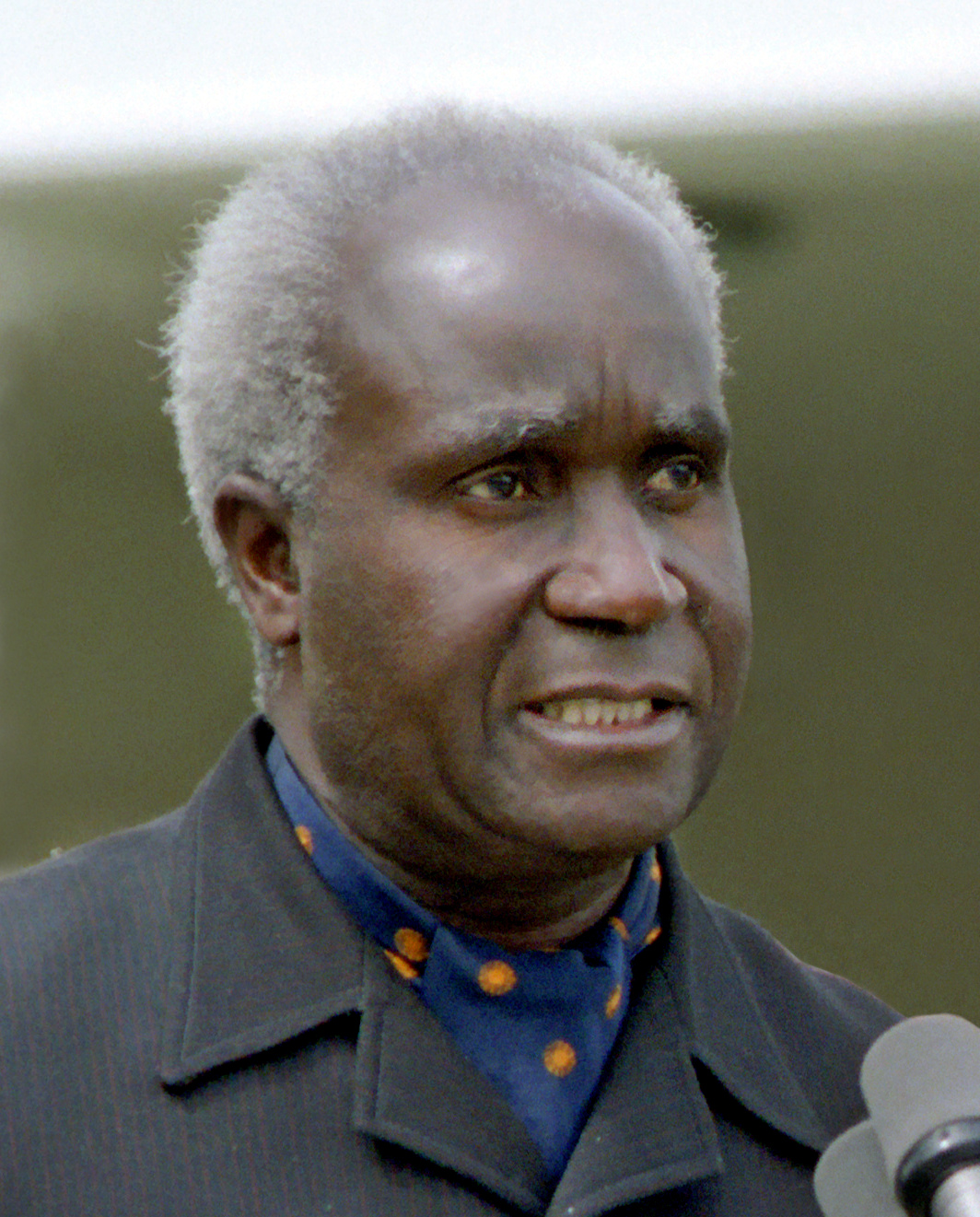
Kenneth Kaunda, also known as KK, was a Zambian politician who served as the first president of Zambia from 1964 to 1991. He was at the forefront of the campaign for independence from the British Empire.
Born on 28 April 1924 at Lubwa Mission in Chinsali, he was the youngest of eight children. His father, Reverend David Kaunda, was a Church of Scotland missionary and his mother, Helen Nyirenda Kaunda, was the first African woman to teach in colonial Northern Rhodesia.
Kaunda attended Munali Training Centre in Lusaka between 1941 and 1943 and later became a teacher. He worked as a Headmaster at Lubwa from 1943 to 1945 and later served as a teacher in Mufulira for the United Missions to the Copperbelt.
He entered politics in 1949 and became the Secretary General of the Africa National Congress in 1953. After breaking away from Harry Nkumbula, he founded the Zambian African National Congress in October 1958 and was later elected president of the United National Independence Party in January 1960.
Following the 1962 elections, Kaunda served as Minister of Local Government and Social Welfare in a coalition government. He became the first president of independent Zambia on 24 October 1964 and appointed Reuben Kamanga as vice-president.
Kaunda established the ideology of Zambian Humanism and oversaw the creation of the University of Zambia in 1966. In 1973, following the Choma Declaration, all political parties except UNIP were banned through a constitutional amendment.
Economic challenges including the 1973 oil crisis and falling copper prices led to debt with the IMF. In the 1991 multi-party elections, Frederick Chiluba of the Movement for Multi-Party Democracy ousted Kaunda.
Kaunda was briefly stripped of Zambian citizenship in 1998, but this decision was overturned in 2000. He died on 17 June 2021.
Key facts
- Kenneth Kaunda served as the first president of Zambia from 1964 to 1991.
- He founded the Zambian African National Congress and led the United National Independence Party.
- He established the ideology of Zambian Humanism and the University of Zambia in 1966.
- He was succeeded by Frederick Chiluba following the 1991 multi-party elections.