

 United Kingdom
Alan Turing
Alan Mathison Turing was an English mathematician and logician regarded as the father of theoretical computer science.
 Biography DeskOctober 19, 2026
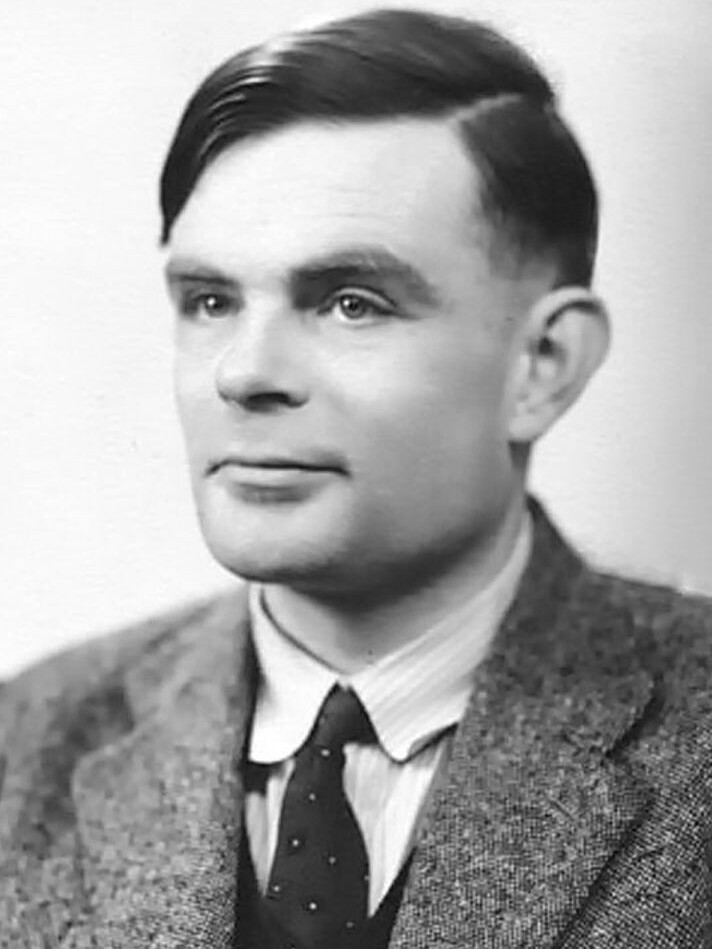
Alan Mathison Turing was an English mathematician and logician. He formalised the concepts of algorithm and computation with the Turing machine, which is a model of a general-purpose computer.
Turing was born in Maida Vale, London, on 23 June 1912. His parents, Julius Mathison Turing and Ethel Sara Turing, moved to Maida Vale so their children could be raised in Britain.
He attended St Michael's primary school and Hazelhurst Preparatory School. At age 13, he went to Sherborne School, where he studied mathematics and science despite the emphasis on the classics.
Turing studied at King's College, Cambridge, from February 1931 to November 1934. He earned first-class honours in mathematics and was elected a Fellow of King's College in 1937.
During World War II, Turing worked at the Government Code and Cypher School at Bletchley Park. As head of Hut 8, he focused on decrypting German naval messages to improve upon the Polish bomba method.
After the war, he joined the National Physical Laboratory to design the Automatic Computing Engine. In 1948, he joined the Computing Machine Laboratory at the University of Manchester.
In 1952, Turing was prosecuted for gross indecency after acknowledging a sexual relationship with another man. He received probation conditional on chemical castration and lost his security clearance.
Turing died on 7 June 1954, aged 41, by cyanide poisoning. An inquest ruled his death a suicide.
Key facts
- Alan Turing was born on 23 June 1912 in London.
- He formalised the concepts of algorithm and computation using the Turing machine.
- He worked at Bletchley Park during World War II to decrypt German Enigma messages.
- He earned a doctorate from Princeton University in 1938.