

 India
Sonam Wangchuk
Sonam Wangchuk is an Indian engineer, educator, and activist from Ladakh known for his work in sustainable architecture and educational reform.
 Biography DeskOctober 25, 2026
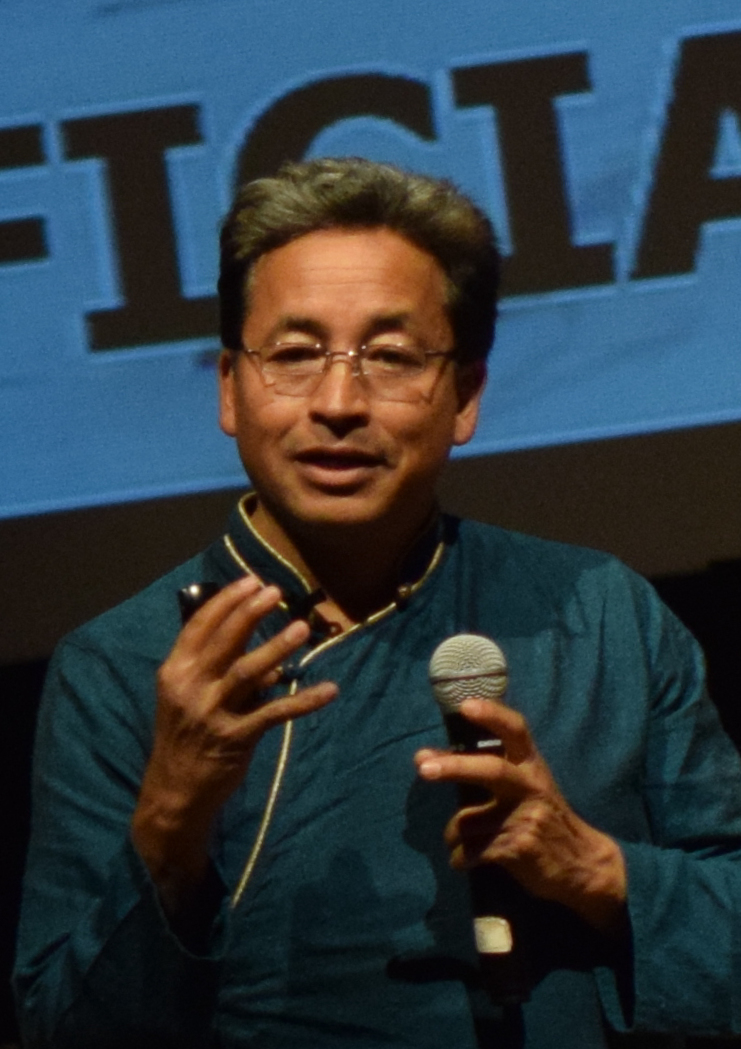
Sonam Wangchuk is an Indian engineer, educator, and activist born in 1966. He is the founding director of the Students' Educational and Cultural Movement of Ladakh (SECMOL).
Born in Uleytokpo in the Leh district of Jammu and Kashmir, he was home schooled by his mother until age nine. He completed a B.Tech. in mechanical engineering from the National Institute of Technology Srinagar in 1987. In 2011, he obtained a diploma in earthen architecture from CRAterre in Grenoble, France.
Wangchuk and his brother founded SECMOL in 1988 to address challenges in the public education system. In 1994, SECMOL launched Operation New Hope to reform government schools. He also served as an advisor for education for the Ladakh Autonomous Hill Development Council starting in 2001.
In 2013, he developed the Ice Stupa technique to create artificial glaciers for storing winter water. He later co-founded the Himalayan Institute of Alternatives Ladakh with Gitanjali J Angmo. His work in sustainable architecture includes designing passive solar mud buildings like the SECMOL campus.
Wangchuk has received the Ramon Magsaysay Award in 2018 and the Global Award for Sustainable Architecture in 2017. In 2021, he developed solar-powered tents for the Indian Army. He also proposed a siphon technique for disaster mitigation at high-altitude glacial lakes in 2016.
In 2023, Wangchuk attempted a hunger strike at Khardung La pass to demand protection for Ladakh under the Sixth Schedule. He began a 21-day hunger strike in March 2024 for Ladakh statehood. In October 2024, he began a march to Delhi to advocate for these causes.
Key facts
- Sonam Wangchuk founded the Students' Educational and Cultural Movement of Ladakh (SECMOL) in 1988.
- He developed the Ice Stupa technique in 2013 to create artificial glaciers for water storage.
- He received the Ramon Magsaysay Award in 2018.
- He co-founded the Himalayan Institute of Alternatives Ladakh with Gitanjali J Angmo.