

 Cambodia
Ponhea Yat
Ponhea Yat was the last king of the Khmer Empire and the first king of the post-Angkor period.
 Biography DeskOctober 24, 2026
Ponhea Yat, also known as Borom Reachea I, was the third son of Thommasaok Reachea. He succeeded his father and was crowned king with three concubines.
After fleeing Angkor, he established a fortress at Toul Bashan in Srei Santor district for three years. He sent 12 spies disguised as servants to the Angkor royal palace to assassinate the Siamese king Intharachathirat (In).
Following the assassination, Ponhea Yat led an army of approximately 70,000 to liberate Angkor from the Siamese. He returned in 1388 and was given the title Preah Barom Reachea.
Because the Siamese had collected Angkor's treasures and damaged the city walls, he moved the capital to Toul Basan for 12 years. After a major flood in the year of Rong, he moved the capital to the Chaktomuk area in 1400.
He ruled in Chaktomuk for 16 years and declared the Chaktomuk era in 1416. He also complained to the Yongle Emperor in 1408 and 1414 regarding raids by the Champa King Indravarman VI.
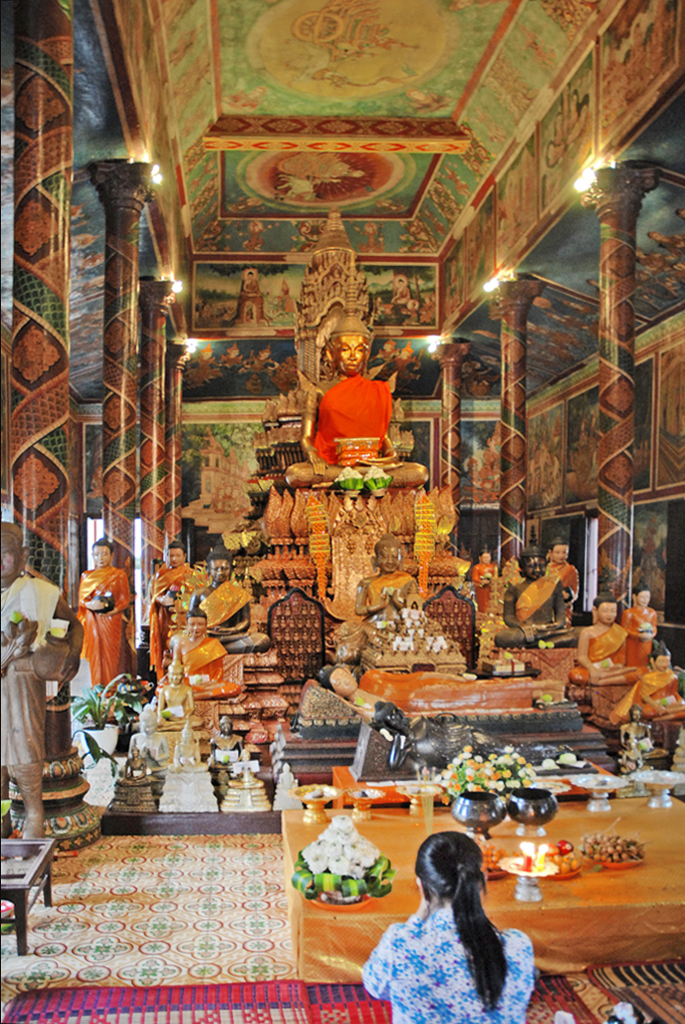
To strengthen ties with the Ming Dynasty, he used trade via the Mekong River to bring in goods. During his reign, he developed Mahayana Buddhism and built monasteries including Wat Botum, Wat Koh, Wat Langka, Wat Ounalom, and Wat Phnom.
He ordered land to be built up in Phnom Penh to protect it from flooding and built a palace. His remains are housed in a stupa behind Wat Phnom.
Ponhea Yat was succeeded by his first son Noreay Reachea, who reigned until 1469. He was then succeeded by his second son, Srei Reachea.
Key facts
- Ponhea Yat was the last king of the Khmer Empire and the first king of the post-Angkor period.
- He moved the capital from Angkor to Toul Basan and later to the Chaktomuk area.
- He led an army of approximately 70,000 to liberate Angkor from the Siamese.
- He built several Buddhist monasteries including Wat Phnom and Wat Ounalom.