

 Pakistan
Yahya Khan
Agha Muhammad Yahya Khan was a Pakistani four-star rank general who served as the third president of Pakistan from 1969 to 1971.
 Biography DeskOctober 28, 2026
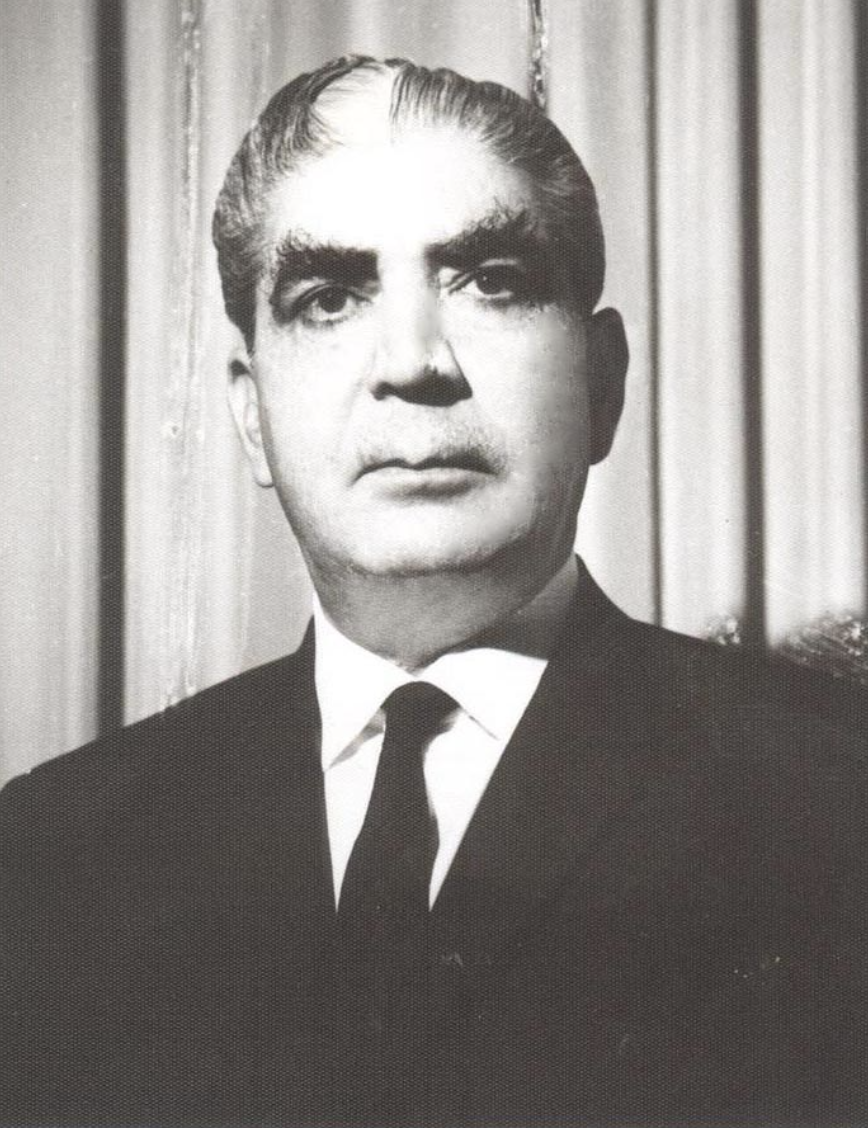
Agha Muhammad Yahya Khan was a Pakistani four-star rank general and the fifth commander-in-chief of the Pakistan Army from 1966 to 1971. He served as the third president of Pakistan from 1969 to 1971 under martial law. His presidency oversaw a civil war in East Pakistan and the secession of Bangladesh.
Born on 4 February 1917 in Chakwal, Yahya Khan was a Qizilbash from a family from Peshawar. His father, Saadat Ali Khan, worked in the Indian Imperial Police and retired as a deputy superintendent in 1938. Yahya studied at the Colonel Brown Cambridge School in Dehradun and graduated with a B.A. from the University of the Punjab in Lahore.
Yahya Khan was commissioned into the British Indian Army on 15 July 1939 as an infantry officer in the 4th/10th Baluch Regiment. He served in Iraq, Italy, and North Africa during the Second World War. He was captured by Axis Forces in June 1942 and was a prisoner of war in Italy before escaping on his third attempt.
After the partition of British India, he joined the Pakistan Army in August 1947 as a major. He was appointed as the youngest Brigadier at age 34 and commanded the 105th Independent Brigade in Jammu and Kashmir during 1951, 1952. He later served as the Chief of General Staff from 1957 to 1962 and commanded two infantry divisions from 1962 to 1965.
In September 1966, President Ayub Khan assigned him the command of the army, and he became the commander-in-chief. He reorganized the Pakistan Army by raising new corps headquarters and infantry divisions. Following nationwide protests against Ayub Khan, Yahya Khan declared martial law on 26 March 1969 and assumed the presidency.
In December 1970, he held the country's first general election, which the Awami League won with a national majority. He barred the power transition to Sheikh Mujibur Rahman, leading to civil disobedience in the east. On 25 March 1971, he ordered Operation Searchlight to suppress Bengali nationalism.
In December 1971, Khan ordered pre-emptive strikes against the Indian Army, resulting in a war. Following the surrender of Pakistani forces in the east, he resigned and transferred the presidency to Zulfikar Ali Bhutto. He died in Rawalpindi in 1980 and was buried in Peshawar.
Key facts
- Served as the third president of Pakistan from 1969 to 1971.
- Was the fifth commander-in-chief of the Pakistan Army from 1966 to 1971.
- Held the rank of four-star general.
- His presidency included the secession of East Pakistan as Bangladesh.