

Kim Jong Il
Kim Jong Il was the second supreme leader of North Korea from 1994 until his death in 2011.
 Biography DeskOctober 23, 2026
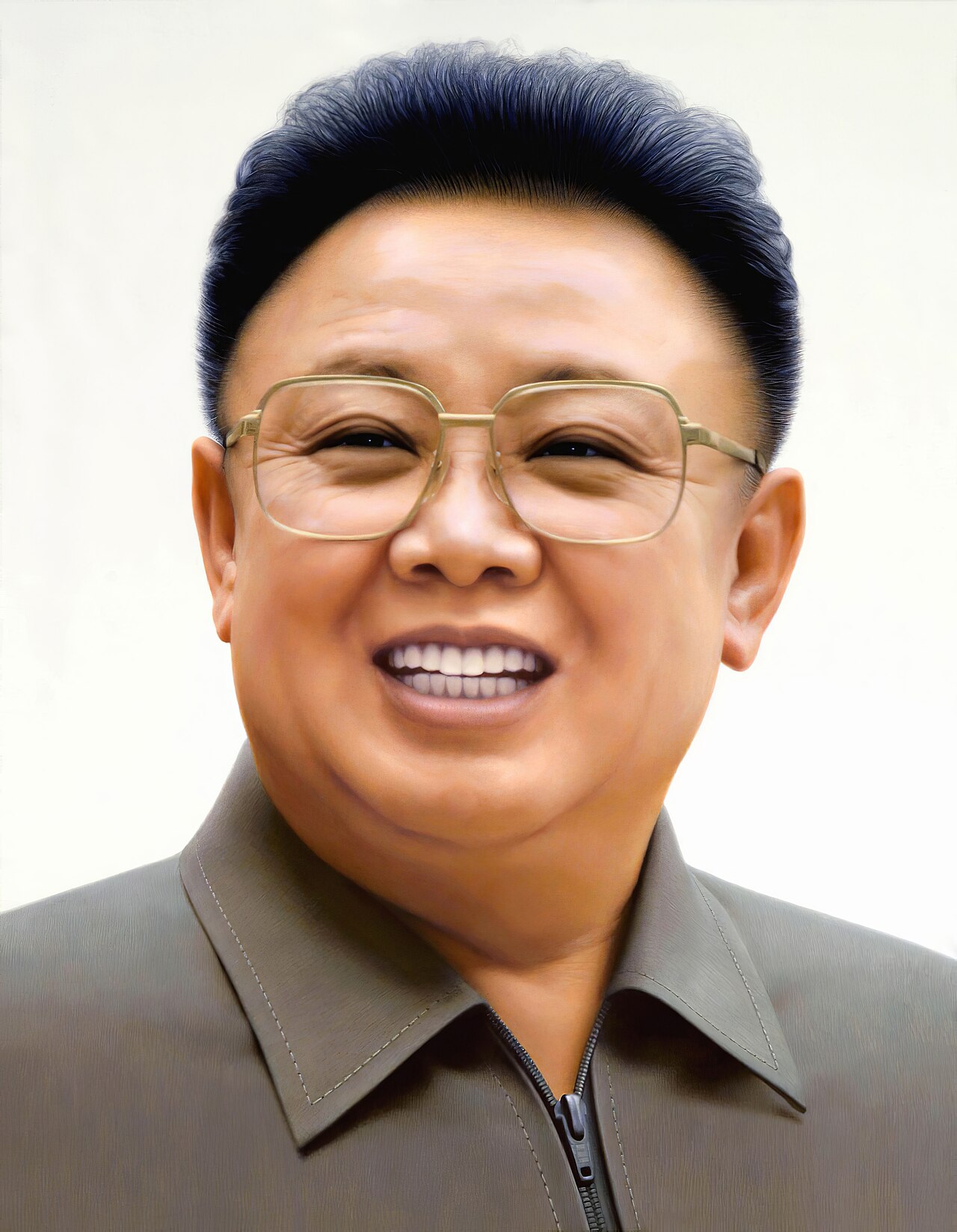
Kim Jong Il was a North Korean politician and dictator. He served as the second supreme leader of North Korea from 1994 until he died in 2011.
Kim was born in 1941 in the far eastern region of the Soviet Union. He moved to Pyongyang in 1945 following the end of Japanese rule. His mother was Kim Jong-suk, the first wife of Kim Il Sung.
Kim completed his general education between 1950 and 1960 at Pyongyang schools. He was active in the Korean Children's Union and the Democratic Youth League of North Korea. He also reportedly received English language education in Malta during the early 1970s.
Kim joined the Workers' Party of Korea in 1961 and joined the Propaganda and Agitation Department in 1966. He played a key role in developing the Juche ideology and the Monolithic Ideological System. He became the director of the Propaganda and Agitation Department in 1973.
Kim was formally designated as the successor to Kim Il Sung in 1980. He succeeded his father in 1994 and held several high-ranking positions. These included General Secretary of the WPK and Chairman of the National Defence Commission.
During his rule, Kim implemented Songun or military-first policies. He oversaw North Korea's first nuclear test in 2006 and another in 2009. He also met with South Korean president Kim Dae-jung in 2000 and president Roh Moo-hyun in 2007.
Kim died on 17 December 2011. Posthumously, he was declared an eternal leader of the Workers' Party of Korea and the eternal Chairman of the National Defence Commission.
Key facts
- Kim Jong Il was the second supreme leader of North Korea from 1994 to 2011.
- He was born in the Soviet Union in 1941.
- He implemented the Songun military-first policy.
- North Korea conducted nuclear tests under his leadership in 2006 and 2009.
- He was posthumously declared an eternal leader of the Workers' Party of Korea.