

 Myanmar
Maha Bandula
General Maha Bandula was the commander-in-chief of the Royal Burmese Armed Forces during the First Anglo-Burmese War.
 Biography DeskOctober 22, 2026
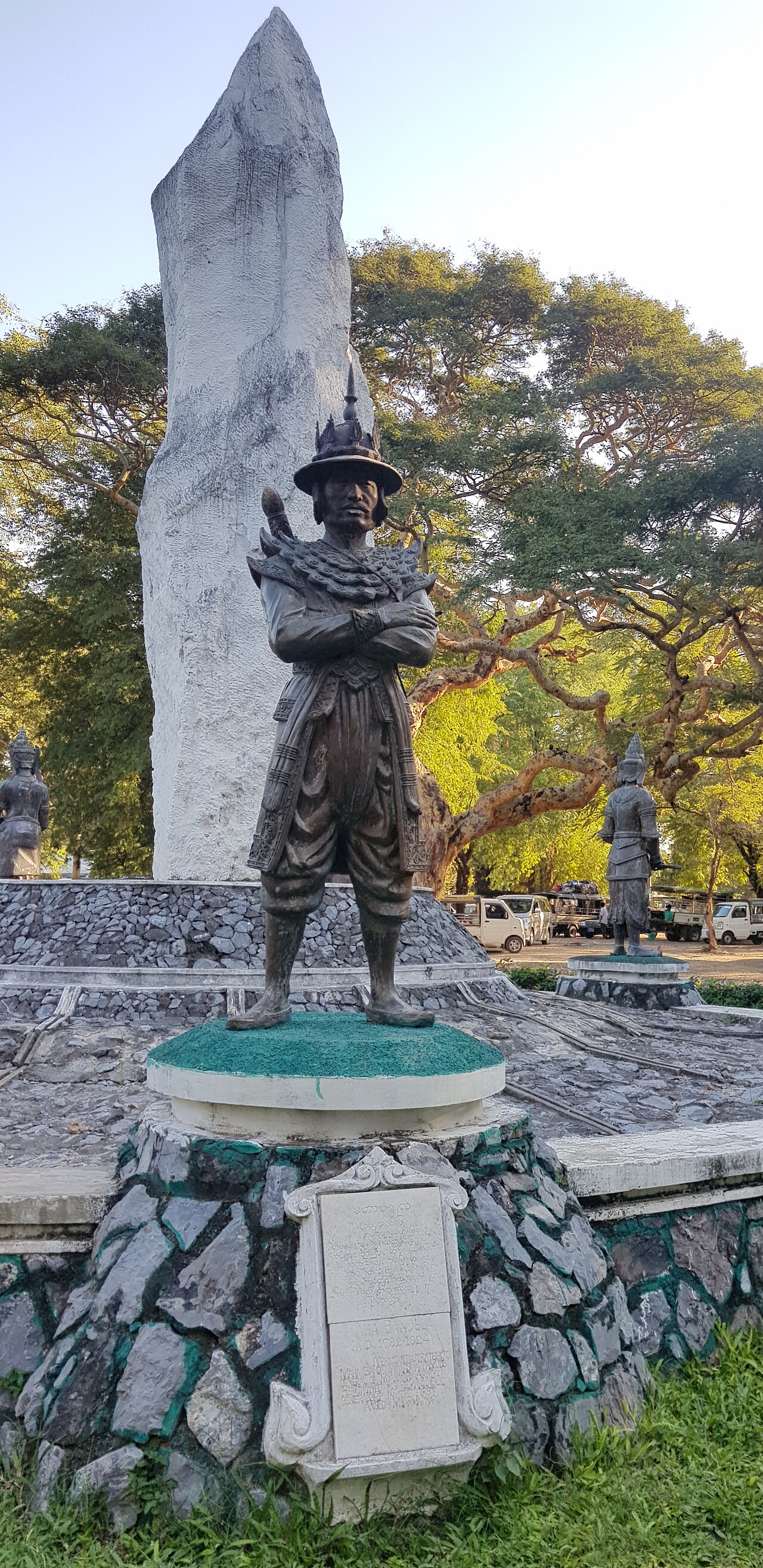
Maha Bandula was the commander-in-chief of the Royal Burmese Armed Forces from 1821 until his death in 1825. He is celebrated as a national hero for his resistance to the British during the First Anglo-Burmese War.
Born Maung Yit on 6 November 1782 in Dabayin, he was the firstborn son of Pauk Taw and Nyein. He received an education at a local Buddhist monastery starting at age 6 but quit before age 13 after his father died.
Yit moved to Amarapura to serve as a retainer for Crown Prince Thado Minsaw. He became a personal bodyguard in 1806 and later became a messenger in the Privy Council after a bold incident in late 1812. In June 1813, he was appointed governor of Dabayin with the title Ne Myo Thura Yegaung.
He participated in the invasion of Manipur in 1814, commanding three regiments of 3000 men. During the Assam campaigns of 1816 and 1819, he served as a regimental commander. On 3 November 1819, King Bagyidaw gave him the title Maha Bandula.
In December 1819, he served as a deputy commander-in-chief in Manipur, where he commanded 5000 infantry and 500 cavalry. He also participated in the Assam campaign of 1821 to 1822, where he helped defeat the army of Chandrakanta Singha.
During the First Anglo-Burmese War, Bandula was a proponent of offensive policy against the British. He commanded the Arakan theater and later moved his army across the Arakan Yoma during the monsoon season to meet the enemy in Yangon.
In November 1824, Bandula commanded 30,000 men outside Yangon. On 30 November, he ordered a frontal attack on British positions near the Shwedagon fort. The British used exploding shells and Congreve rockets against the Burmese forces.
Key facts
- Maha Bandula was born Maung Yit on 6 November 1782.
- He served as the commander-in-chief of the Royal Burmese Armed Forces from 1821 to 1825.
- He was appointed governor of Dabayin in June 1813.
- He received the title Maha Bandula on 3 November 1819.
- He commanded 30,000 men during the Battle of Yangon in late 1824.