

 Mongolia
Zanabazar
Öndör Gegeen Zanabazar was the first Jebtsundamba Khutuktu and the supreme spiritual authority of the Gelugpa lineage in Mongolia.
 Biography DeskOctober 27, 2026
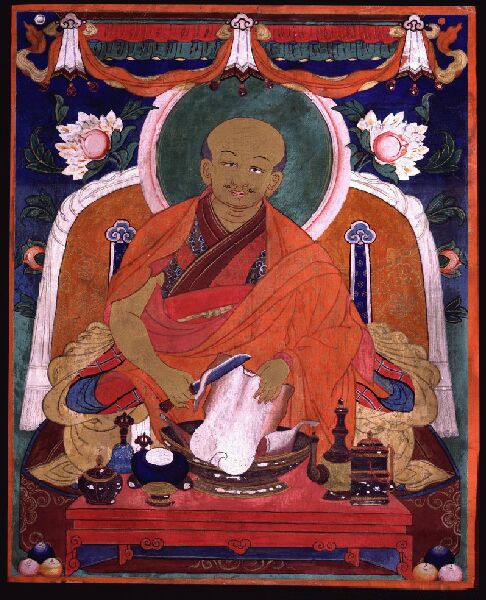
Öndör Gegeen Zanabazar, born Eshidorji, was the first Jebtsundamba Khutuktu and the first Bogd Gegeen of the Gelugpa lineage. He was a polymath who worked as a sculptor, painter, architect, poet, scholar, and linguist. He is credited with starting the seventeenth century cultural renaissance in Mongolia.
Zanabazar was born in 1635 in present-day Yesönzüil, Övörkhangai, Mongolia. He was the second son of Tüsheet khan Gombodorj and Khandojamtso. In 1639, a convocation of nobles recognized the four-year-old as the spiritual leader of the Khalkha Mongols.
The 5th Dalai Lama recognized him as the reincarnation of the scholar Taranatha and gave him the Sanskrit name Jñānavajra. In 1649, Zanabazar traveled to Tibet to receive instruction from the 5th Dalai Lama and the 4th Panchen Lama at Drepung Monastery. He established his religious center in 1647 as a traveling ger camp called the Monastery of the West.
Between 1651 and 1686, Zanabazar founded many monasteries, temples, and shrines throughout Mongol territory. He established seven aimags to oversee his religious institutions. His ambulatory palatial residence was known as the Shira Busiin Ord, which later became the site of Ulaanbaatar.
In 1686, Zanabazar attended a peace conference to reconcile with the Dzungars. Following the invasion of Galdan Boshugtu Khan in 1688, Zanabazar and 20,000 refugees fled to seek protection from the Qing Emperor. In 1691, the Khalkha rulers declared themselves Qing vassals at Dolon Nor.
Zanabazar spent time in China as a spiritual mentor to the Kangxi Emperor. He returned to Khalkha Mongolia in 1701 to supervise the restoration of the Erdene Zuu Monastery. He died in Beijing on February 18, 1723, at the age of 88.
He created the Soyombo script in 1686 to help translate sacred Tibetan texts. His artistic works include sculptures such as the White Tara and Varajradhara created in the 1680s. The Soyombo symbol from his script later became a national symbol of Mongolia.
Key facts
- Zanabazar was born in 1635 and died in 1723.
- He was the first Jebtsundamba Khutuktu and Bogd Gegeen of the Gelugpa lineage.
- He created the Soyombo script in 1686.
- He was a sculptor known for works like the White Tara and Varajradhara.