

 India
Mahatma Gandhi
Mohandas Karamchand Gandhi was an Indian lawyer and anti-colonial nationalist who led the campaign for India's independence through nonviolent resistance.
 Biography DeskOctober 17, 2026
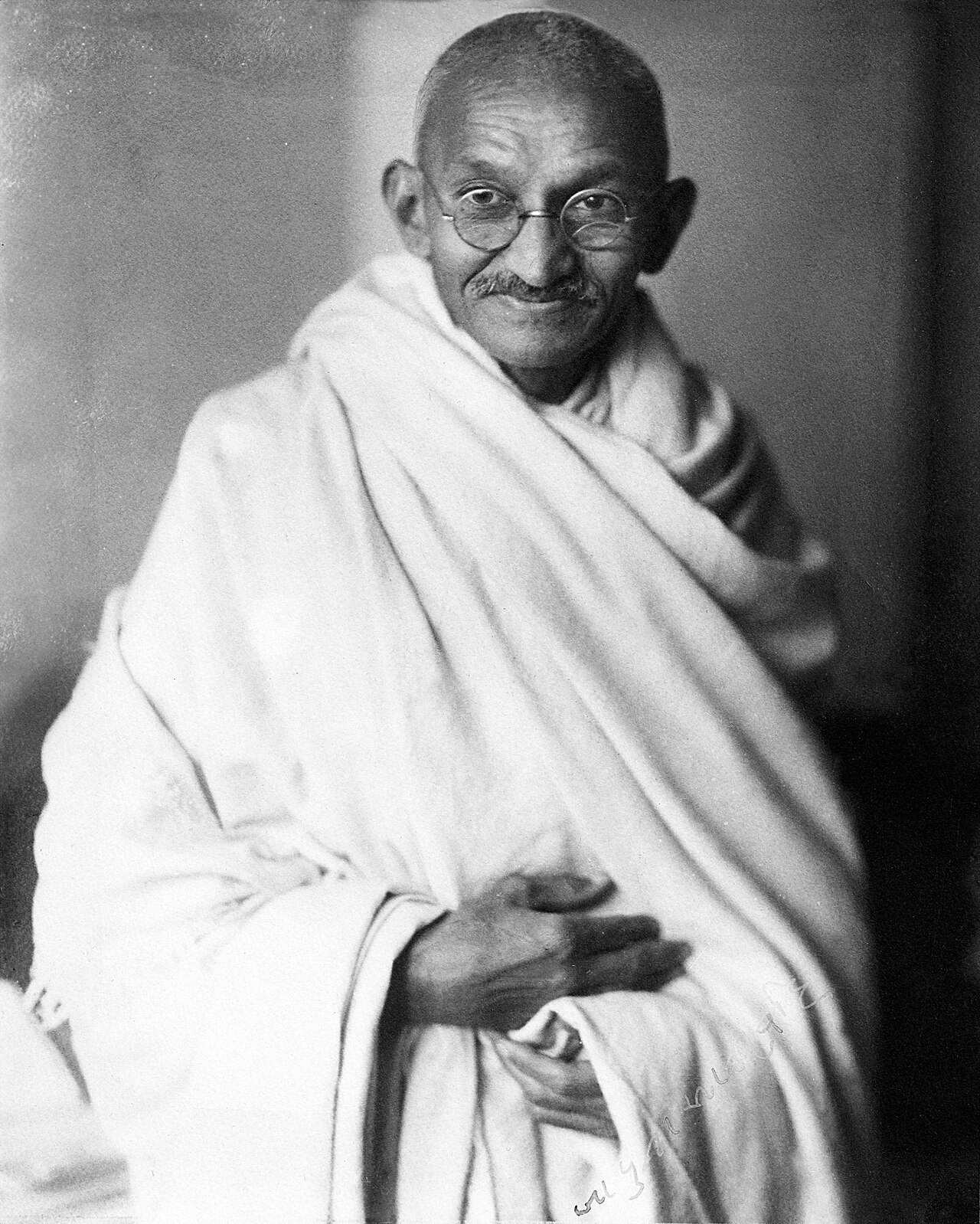
Mohandas Karamchand Gandhi was an Indian lawyer, political ethicist, and anti-colonial nationalist. He used nonviolent resistance to lead the campaign for India's independence from British rule. He is known as the Father of the Nation and was often called Bapu.
Born on 2 October 1869 in Porbandar, Gandhi was raised in a Hindu family in coastal Gujarat. His father, Karamchand Uttamchand Gandhi, served as the dewan of Porbandar state. Gandhi was a shy student at Alfred High School in Rajkot.
In May 1883, the 13-year-old Gandhi married 14-year-old Kasturbai Gokuldas Kapadia in an arranged marriage. He later enrolled at Samaldas College in Bhavnagar State but dropped out. In 1888, he traveled to London to study law at University College, London and the Inner Temple.
Gandhi moved to South Africa in 1893 to represent an Indian merchant in a lawsuit. He lived there for 21 years and used nonviolent resistance in a civil rights campaign. He returned to India in 1915 at age 45 to organize peasants and labourers.
In 1921, Gandhi assumed leadership of the Indian National Congress. He led campaigns for swaraj, women's rights, and ending untouchability. He led the 400 km Dandi Salt March in 1930 and called for the British to quit India in 1942.
After India gained independence in August 1947, religious violence broke out during the partition. Gandhi visited affected areas and undertook hunger strikes to stop the violence. He was assassinated by Nathuram Godse on 30 January 1948 in Delhi.
Gandhi's birthday is commemorated in India as Gandhi Jayanti. His legacy inspired civil rights and freedom movements across the world. The honorific Mahatma is used globally to describe him.
Key facts
- Gandhi led the successful campaign for India's independence from British rule using nonviolent resistance.
- He lived in South Africa for 21 years starting in 1893.
- He led the 400 km Dandi Salt March in 1930.
- He was assassinated in Delhi on 30 January 1948.