

 Afghanistan
Mohammad Ayub Khan
Ghazi Mohammad Ayub Khan Barakzai was an Afghan leader and the Victor of Maiwand who served briefly as the Emir of Afghanistan.
 Biography DeskOctober 24, 2026
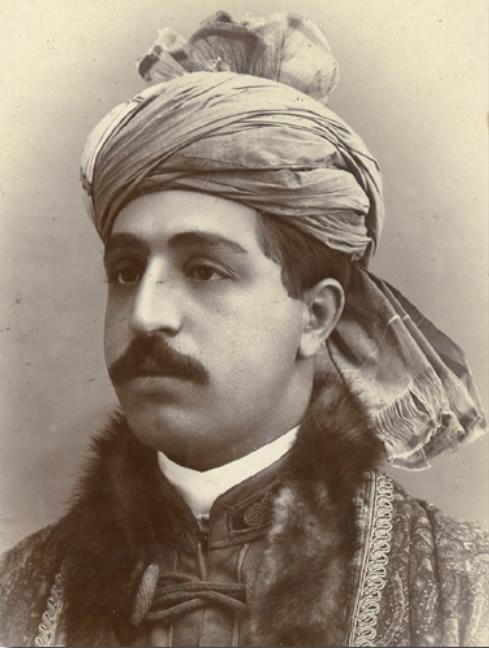
Ghazi Mohammad Ayub Khan Barakzai was the Victor of Maiwand and the Afghan Prince Charlie. He served as the governor of Herat Province and was the Emir of Afghanistan from 12 October 1879 to 31 May 1880.
He was born into a Pashtun family to his father Sher Ali Khan and his mother Qamar Jan. His mother was the daughter of a Mohmand chief of Lalpura named Saadat Khan, and his full-brother was Mohammad Yaqub Khan.
During the Second Anglo-Afghan War, Ayub Khan commanded Afghan troops against Anglo-Indian forces. On 27 July 1880, he defeated the British Indian Army at the Battle of Maiwand, which saved Afghanistan from dismemberment and prevented a permanent British occupation of Kandahar.
Ayub Khan later besieged British forces at Kandahar but was defeated by forces led by General Frederick Roberts on 1 September 1880. In July 1881, he attempted to reach Kandahar and won a battle at Maiwand to briefly rule the province. However, Amir Abdur Rahman Khan defeated him outside Kandahar with British support.
After his defeat, Ayub Khan fled to Persia. Following negotiations in 1888 with Sir Mortimer Durand, the United Kingdom's ambassador at Tehran, he became a pensioner of the British Raj. He traveled to British India in 1888 and lived in Lahore, Punjab.
Ayub Khan died in 1914 and is buried in Peshawar near the shrine of Sheikh Habib at the Durrani graveyard. He had eleven wives, fifteen sons, and ten daughters.
His descendants included Sardar Mohammad Afzal Khan, who was awarded the Military Cross, and Sardar Hissam Mahmud el-Effendi, who served as a Brigadier in the Pakistan Army. Other descendants include Majda and Hamida Sarwar.
Key facts
- Ayub Khan was the Emir of Afghanistan from 12 October 1879 to 31 May 1880.
- He defeated the British Indian Army at the Battle of Maiwand on 27 July 1880.
- He lived in Lahore, Punjab, from 1888 until his death in 1914.
- He is remembered in Afghanistan as the National Hero of Afghanistan.