

 Mongolia
Muqali
Muqali was a prominent Mongol general and trusted commander under Genghis Khan who served as the Viceroy of China.
 Biography DeskOctober 25, 2026
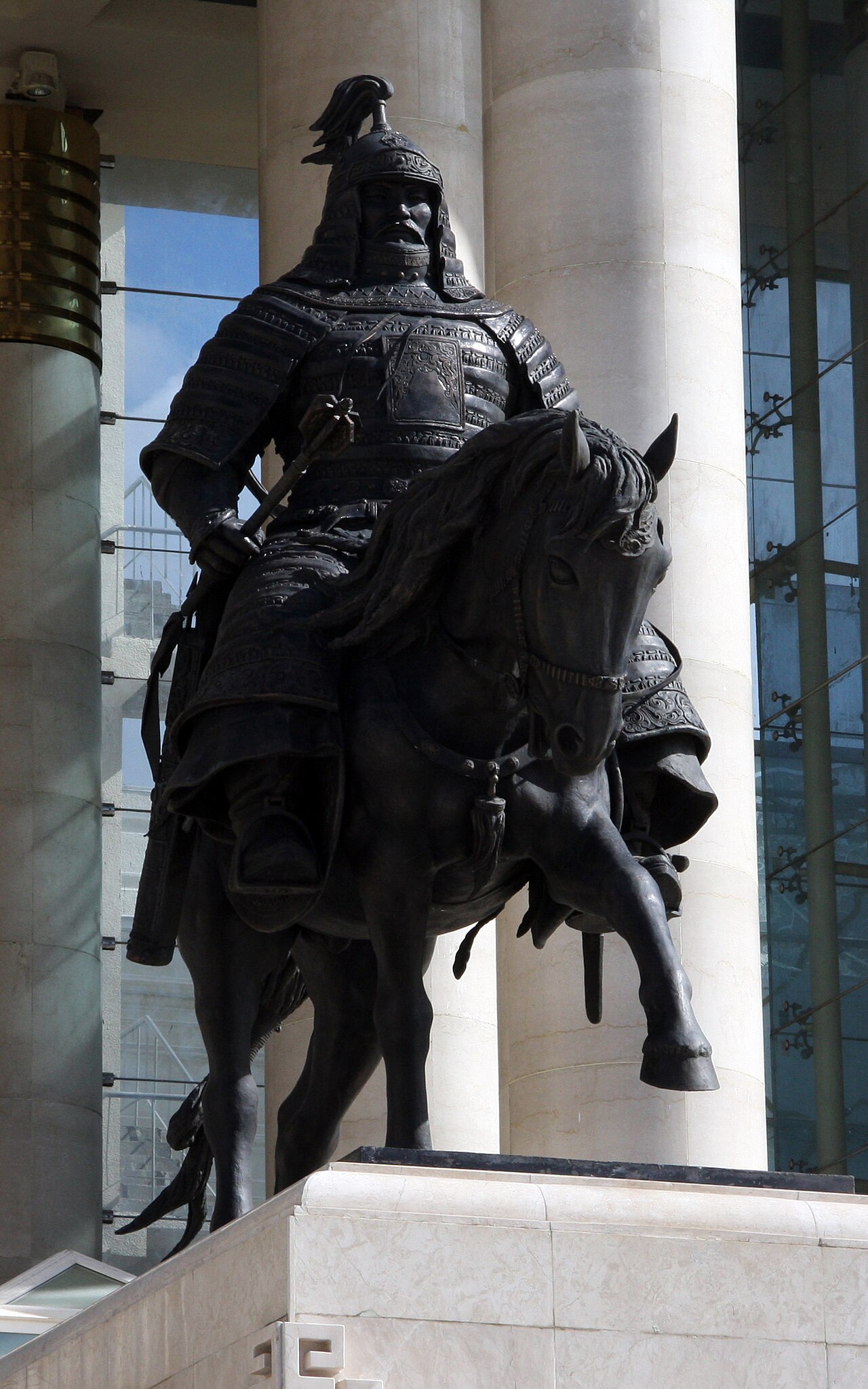
Muqali was a Mongol general and a trusted commander under Genghis Khan. He was the third son of Gü'ün U'a, a leader of the Jalair tribe's White clan. He earned the epithet Muqali, which means one who dulls, through his service to the Mongol Empire.
Muqali's father and uncles pledged allegiance to Temujin in 1197 after he defeated the Jurkin. Gü'ün U'a offered Muqali to Temujin as a personal slave, emčü bo'ol. This period of service resulted in a close relationship with Genghis Khan.
At the coronation of Genghis Khan in 1206, Muqali received command of the third tumen and control over the eastern mingghans. He participated in the campaign against the Jin, including the Battle of Yehuling in 1211. During the invasion of Jin China, he acted as the second-in-command.
When Genghis Khan went to war with the Khwarazmian Empire, he left Muqali in control of Northern China as viceroy. Muqali held the titles of gui ong, kuo-wang, and taishi. He used a small force of around 20,000 Mongols to subdue most of northern China.
In 1217, Muqali attacked the Jin-controlled areas of Hebei, northern Shandong, and northern Shaanxi. He had largely subdued these agricultural areas by 1219. In 1220, he captured four towns in Shandong Province.
Muqali crossed the Ordos in mid-1221 and conquered cities in northern and central Shaanxi. He captured Jiazhou in November 1221 and later recaptured towns including Xizhou and Daizhou in the spring of 1222. He took the strategic Hezhong at the end of 1222.
Muqali became seriously ill and died in the spring of 1223 at 53 years of age. On his deathbed, he declared that he had never been defeated. His son Bo’ol was given command after his death.
Key facts
- Muqali was the third son of Gü'ün U'a of the Jalair tribe.
- He served as the Viceroy of China and held the title of gui ong.
- He died in the spring of 1223 at the age of 53.
- He commanded a force of approximately 20,000 Mongols in northern China.